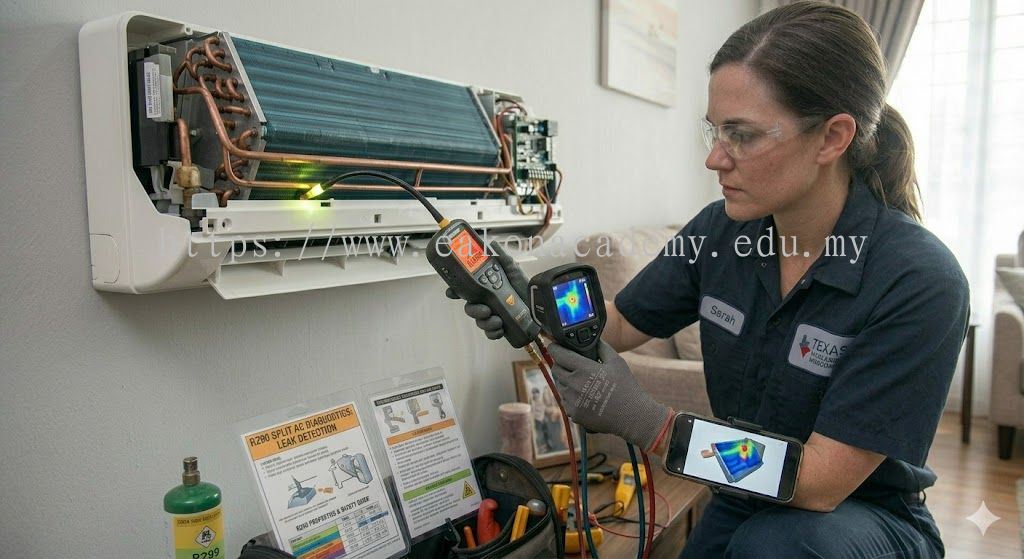
R290 Refrigerant Leak Troubleshooting Guide for HVAC Technicians and Safe Refrigeration System Maintenance
R290 refrigerant leak troubleshooting is an essential technical skill for HVAC technicians, refrigeration engineers, air conditioning contractors, and maintenance professionals who work with propane refrigerant systems. As the HVAC industry continues to adopt environmentally friendly refrigerants with low global warming potential (GWP), R290 propane refrigerant has become an increasingly popular solution for sustainable cooling applications. However, because R290 is classified as an A3 flammable refrigerant, proper leak detection, troubleshooting procedures, and safe handling practices are critical to ensure reliable system operation. At eakonacadem.edu.my, HVAC training programmes focus on developing professional knowledge in R290 refrigerant management, leak detection methods, system troubleshooting, and safe servicing techniques to support the future development of sustainable HVAC technology.
R290 refrigerant leak troubleshooting requires a strong understanding of refrigeration system operation, refrigerant characteristics, piping systems, and safety requirements. Unlike conventional refrigerants, R290 requires specialised attention because refrigerant leakage can affect both system performance and workplace safety. A proper troubleshooting approach allows technicians to identify the source of leaks, evaluate system conditions, perform necessary repairs, and restore equipment efficiency while following recommended safety procedures.
The first step in R290 refrigerant leak troubleshooting is conducting a detailed inspection of the refrigeration system. HVAC technicians should examine refrigerant piping, joints, valves, connections, service ports, brazed areas, and major components such as compressors, condensers, and evaporators. Common causes of R290 refrigerant leaks include damaged piping, poor installation practices, loose fittings, vibration-related failures, corrosion, improper brazing, and component wear. Early detection of these problems helps prevent refrigerant loss, system inefficiency, and potential safety risks.
Leak detection methods are a critical part of any R290 refrigerant troubleshooting procedure. Technicians must use suitable leak detection tools and follow safe inspection practices to accurately identify refrigerant escape points. Professional leak detection equipment helps locate small leaks that may not be visible during normal system operation. Proper identification of leakage areas allows technicians to perform effective repairs and reduce unnecessary refrigerant release into the environment.
Understanding system performance symptoms is also important when troubleshooting R290 refrigerant leaks. Common signs of refrigerant leakage include reduced cooling capacity, longer compressor operating cycles, unstable pressure readings, abnormal temperature conditions, poor energy efficiency, and insufficient heat transfer. Technicians must analyse these symptoms together with pressure and temperature measurements to determine whether refrigerant loss is the cause of system performance problems.
Refrigerant recovery and repair procedures are important stages after identifying an R290 leak. Since propane refrigerant is flammable, technicians must follow proper safety protocols before opening the refrigeration circuit. Safe recovery procedures, correct cylinder handling, ventilation control, and ignition source prevention are necessary to reduce risks during repair activities. Professional training ensures technicians understand how to manage R290 refrigerant safely throughout the troubleshooting and repair process.
R290 piping inspection is another important aspect of refrigerant leak troubleshooting. Refrigerant lines must be checked for correct installation, proper support, insulation condition, and connection quality. Poor piping practices can increase the risk of leakage and reduce overall system performance. Regular inspection and preventive maintenance help improve system reliability and extend equipment service life.
Safety awareness plays a major role in R290 refrigerant leak troubleshooting. Technicians must understand the importance of working in well-ventilated areas, using appropriate tools, controlling ignition sources, and following safe refrigerant handling procedures. Proper training helps HVAC professionals carry out leak detection and repair tasks responsibly while maintaining high standards of workplace safety.
As the demand for natural refrigerant systems continues to grow, skilled technicians with R290 refrigerant leak troubleshooting expertise are becoming increasingly valuable. Businesses, contractors, and facility operators require professionals who can maintain efficient cooling systems while managing safety requirements effectively. Strong troubleshooting knowledge allows technicians to improve system reliability, reduce operating costs, and support sustainable HVAC development.
At eakonacadem.edu.my, HVAC and ACMV training programmes are designed to equip technicians, contractors, and industry learners with practical skills in modern refrigeration technologies. Learning R290 refrigerant leak troubleshooting enables professionals to improve diagnostic accuracy, enhance refrigerant management skills, and confidently service advanced low-GWP systems. Through training in leak detection, system analysis, repair procedures, and safety practices, HVAC professionals can provide higher-quality maintenance services.
Whether you are an HVAC technician, refrigeration engineer, maintenance specialist, or someone developing expertise in sustainable cooling technology, mastering R290 refrigerant leak troubleshooting provides valuable knowledge for future career advancement. Professional training helps technicians prevent system failures, improve energy efficiency, maintain safe operations, and contribute to the growth of environmentally responsible HVAC solutions in Malaysia and beyond.
更多 EAKON ACADEMY SDN BHD 相关资料 Malaysia