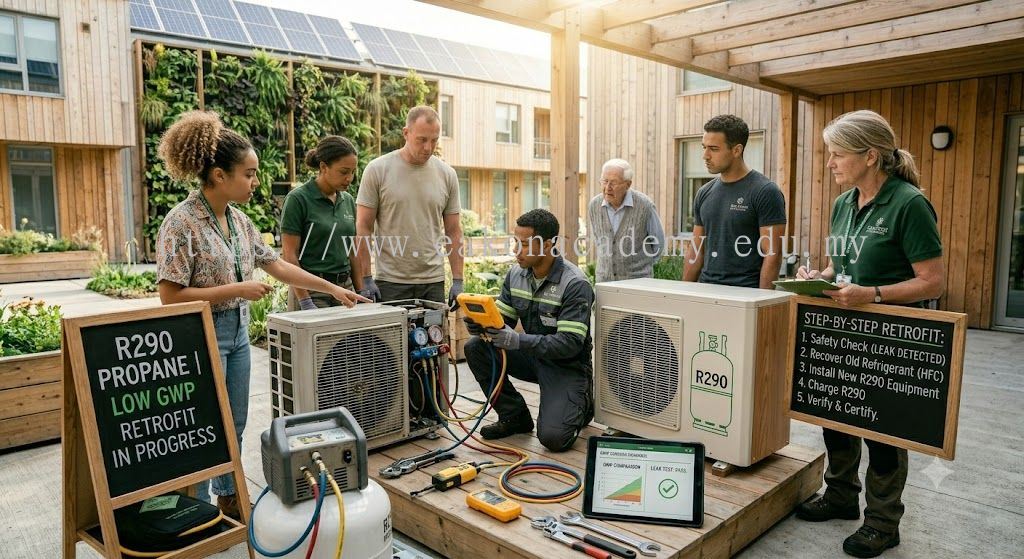
R290 HVAC LOW GWP RETROFIT SOLUTIONS: SUSTAINABLE REFRIGERANT CONVERSION, ENERGY-EFFICIENT SYSTEM UPGRADES AND ECO-FRIENDLY HVAC TRANSFORMATION
R290 HVAC low GWP retrofit solutions refer to the process of upgrading existing heating, ventilation, and air conditioning systems by adopting propane (R290) as a more environmentally friendly refrigerant alternative. As businesses and industries increasingly focus on reducing greenhouse gas emissions, improving energy efficiency, and complying with evolving refrigerant regulations, R290 retrofit solutions provide an effective pathway toward sustainable HVAC-R system modernization. These solutions help organizations improve system performance, reduce environmental impact, and extend the operational life of existing cooling equipment while supporting the global transition toward low-GWP refrigerant technologies.
One of the primary advantages of R290 HVAC low GWP retrofit solutions is their ability to reduce environmental impact. Many older HVAC-R systems use refrigerants with higher Global Warming Potential (GWP), which contribute significantly to climate change when released into the atmosphere. By transitioning toward R290, organizations can reduce direct refrigerant emissions and support sustainable environmental objectives. R290 offers an extremely low GWP compared to many conventional refrigerants, making it a preferred option for companies seeking greener HVAC solutions and compliance with future refrigerant management requirements.
Energy efficiency improvement is another important benefit of R290 HVAC retrofit solutions. R290 has excellent thermodynamic properties that allow refrigeration and air conditioning systems to operate efficiently with reduced energy consumption. During a properly designed retrofit process, system components can be optimized to improve cooling performance, reduce compressor workload, and enhance overall energy management. These improvements can result in lower electricity costs, improved system reliability, and better long-term operational efficiency for residential, commercial, and industrial facilities.
R290 HVAC low GWP retrofit solutions can be applied to various types of cooling equipment, depending on system design, refrigerant charge requirements, and safety considerations. Applications may include commercial refrigeration units, air conditioning systems, heat pump equipment, cold storage systems, and specialized HVAC-R installations. A professional assessment is required before retrofit implementation to determine equipment compatibility, safety requirements, component suitability, and necessary modifications. Proper evaluation ensures that the upgraded system operates safely and efficiently.
Safety and compliance are critical elements in R290 retrofit projects. Since R290 is classified as a flammable hydrocarbon refrigerant, retrofit activities must follow appropriate safety procedures and technical standards. Important considerations include refrigerant charge limitations, ventilation requirements, electrical safety, component selection, and proper system labeling. HVAC-R technicians must have specialized knowledge of R290 handling procedures, leak detection techniques, refrigerant recovery methods, and safe servicing practices to ensure successful retrofit implementation.
Another key aspect of R290 retrofit solutions is professional technical expertise. Retrofitting an HVAC system requires careful planning, accurate system analysis, and practical knowledge of refrigeration principles. Technicians must understand system pressure characteristics, compressor performance, heat exchanger efficiency, control system operation, and refrigerant compatibility. Proper training helps professionals perform retrofit work effectively while maintaining safety, efficiency, and compliance standards.
Preventive maintenance after an R290 retrofit is essential for maximizing system performance and reliability. Regular inspection of compressors, condensers, evaporators, refrigerant piping, and control components helps identify potential issues early. Proper maintenance ensures continued energy efficiency, reduces downtime, extends equipment lifespan, and maintains compliance with safety requirements.
From a professional education perspective, understanding R290 HVAC low GWP retrofit solutions is increasingly important for HVAC-R technicians and engineers. Institutions such as Eakon Academy Malaysia provide structured training programs covering R290 technology, retrofit procedures, refrigerant safety, system optimization, and environmental compliance. These programs prepare industry professionals with the practical skills required to support sustainable HVAC-R upgrades.
Furthermore, R290 HVAC low GWP retrofit solutions represent an important step toward creating more sustainable and energy-efficient cooling systems. By upgrading existing equipment with environmentally responsible refrigerant technology, businesses can reduce emissions, improve efficiency, and achieve long-term cost savings. As the HVAC-R industry continues to move toward greener solutions, expertise in R290 retrofit technology will become increasingly valuable, helping professionals and organizations develop safer, smarter, and more sustainable HVAC systems for the future.
更多 EAKON ACADEMY SDN BHD 相关资料 Malaysia