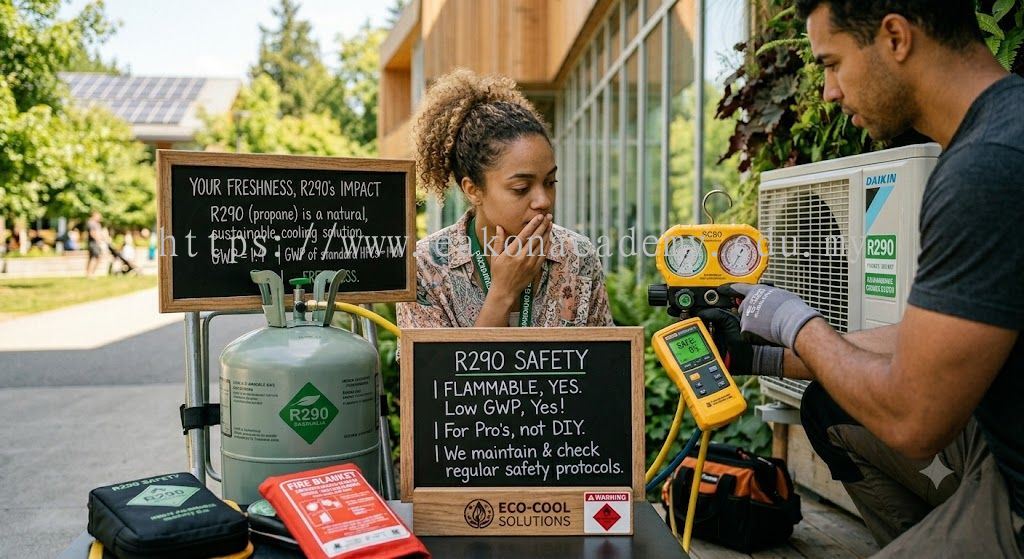
R290 FLAMMABLE LOW GWP REFRIGERANT SAFETY: SAFE HANDLING PRACTICES, HVAC-R COMPLIANCE REQUIREMENTS AND SUSTAINABLE REFRIGERATION TECHNOLOGY
R290 flammable low GWP refrigerant safety refers to the essential safety procedures, technical requirements, and professional practices required when working with propane (R290) refrigerant in modern HVAC-R systems. As the refrigeration industry continues to adopt environmentally friendly refrigerants, R290 has become a popular sustainable solution due to its extremely low Global Warming Potential (GWP), excellent energy efficiency, and strong cooling performance. However, because R290 is classified as a flammable hydrocarbon refrigerant, proper safety knowledge and compliance practices are critical to ensure safe installation, maintenance, servicing, and operation of R290-based refrigeration and air conditioning systems.
One of the most important aspects of R290 flammable low GWP refrigerant safety is understanding the physical properties and risks associated with propane refrigerant. Unlike non-flammable refrigerants, R290 can ignite when exposed to an ignition source under suitable conditions. Therefore, HVAC-R technicians must understand flammability characteristics, safe working distances, ventilation requirements, and proper handling procedures. Awareness of these safety principles helps prevent accidents and ensures that R290 systems can be operated effectively while maintaining a high level of workplace protection.
Proper installation procedures are a key element of R290 refrigerant safety. HVAC-R systems using R290 must be designed and installed according to recognized safety standards and manufacturer guidelines. Important considerations include correct refrigerant charge limits, suitable system components, adequate ventilation, electrical safety precautions, and appropriate equipment placement. Professional installation ensures that the refrigerant remains contained within the system and minimizes potential risks related to leaks or improper system configuration.
Another important area of R290 flammable low GWP refrigerant safety is technician training and competency. Professionals working with R290 must receive specialized training covering refrigerant handling, leak detection, recovery procedures, charging methods, and emergency response actions. Technicians must also understand the correct use of tools and equipment designed for hydrocarbon refrigerants. Proper training allows HVAC-R professionals to perform installation and maintenance tasks safely while complying with industry requirements.
Leak prevention and detection are also essential components of R290 safety management. Regular inspection of refrigerant piping, connections, valves, compressors, and system components helps identify potential leakage issues before they become safety hazards. Approved leak detection methods should be used to ensure accurate identification of refrigerant loss. In the event of a leak, technicians must follow proper procedures, including ventilation of the working area, elimination of ignition sources, and safe refrigerant recovery.
Storage and transportation safety are additional considerations when handling R290 refrigerant. Cylinders must be stored in suitable locations with proper ventilation and protection from heat sources or ignition risks. During transportation, refrigerant containers must be secured, labeled correctly, and handled according to hazardous material requirements. These practices help maintain safety throughout the refrigerant supply chain.
Environmental responsibility is another important benefit of R290 technology. Although R290 requires strict safety management due to its flammability, its extremely low GWP makes it an environmentally preferred refrigerant option. Proper handling, recovery, and maintenance procedures help prevent unnecessary emissions while supporting sustainable HVAC-R practices.
From a professional education perspective, understanding R290 flammable low GWP refrigerant safety is essential for HVAC-R technicians, engineers, and industry professionals. Institutions such as Eakon Academy Malaysia provide structured training programs focusing on R290 safety procedures, natural refrigerant technology, installation practices, maintenance techniques, and compliance requirements. These programs help learners develop the practical skills and technical knowledge needed to work safely with modern low-GWP refrigerant systems.
Furthermore, R290 flammable low GWP refrigerant safety represents a critical foundation for the future of sustainable refrigeration technology. By combining proper training, safe working procedures, and compliance with industry standards, organizations can achieve efficient cooling performance while protecting personnel and the environment. As the HVAC-R industry continues moving toward natural refrigerants, expertise in R290 safety will become increasingly valuable, supporting safer, greener, and more energy-efficient refrigeration operations worldwide.
更多 EAKON ACADEMY SDN BHD 相关资料 Malaysia