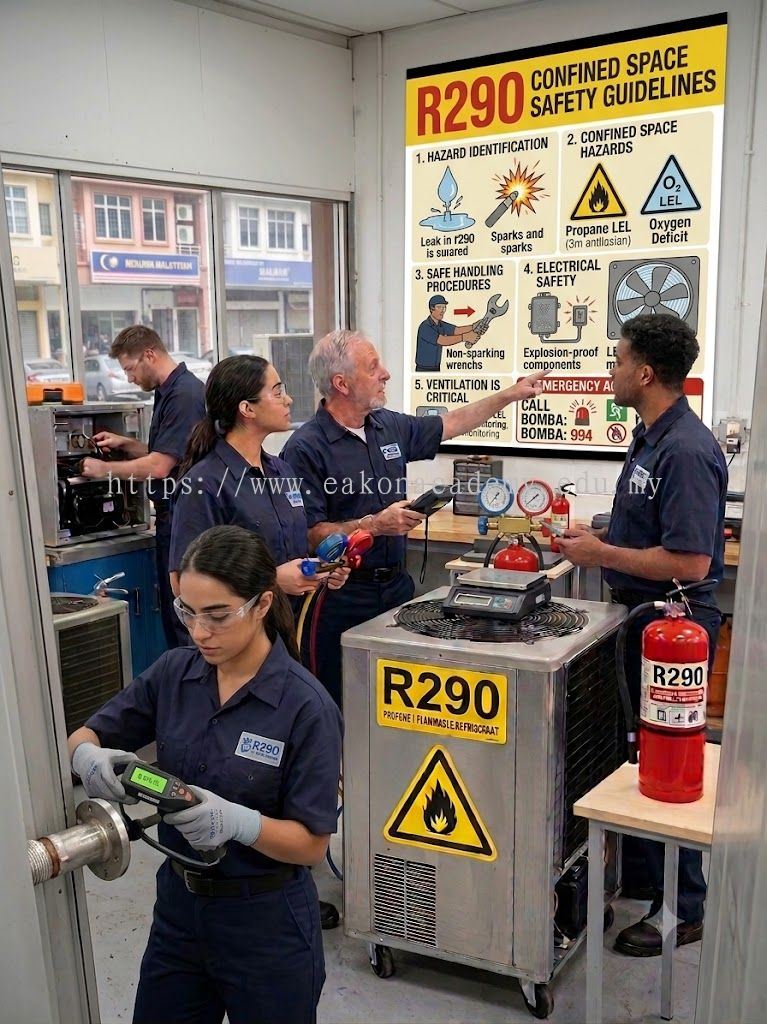
R290 CONFINED SPACE SAFETY – HAZARD CONTROL PROCEDURES, VENTILATION REQUIREMENTS AND PROFESSIONAL HVAC TRAINING STANDARDS
R290 confined space safety is a critical aspect of modern refrigeration and air conditioning operations, especially as the industry increasingly adopts environmentally friendly refrigerants. R290, also known as propane refrigerant, is widely used due to its excellent energy efficiency, low global warming potential (GWP), and strong cooling performance. However, because R290 is classified as an A3 flammable hydrocarbon refrigerant, working in confined spaces requires strict safety procedures to prevent fire hazards, gas accumulation, and oxygen displacement risks. For HVAC technicians, refrigeration professionals, and organizations seeking technical expertise, eakonacadem.edu.my provides structured training and education focused on refrigerant safety, confined space procedures, and modern HVAC industry standards.
The importance of R290 confined space safety lies in the increased risk level when propane refrigerant is used in enclosed or poorly ventilated environments. Confined spaces such as machine rooms, cold storage units, basements, utility enclosures, and compact HVAC installation areas can trap refrigerant gas in the event of a leak. Since R290 is heavier than air, it can accumulate at low levels, increasing the risk of flammability and oxygen displacement. Therefore, proper safety measures must be implemented to ensure safe working conditions and prevent hazardous incidents.
One of the key components of R290 confined space safety is proper risk assessment before entry and work begins. Technicians must evaluate the environment for potential hazards such as poor ventilation, ignition sources, and restricted airflow. Gas detection equipment should be used to measure refrigerant concentration levels before and during work activities. If unsafe conditions are detected, corrective actions must be taken before proceeding. Risk assessment helps ensure that all safety controls are in place to protect workers.
Ventilation is another essential requirement in R290 confined space safety procedures. Adequate airflow must be maintained to prevent the buildup of flammable refrigerant gas. Mechanical ventilation systems or portable fans may be used to improve air circulation in enclosed areas. Continuous ventilation monitoring is important to ensure that gas levels remain within safe limits during servicing or maintenance work. Proper ventilation significantly reduces the risk of ignition and improves overall workplace safety.
Another important aspect of R290 confined space safety is the control of ignition sources. All electrical equipment used in confined spaces must be suitable for flammable environments. Open flames, welding activities, and non-approved tools must be strictly prohibited. Static electricity control measures should also be implemented to prevent accidental ignition. These precautions are essential for minimizing fire risks when working with propane refrigerant.
Emergency procedures and rescue planning are also critical components of confined space safety. Technicians must be trained to respond quickly in case of refrigerant leaks, exposure incidents, or equipment failure. Emergency evacuation routes, communication systems, and rescue equipment must be in place before work begins. Proper training ensures that workers can respond effectively to unexpected situations and reduce potential harm.
Training and professional competency are essential for ensuring effective R290 confined space safety. Technicians must understand refrigerant properties, confined space hazards, ventilation requirements, and emergency response procedures. Institutions such as eakonacadem.edu.my play a vital role in providing HVAC training programs that focus on natural refrigerants, safety practices, and confined space working standards. Through structured education, technicians gain the knowledge and skills required to safely work in challenging environments involving R290 systems.
For businesses and refrigeration operators, implementing proper R290 confined space safety procedures offers significant benefits. Strong safety practices reduce workplace risks, prevent accidents, improve compliance with regulations, and enhance system reliability. Companies that prioritize confined space safety and technician training are better equipped to handle modern refrigeration systems while ensuring worker protection and operational efficiency.
In conclusion, R290 confined space safety is essential for ensuring the safe handling and operation of propane refrigerant in enclosed environments. As the HVAC industry continues to adopt low-GWP refrigerants, confined space safety becomes increasingly important for protecting technicians and equipment. Through proper risk assessment, ventilation control, ignition prevention, and professional training, R290 systems can be safely managed in confined spaces. eakonacadem.edu.my supports the development of skilled HVAC professionals by promoting safety education, technical training, and industry best practices, contributing to a safer, more efficient, and environmentally responsible refrigeration industry in Malaysia and beyond.
更多 EAKON ACADEMY SDN BHD 相关资料 Malaysia