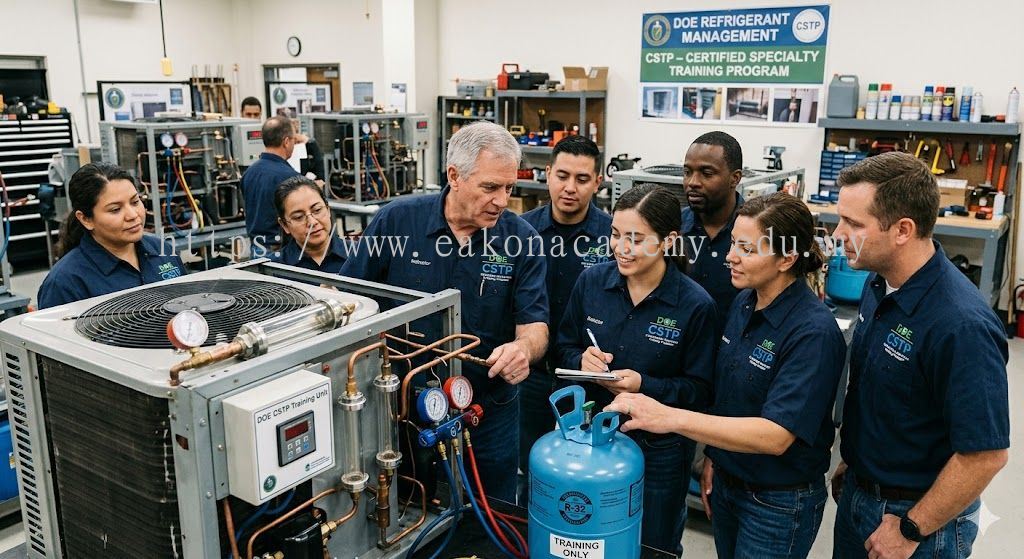
DOE Refrigerant Training Program CSTP: Professional HVACR Certification for Safe Refrigerant Handling, Environmental Compliance and Sustainable Industry Practices
DOE refrigerant training program CSTP refers to a structured and professional HVACR certification program designed to equip technicians, engineers, contractors, and refrigeration professionals with the essential skills and knowledge required for safe, efficient, and environmentally responsible refrigerant management. As Malaysia’s heating, ventilation, air conditioning, and refrigeration (HVACR) industry continues to grow, the need for properly trained and certified professionals has become increasingly important. This training program plays a key role in ensuring compliance with environmental regulations, improving technical competency, and promoting sustainable refrigeration practices across the industry.
The main objective of the DOE refrigerant training program CSTP is to develop competent HVACR technicians who understand the complete refrigerant lifecycle, including installation, operation, maintenance, recovery, recycling, and safe disposal. Refrigerants are widely used in air conditioning systems, commercial refrigeration units, chillers, cold storage facilities, supermarkets, hospitals, hotels, and industrial applications. While essential for cooling systems, refrigerants must be handled responsibly to prevent leakage, reduce environmental impact, and ensure system efficiency. This training provides technicians with the practical knowledge required to manage refrigerants safely and effectively.
The Department of Environment Malaysia, also known as Jabatan Alam Sekitar (JAS), plays a significant role in regulating environmental protection standards and promoting responsible refrigerant management practices in Malaysia. The DOE refrigerant training program CSTP supports these national environmental goals by ensuring HVACR professionals are trained in accordance with approved safety procedures, environmental compliance requirements, and sustainable refrigerant handling practices. This helps reduce greenhouse gas emissions and supports Malaysia’s commitment to environmental sustainability.
A key focus of the DOE refrigerant training program CSTP is safe refrigerant handling techniques. Participants are trained in proper methods for refrigerant charging, recovery, containment, storage, and transportation. These procedures are essential for preventing accidental refrigerant release, improving system performance, and maintaining workplace safety. Proper handling practices also help extend the lifespan of HVAC equipment and reduce operational costs.
Refrigerant recovery and emission control are important components of the DOE refrigerant training program CSTP. HVAC professionals are taught how to safely recover refrigerants during maintenance, repair, or system replacement activities using approved recovery equipment. This ensures refrigerants are not released into the atmosphere and are properly stored for recycling or disposal. These practices are critical for reducing environmental pollution and promoting responsible refrigerant lifecycle management.
Leak detection and preventive maintenance are also essential parts of the DOE refrigerant training program CSTP. Technicians learn how to inspect refrigeration systems, identify leak points, perform pressure testing, and apply corrective maintenance procedures. These skills help improve system efficiency, reduce energy consumption, and minimize refrigerant loss while ensuring reliable HVAC operation.
Safety management is a core element of the DOE refrigerant training program CSTP. Refrigeration systems involve risks such as high-pressure equipment, chemical exposure, and electrical hazards. Training includes workplace safety procedures, hazard identification, emergency response techniques, proper ventilation requirements, and the correct use of personal protective equipment (PPE). These safety measures ensure technicians can work safely and professionally in various environments.
Documentation and compliance management are also emphasized in the DOE refrigerant training program CSTP. Proper record-keeping of refrigerant usage, recovery activities, maintenance history, and system inspections helps organizations monitor environmental performance and maintain regulatory compliance. Accurate documentation demonstrates accountability and supports sustainable business operations within the HVACR industry.
As Malaysia continues to adopt energy-efficient cooling systems, low-GWP refrigerants, and sustainable HVAC technologies, the demand for certified and skilled technicians continues to grow. The DOE refrigerant training program CSTP provides HVACR professionals with the essential technical knowledge and practical skills required to meet industry demands while ensuring environmental responsibility.
At Eakon Academy, HVACR professionals can enhance their expertise through structured DOE refrigerant training program CSTP courses. The training covers refrigerant safety procedures, recovery techniques, leak prevention strategies, HVAC maintenance practices, environmental compliance standards, and sustainable refrigerant management. By completing this professional program, technicians can improve their qualifications, strengthen career opportunities, and contribute to Malaysia’s goal of developing a safer, more efficient, and environmentally responsible HVACR industry.
更多 EAKON ACADEMY SDN BHD 相关资料 Malaysia