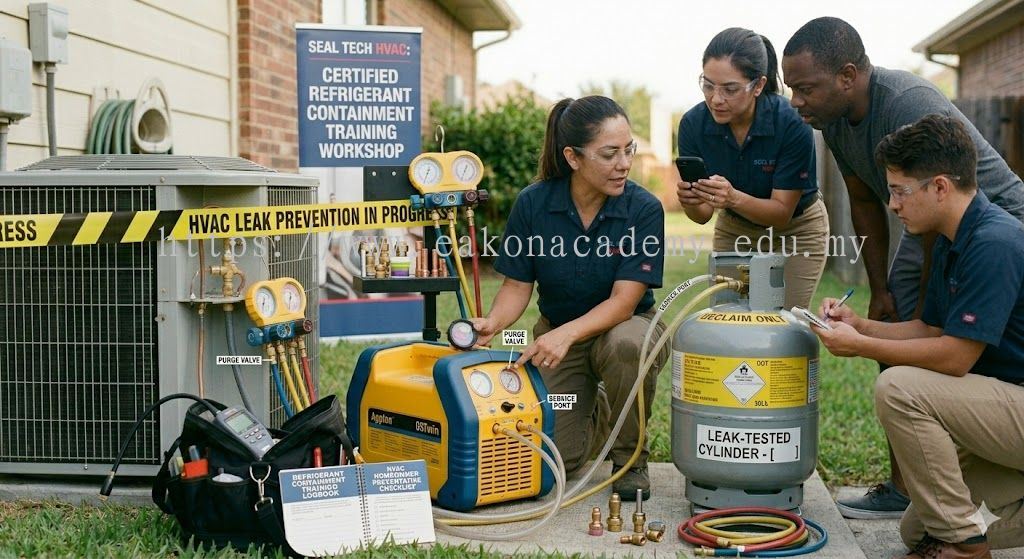
Refrigerant Containment Training: Building Professional Competency for Environmental Compliance, Sustainable HVACR Practices, and Efficient Refrigerant Management
Refrigerant Containment Training is an essential component of professional development within the HVACR (Heating, Ventilation, Air Conditioning, and Refrigeration) industry. As environmental regulations become increasingly stringent and organizations focus on reducing greenhouse gas emissions, proper refrigerant management has become a critical responsibility for HVAC technicians, engineers, facility managers, maintenance personnel, and refrigeration specialists. Refrigerants are fundamental to the operation of air conditioning and refrigeration systems, but improper handling, leakage, or disposal can have serious environmental and economic consequences. Refrigerant containment training provides industry professionals with the knowledge, practical skills, and regulatory understanding necessary to prevent refrigerant emissions, maintain system efficiency, and support sustainable HVACR operations.
The primary objective of refrigerant containment training is to educate participants on the best practices for managing refrigerants throughout the entire lifecycle of HVACR systems. This includes system installation, leak prevention, refrigerant recovery, recycling, reclamation, storage, transportation, maintenance, and final disposal. Through structured training programs, HVACR professionals learn how to implement effective refrigerant containment strategies that minimize environmental impact while ensuring optimal equipment performance. Organizations that invest in refrigerant containment training often experience improved compliance, reduced refrigerant losses, and enhanced operational reliability.
One of the most important topics covered in refrigerant containment training is refrigerant leak prevention. Refrigerant leaks are among the leading causes of environmental emissions and system inefficiencies. Training programs teach technicians how to identify common leak sources, inspect refrigeration components, evaluate system integrity, and apply preventive maintenance techniques. Understanding leak prevention methods allows HVACR professionals to reduce refrigerant losses, improve equipment lifespan, and lower operating costs. Proper leak management also supports compliance with environmental regulations and sustainability goals.
Leak detection technology is another critical area of focus in refrigerant containment training. Participants learn how to use electronic leak detectors, infrared sensing devices, ultrasonic leak detection systems, pressure testing equipment, and automated monitoring technologies. These tools help technicians detect refrigerant leaks accurately and efficiently before they result in significant refrigerant losses or system failures. Early leak detection is one of the most effective ways to improve refrigerant containment and maintain system performance.
Proper refrigerant recovery and recycling procedures are fundamental components of refrigerant containment training. During maintenance, servicing, retrofits, or equipment decommissioning, refrigerants must be recovered safely using certified recovery equipment. Training programs emphasize the importance of preventing refrigerant release into the atmosphere and provide practical instruction on refrigerant recovery techniques, cylinder handling procedures, recycling methods, and reclamation processes. These skills are essential for responsible refrigerant management and environmental protection.
Safety awareness is a key aspect of refrigerant containment training. Refrigerants can present various hazards depending on their chemical properties, including pressure-related risks, toxicity concerns, and flammability characteristics. Participants learn how to use personal protective equipment (PPE), follow safe handling procedures, respond to refrigerant emergencies, and comply with workplace safety standards. Effective safety training helps protect technicians, facility occupants, and the environment from potential refrigerant-related incidents.
Environmental compliance and regulatory knowledge are increasingly important topics within refrigerant containment training programs. HVACR professionals must understand the environmental implications of refrigerant emissions and the importance of adhering to industry standards and regulatory requirements. Training helps participants stay informed about evolving refrigerant regulations, refrigerant phase-down initiatives, low Global Warming Potential (GWP) refrigerants, and sustainable HVACR practices. Compliance knowledge enables organizations to avoid penalties while supporting environmental stewardship objectives.
Energy efficiency is also closely linked to refrigerant containment training. Systems that maintain proper refrigerant charge levels and experience minimal leakage generally operate more efficiently and consume less energy. Training programs teach participants how refrigerant containment contributes to optimized system performance, reduced electricity consumption, lower utility costs, and improved equipment reliability. Understanding the relationship between refrigerant management and energy efficiency allows technicians to deliver greater value to employers and clients.
Documentation and refrigerant inventory management are additional areas addressed in refrigerant containment training. Accurate record keeping helps organizations monitor refrigerant usage, track maintenance activities, document recovery procedures, and demonstrate compliance during audits. Participants learn best practices for refrigerant inventory control and reporting, which are essential for effective refrigerant management programs.
At eakonacadem.edu.my, refrigerant containment training programs are designed to equip HVACR professionals with comprehensive technical knowledge and hands-on practical skills. Participants gain expertise in refrigerant containment strategies, leak detection technologies, refrigerant recovery and recycling procedures, environmental compliance requirements, safety management, and energy-efficient HVACR operations. The training combines classroom learning with practical applications to ensure that graduates are prepared to meet industry demands and regulatory expectations.
As the HVACR industry continues to transition toward sustainable cooling technologies and environmentally responsible practices, refrigerant containment training will remain a critical investment for both individuals and organizations. Businesses that prioritize professional refrigerant containment training can improve system performance, reduce environmental impact, strengthen compliance efforts, lower maintenance costs, and enhance workplace safety. Through specialized education and industry-focused training offered by eakonacadem.edu.my, HVACR professionals can develop the skills and expertise needed to lead effective refrigerant management initiatives and contribute to a cleaner, more sustainable future for the refrigeration and air conditioning industry.
更多 EAKON ACADEMY SDN BHD 相关资料 Malaysia