Refrigerant Compliance Best Practices: Achieving Environmental Responsibility, Regulatory Compliance, and HVACR Excellence
Refrigerant Compliance Best Practices are essential for organizations and HVACR professionals seeking to maintain environmental responsibility, regulatory compliance, and operational efficiency in refrigeration and air conditioning systems. As environmental regulations become increasingly stringent and the global focus on climate protection continues to grow, businesses must adopt effective refrigerant management strategies to reduce emissions, improve system performance, and comply with industry standards. Refrigerants play a critical role in heating, ventilation, air conditioning, and refrigeration (HVACR) systems, but improper handling, leakage, or disposal can contribute to greenhouse gas emissions and environmental degradation. Implementing refrigerant compliance best practices helps organizations safeguard the environment while improving system reliability and reducing operational costs.
One of the most important refrigerant compliance best practices is establishing a comprehensive refrigerant management program. A structured refrigerant management system provides clear procedures for refrigerant procurement, storage, usage, monitoring, recovery, recycling, reclamation, and disposal. By maintaining accurate control over refrigerant inventories and system performance, organizations can significantly reduce refrigerant losses and improve compliance with environmental requirements. A well-designed management program also enhances accountability and supports continuous improvement initiatives.
Leak prevention is a fundamental component of refrigerant compliance best practices. Refrigerant leaks not only reduce cooling system efficiency but can also result in environmental harm and costly refrigerant replacement expenses. Organizations should implement routine inspection schedules, preventive maintenance programs, and advanced leak detection technologies to identify potential leaks before they become significant issues. Electronic leak detectors, infrared sensors, ultrasonic detection systems, and automated monitoring technologies can help technicians locate leaks quickly and accurately. Early detection and prompt repair are critical to maintaining compliance and minimizing environmental impact.
Proper refrigerant handling procedures are another key aspect of refrigerant compliance best practices. Technicians must follow approved procedures when charging, recovering, transferring, or servicing refrigerants. Using certified recovery equipment and proper service tools helps prevent accidental refrigerant releases and ensures safe operations. Refrigerants should always be handled according to manufacturer guidelines, safety standards, and applicable environmental regulations. Consistent adherence to these procedures helps maintain system integrity and protects both technicians and the environment.
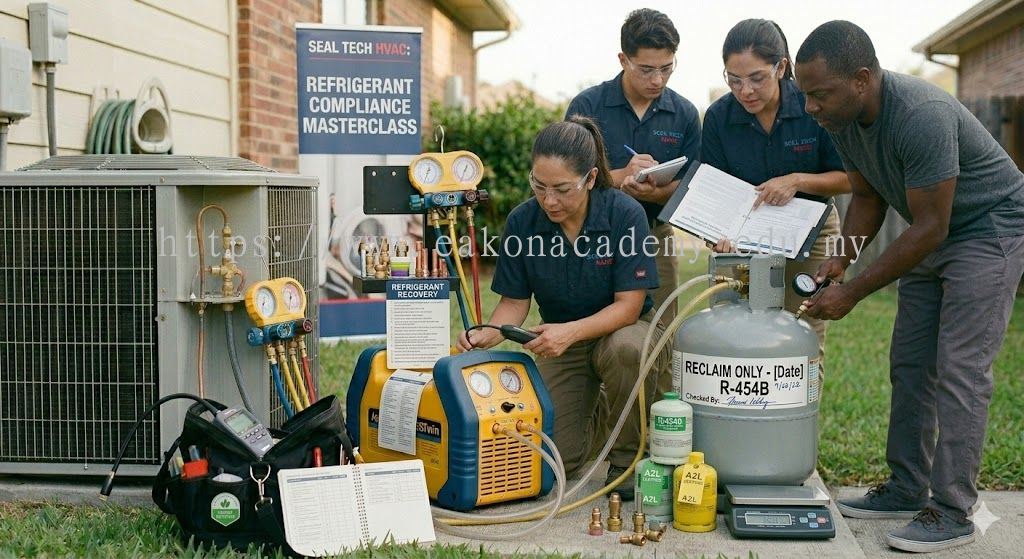
Refrigerant recovery and recycling are also essential elements of refrigerant compliance best practices. During maintenance, retrofitting, repairs, or equipment decommissioning, refrigerants should never be intentionally released into the atmosphere. Instead, refrigerants must be recovered using approved recovery systems and stored in certified recovery cylinders. Recovered refrigerants may be recycled, reclaimed, or disposed of through authorized channels, depending on their condition. These practices support sustainable resource management and help organizations meet environmental compliance objectives.
Accurate documentation and record keeping are critical components of refrigerant compliance best practices. Organizations should maintain detailed records of refrigerant purchases, inventory levels, system charges, leak repairs, recovery activities, maintenance procedures, and disposal operations. Comprehensive documentation helps demonstrate compliance during audits, supports regulatory reporting requirements, and provides valuable insights into refrigerant management performance. Effective record keeping also allows organizations to identify trends and implement corrective actions when necessary.
Training and certification of HVACR personnel are vital for successful implementation of refrigerant compliance best practices. Technicians must understand refrigerant properties, environmental impacts, recovery procedures, leak detection methods, safety requirements, and evolving regulatory standards. Ongoing professional development ensures that personnel remain knowledgeable about new refrigerant technologies, low GWP alternatives, and emerging industry best practices. Well-trained technicians are better equipped to maintain compliance and protect system performance.
Energy efficiency is closely linked to refrigerant compliance best practices. HVACR systems operating with proper refrigerant charge levels and minimal leakage typically perform more efficiently and consume less energy. Efficient systems reduce electricity usage, lower operational costs, and contribute to sustainability goals. Organizations that integrate refrigerant compliance with energy management strategies often achieve significant long-term benefits.
The transition to environmentally friendly refrigerants is increasingly becoming part of refrigerant compliance best practices. Many industries are adopting low Global Warming Potential (GWP) refrigerants and natural refrigerant alternatives to reduce environmental impact and prepare for future regulatory changes. Proper management of these refrigerants requires specialized training and updated operational procedures, making education and technical competency even more important.
At eakonacadem.edu.my, HVACR professionals, technicians, engineers, facility managers, and environmental compliance personnel can access specialized training programs focused on refrigerant compliance best practices. These programs cover refrigerant management systems, leak detection techniques, refrigerant recovery and recycling procedures, environmental regulations, sustainable HVACR operations, and energy efficiency optimization. Through a combination of theoretical instruction and practical hands-on training, participants develop the expertise necessary to manage refrigerants responsibly and maintain regulatory compliance.
As environmental regulations continue to evolve and sustainability becomes a key business priority, refrigerant compliance best practices will remain essential for organizations across all industries. Businesses that implement effective refrigerant compliance programs can reduce environmental impact, improve system efficiency, lower operating costs, strengthen regulatory compliance, and enhance corporate sustainability performance. Through industry-focused education and professional training offered by eakonacadem.edu.my, HVACR professionals can acquire the knowledge and skills needed to support responsible refrigerant management and contribute to a more sustainable future for the HVACR industry.
更多 EAKON ACADEMY SDN BHD 相关资料 Malaysia