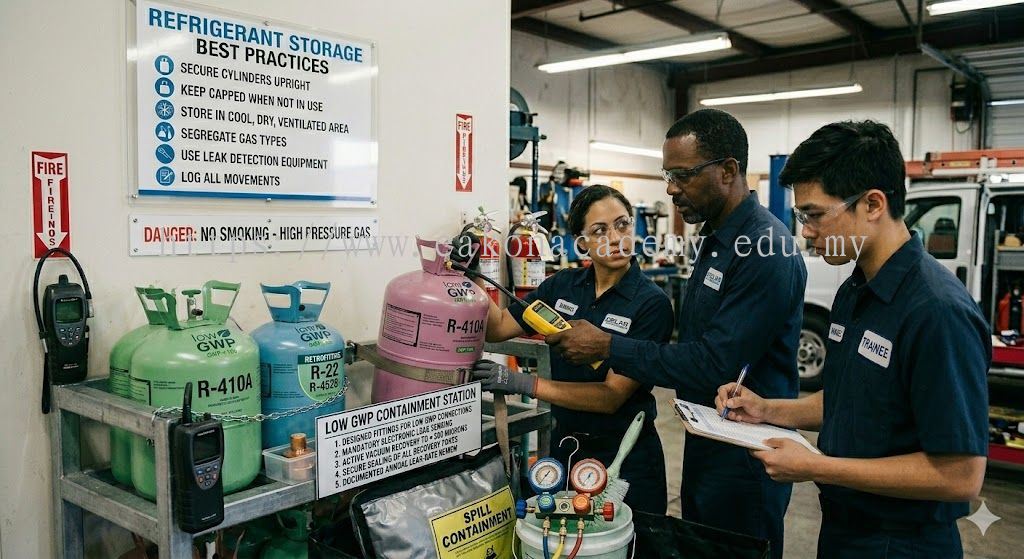
Low GWP Refrigerant Containment: Supporting Sustainable Cooling Solutions, Environmental Compliance, and Future-Ready HVACR Systems
Low GWP Refrigerant Containment has become a crucial focus within the HVACR (Heating, Ventilation, Air Conditioning, and Refrigeration) industry as governments, businesses, and environmental organizations work together to reduce greenhouse gas emissions and combat climate change. Low Global Warming Potential (GWP) refrigerants are increasingly being adopted as environmentally responsible alternatives to traditional refrigerants with higher climate impacts. While these refrigerants offer significant environmental benefits, effective containment remains essential to ensure maximum system efficiency, safety, regulatory compliance, and sustainability. Proper low GWP refrigerant containment helps organizations protect their investments, reduce refrigerant losses, improve operational performance, and contribute to global environmental protection initiatives.
Low GWP refrigerants are designed to have a substantially lower impact on global warming compared to conventional refrigerants. These refrigerants are commonly used in commercial HVAC systems, industrial refrigeration plants, supermarkets, cold storage facilities, manufacturing operations, data centers, healthcare facilities, hotels, and educational institutions. Despite their lower environmental impact, low GWP refrigerants must still be managed carefully to prevent leaks, maintain efficiency, and ensure safe operation. Effective low GWP refrigerant containment is therefore a key component of modern refrigeration and air conditioning management strategies.
One of the primary objectives of low GWP refrigerant containment is preventing refrigerant leakage throughout the operational life of HVACR equipment. Refrigerant leaks not only reduce cooling efficiency and increase energy consumption but can also result in equipment damage and unnecessary operating costs. Implementing robust containment measures helps maintain optimal refrigerant charge levels and ensures that systems continue to operate at peak performance. Proper containment also supports environmental goals by minimizing refrigerant emissions into the atmosphere.
System design and installation are critical factors in successful low GWP refrigerant containment. HVACR systems must be engineered and installed according to industry standards, manufacturer specifications, and applicable safety requirements. Proper piping design, secure fittings, high-quality brazing, pressure testing, and commissioning procedures help establish a leak-resistant system from the beginning. Investing in quality installation practices significantly reduces the likelihood of refrigerant losses and improves long-term system reliability.
Routine inspection and preventive maintenance are essential components of low GWP refrigerant containment. Regular maintenance activities help identify potential issues before they result in refrigerant leaks or system failures. Technicians should perform leak detection testing, inspect valves and connections, monitor operating pressures, evaluate system performance, and verify refrigerant charge levels. Preventive maintenance programs not only protect refrigerants but also enhance equipment efficiency and reduce maintenance expenses.
Advanced leak detection technologies play an increasingly important role in low GWP refrigerant containment. Modern HVACR facilities utilize electronic leak detectors, infrared sensors, gas monitoring systems, and automated detection technologies to identify leaks quickly and accurately. Early detection enables technicians to address problems before significant refrigerant loss occurs, reducing environmental impact and preventing costly downtime. Continuous monitoring systems are particularly valuable in large commercial and industrial applications where refrigerant inventories are substantial.
Proper refrigerant recovery, recycling, and reclamation procedures are also fundamental to low GWP refrigerant containment. During servicing, retrofitting, repairs, or equipment decommissioning, refrigerants must be recovered using certified recovery equipment and stored in approved cylinders. Recovered refrigerants can often be reclaimed and reused, supporting sustainable resource management and reducing the need for new refrigerant production. These practices align with environmental best practices and contribute to responsible refrigerant lifecycle management.
Safety considerations are especially important when implementing low GWP refrigerant containment strategies. Some low GWP refrigerants may possess mild flammability or require specialized handling procedures. Technicians must be trained to understand refrigerant characteristics, safety requirements, and emergency response protocols. Proper use of personal protective equipment (PPE), adherence to safety standards, and ongoing professional development help ensure safe and effective refrigerant management.
Environmental compliance is another major benefit of low GWP refrigerant containment. Regulatory agencies around the world are encouraging the adoption of environmentally friendly refrigerants and stricter refrigerant management practices. Organizations that implement effective containment programs are better positioned to meet regulatory requirements, reduce environmental liabilities, and demonstrate commitment to sustainable operations. These efforts also support corporate sustainability initiatives and strengthen environmental, social, and governance (ESG) objectives.
At eakonacadem.edu.my, HVACR professionals, technicians, engineers, facility managers, and industry stakeholders can access specialized training programs focused on low GWP refrigerant containment, refrigerant recovery and recycling, leak detection technologies, sustainable HVACR practices, environmental compliance, and refrigeration system optimization. Through comprehensive theoretical learning and practical hands-on training, participants gain the knowledge and skills necessary to manage low GWP refrigerants safely and efficiently.
As the HVACR industry continues its transition toward environmentally responsible cooling technologies, low GWP refrigerant containment will remain a critical element of sustainable refrigeration and air conditioning management. Organizations that prioritize containment strategies can improve system performance, reduce greenhouse gas emissions, enhance safety, strengthen regulatory compliance, and lower operating costs. Through professional education and industry-focused training offered by eakonacadem.edu.my, HVACR professionals can develop the expertise needed to support a greener, more efficient, and environmentally responsible future for cooling and refrigeration systems.
更多 EAKON ACADEMY SDN BHD 相关资料 Malaysia