Green Refrigerant Management: Driving Sustainable HVACR Solutions, Environmental Compliance, and Energy Efficiency
Green refrigerant management is becoming an essential focus within the HVACR (Heating, Ventilation, Air Conditioning, and Refrigeration) industry as organizations worldwide seek environmentally responsible cooling solutions. With increasing concerns about climate change, greenhouse gas emissions, ozone layer protection, and energy efficiency, businesses and HVAC professionals are adopting green refrigerant management practices to reduce environmental impact while maintaining reliable cooling performance. Green refrigerant management involves the proper selection, handling, monitoring, recovery, recycling, and disposal of environmentally friendly refrigerants that have lower Global Warming Potential (GWP) and minimal impact on the environment. For organizations committed to sustainability and regulatory compliance, implementing effective green refrigerant management strategies is a critical step toward achieving long-term environmental goals.
Green refrigerant management focuses on reducing dependence on traditional refrigerants that contribute significantly to global warming and environmental degradation. Many older refrigerants used in refrigeration and air conditioning systems possess high GWP values and can remain in the atmosphere for extended periods if released. As environmental regulations continue to evolve, industries are increasingly transitioning toward low-GWP refrigerants and natural refrigerants such as carbon dioxide (CO ), ammonia (NH ), hydrocarbons, and other environmentally friendly alternatives. These refrigerants offer improved environmental performance while supporting global sustainability initiatives and climate protection efforts.
One of the most important aspects of green refrigerant management is refrigerant containment and leak prevention. Even environmentally friendly refrigerants should be properly managed to prevent unnecessary emissions and system inefficiencies. Regular leak inspections, preventive maintenance programs, pressure testing, and advanced leak detection technologies help ensure that refrigerants remain safely contained within HVACR systems. Effective containment practices improve equipment performance, reduce refrigerant replacement costs, and support environmental protection objectives.
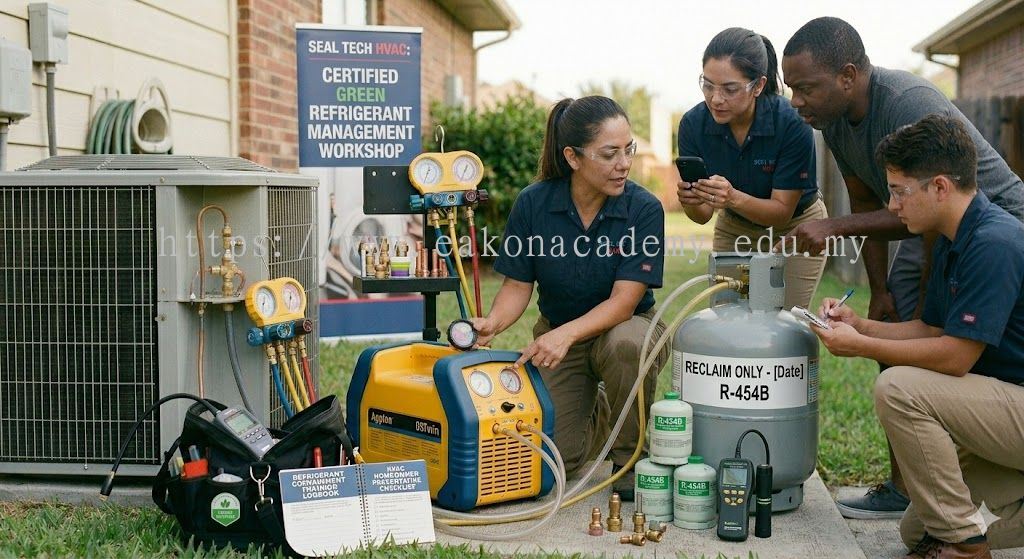
Proper refrigerant recovery and recycling are also essential elements of green refrigerant management. During servicing, equipment upgrades, retrofits, or system decommissioning, refrigerants should be recovered using certified equipment rather than being released into the atmosphere. Recovered refrigerants can often be recycled, reclaimed, or reused depending on their condition and regulatory requirements. These practices support resource conservation, reduce environmental waste, and contribute to a circular economy within the HVACR sector.
Energy efficiency is closely connected to green refrigerant management. HVACR systems that utilize environmentally friendly refrigerants and maintain proper refrigerant charge levels typically operate more efficiently than poorly maintained systems. Optimized refrigerant performance improves heat transfer efficiency, reduces compressor workload, lowers electricity consumption, and decreases operating costs. Businesses that implement green refrigerant management strategies often experience significant energy savings while reducing their carbon footprint.
The adoption of low-GWP refrigerants is a major driver of green refrigerant management initiatives. Many industries are transitioning toward refrigerants that align with international environmental agreements and sustainability standards. These refrigerants help organizations meet environmental compliance requirements while future-proofing their cooling infrastructure against evolving regulations. Proper training and technical expertise are necessary to ensure the safe and effective implementation of these next-generation refrigerants.
Technician education and professional development play a crucial role in successful green refrigerant management. HVACR professionals must understand refrigerant properties, environmental regulations, leak detection methods, refrigerant recovery procedures, and energy-efficient system design. Continuous training ensures that technicians remain updated on emerging refrigerant technologies and best practices. Skilled professionals are essential for maintaining system integrity and maximizing the environmental benefits of green refrigerant solutions.
Advanced monitoring technologies further enhance green refrigerant management programs. Smart HVACR controls, automated leak detection systems, remote monitoring platforms, and predictive maintenance tools allow organizations to track refrigerant performance in real time. These technologies help identify issues early, improve maintenance planning, and ensure optimal system efficiency while reducing environmental risks.
Corporate sustainability goals are increasingly driving investment in green refrigerant management. Businesses that prioritize environmentally responsible refrigerant practices can improve their environmental, social, and governance (ESG) performance, strengthen their reputation, and demonstrate commitment to sustainable operations. Green refrigerant management also supports compliance with national environmental regulations and global climate initiatives aimed at reducing greenhouse gas emissions.
At eakonacadem.edu.my, HVACR professionals, technicians, facility managers, and industry stakeholders can access specialized training programs focused on green refrigerant management. These programs cover low-GWP refrigerant technologies, refrigerant recovery and recycling, leak prevention strategies, environmental compliance requirements, energy efficiency optimization, and sustainable HVACR practices. Through comprehensive theoretical instruction and practical hands-on training, participants develop the skills necessary to implement environmentally responsible refrigerant management strategies effectively.
As the HVACR industry continues to evolve toward greater sustainability, green refrigerant management will remain a critical component of modern cooling and refrigeration operations. Organizations that embrace green refrigerant management can reduce environmental impact, improve energy efficiency, lower operating costs, and strengthen regulatory compliance. Through industry-focused education and professional training offered by eakonacadem.edu.my, HVACR professionals can gain the expertise needed to support a greener, more sustainable, and environmentally responsible future for refrigeration and air conditioning systems.
更多 EAKON ACADEMY SDN BHD 相关资料 Malaysia