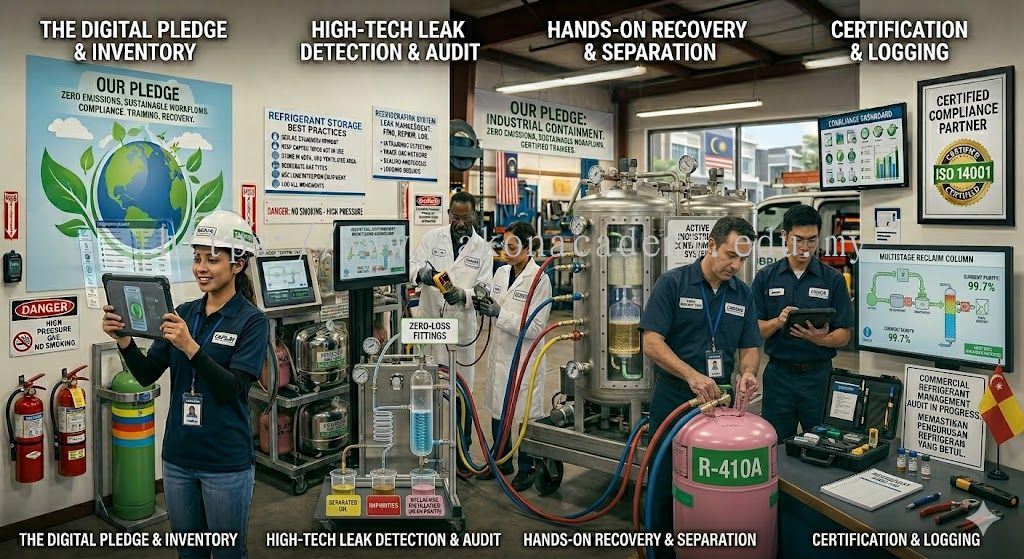
Commercial HVAC Refrigerant Management: Best Practices for Compliance, Efficiency, and Environmental Sustainability
Commercial HVAC refrigerant management is a critical aspect of maintaining efficient, reliable, and environmentally responsible heating, ventilation, air conditioning, and refrigeration systems. As commercial buildings, shopping malls, hotels, hospitals, manufacturing facilities, office complexes, educational institutions, and data centers continue to rely heavily on HVAC systems for indoor comfort and operational efficiency, proper refrigerant management has become more important than ever. Effective commercial HVAC refrigerant management helps organizations reduce refrigerant emissions, improve system performance, comply with environmental regulations, lower operating costs, and support long-term sustainability goals. For businesses operating in Malaysia and throughout the region, understanding and implementing professional refrigerant management practices is essential for achieving both operational excellence and environmental compliance.
Commercial HVAC refrigerant management involves the complete lifecycle control of refrigerants used in cooling systems, from procurement and storage to installation, monitoring, maintenance, recovery, recycling, and disposal. Refrigerants are essential for heat transfer within HVAC systems, but many traditional refrigerants possess high Global Warming Potential (GWP) and can contribute significantly to climate change if released into the atmosphere. Therefore, organizations must implement structured refrigerant management programs to ensure proper handling and containment throughout the operational life of their HVAC equipment.
One of the most important components of commercial HVAC refrigerant management is leak prevention and detection. Refrigerant leaks can reduce cooling efficiency, increase energy consumption, damage system components, and create environmental concerns. Regular inspections using electronic leak detectors, ultrasonic leak detection technology, pressure testing equipment, and monitoring systems allow technicians to identify leaks before they become major problems. Early leak detection minimizes refrigerant loss, protects the environment, and reduces maintenance expenses.
Preventive maintenance is another essential element of commercial HVAC refrigerant management. Routine servicing helps ensure that refrigerant levels remain within manufacturer specifications and that system components operate efficiently. Maintenance activities such as coil cleaning, pressure checks, filter replacement, valve inspections, and compressor performance evaluation contribute to optimal refrigerant performance and system reliability. Well-maintained systems experience fewer breakdowns, consume less energy, and have longer operational lifespans.
Proper refrigerant recovery and recycling procedures are also fundamental to commercial HVAC refrigerant management. During repairs, upgrades, retrofits, or equipment decommissioning, refrigerants should be safely recovered using certified recovery equipment rather than released into the atmosphere. Recovered refrigerants can often be recycled or reclaimed for future use, reducing waste and supporting sustainable HVAC practices. These procedures help businesses comply with environmental standards while minimizing the environmental impact of refrigerant handling activities.
Energy efficiency and refrigerant management are closely connected. Commercial HVAC systems that maintain correct refrigerant charge levels operate more efficiently and consume less electricity. Undercharged or overcharged systems often experience reduced performance and increased energy costs. Through regular monitoring and professional refrigerant management practices, organizations can optimize system efficiency, improve occupant comfort, and reduce utility expenses. This contributes to both financial savings and environmental sustainability.
Technician training and professional competency are critical factors in successful commercial HVAC refrigerant management. HVAC professionals must understand refrigerant characteristics, leak detection methods, environmental regulations, safety procedures, recovery techniques, and emerging low-GWP refrigerant technologies. Continuous professional development ensures that technicians remain knowledgeable about evolving industry requirements and best practices. Skilled technicians play a vital role in maintaining system integrity and supporting organizational compliance objectives.
Digital monitoring technologies are increasingly becoming part of advanced commercial HVAC refrigerant management programs. Smart sensors, automated leak detection systems, building management systems (BMS), and remote monitoring platforms provide real-time insights into HVAC performance. These technologies allow facility managers to detect abnormalities quickly, improve maintenance planning, and reduce refrigerant-related risks before they affect operations.
Environmental stewardship is a major driver behind commercial HVAC refrigerant management. Organizations are under increasing pressure to reduce greenhouse gas emissions and support sustainable business practices. Effective refrigerant management programs help businesses lower their environmental footprint, demonstrate corporate responsibility, and align with sustainability initiatives. Proper refrigerant handling also contributes to compliance with environmental regulations and industry standards governing HVAC operations.
At eakonacadem.edu.my, HVAC professionals, facility managers, maintenance personnel, and industry stakeholders can access specialized training programs focused on commercial HVAC refrigerant management. These programs cover refrigerant containment, leak detection, refrigerant recovery and recycling, environmental compliance, energy efficiency optimization, safety procedures, and sustainable HVAC practices. Through a combination of theoretical knowledge and practical hands-on training, participants develop the expertise needed to manage refrigerants professionally and responsibly.
As commercial facilities continue to prioritize energy efficiency, environmental compliance, and operational reliability, commercial HVAC refrigerant management will remain a critical component of successful building management strategies. Organizations that invest in effective refrigerant management practices can improve system performance, reduce environmental impact, lower operating costs, and strengthen regulatory compliance. Through industry-focused education and professional development opportunities provided by eakonacadem.edu.my, HVAC professionals can build the knowledge and skills necessary to support a more sustainable, efficient, and environmentally responsible future for the commercial HVAC industry.
更多 EAKON ACADEMY SDN BHD 相关资料 Malaysia