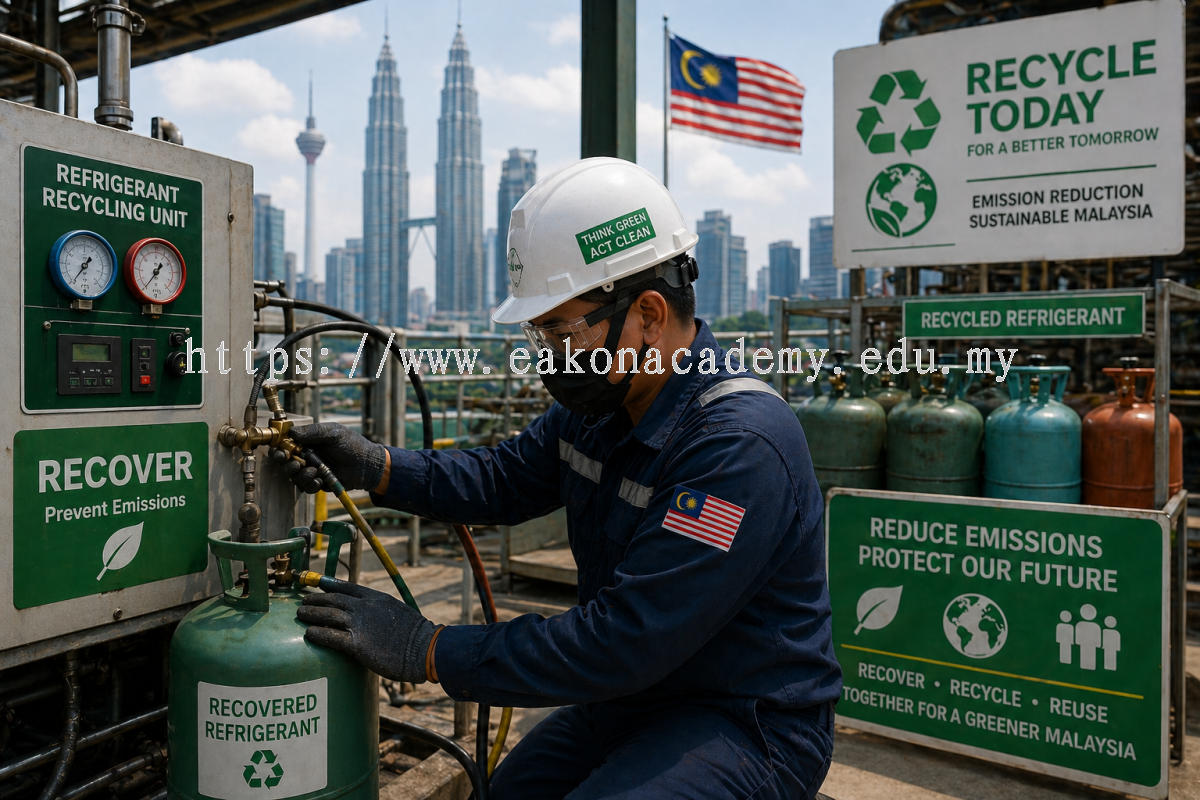
REFRIGERANT RECYCLING EMISSION REDUCTION MALAYSIA DOE
Refrigerant recycling emission reduction in Malaysia under the Department of Environment (DOE) is a key environmental initiative focused on minimizing greenhouse gas emissions and promoting sustainable refrigerant management within the HVACR (Heating, Ventilation, Air Conditioning, and Refrigeration) industry. Refrigerants such as hydrofluorocarbons (HFCs) and hydrochlorofluorocarbons (HCFCs) have high global warming potential (GWP), and improper disposal or venting of these substances can significantly contribute to climate change. Refrigerant recycling helps reduce emissions by cleaning and reprocessing used refrigerants so they can be safely reused in HVACR systems, reducing the need for new refrigerant production and preventing unnecessary environmental release. Understanding refrigerant recycling emission reduction Malaysia DOE is essential for technicians, engineers, contractors, and facility operators involved in refrigeration system maintenance and servicing.
The DOE framework encourages proper refrigerant recovery and recycling practices as part of a broader strategy to control emissions throughout the refrigerant lifecycle. Recycling involves removing refrigerant from a system, filtering and purifying it to remove moisture, oil, and impurities, and then reintroducing it into the system or storing it for future use. This process must be carried out using certified recovery and recycling equipment to ensure that the refrigerant meets industry purity standards. By recycling refrigerants instead of venting or improperly disposing of them, HVACR professionals can significantly reduce environmental impact while improving cost efficiency for businesses.
In Malaysia, refrigerant recycling emission reduction efforts are aligned with international environmental agreements such as the Montreal Protocol and the Kigali Amendment, which aim to phase down high-GWP refrigerants and encourage sustainable cooling technologies. As part of this transition, the HVACR industry is increasingly adopting low-GWP refrigerants such as R32, R290 (propane), and carbon dioxide (CO ) systems. However, even with newer refrigerants, recycling remains an important practice to minimize waste, reduce emissions, and support a circular economy within the refrigeration sector.
Training and competency development are crucial for effective refrigerant recycling emission reduction Malaysia practices. Skilled HVACR technicians must be trained in proper refrigerant recovery, recycling machine operation, contamination testing, and environmental compliance procedures. Institutions such as Eakon Academy (eakonacadem.edu.my) provide specialized HVACR training programs designed to meet DOE requirements and industry standards. These programs equip learners with practical skills and theoretical knowledge in refrigerant lifecycle management, ensuring they can perform recycling operations safely, efficiently, and in compliance with environmental regulations.
Another important aspect of refrigerant recycling is proper documentation and quality control. Facilities and service providers are required to maintain detailed records of recycled refrigerants, including source systems, processing methods, and storage conditions. This ensures transparency and allows regulatory authorities to verify compliance with DOE standards. Proper documentation also helps companies optimize refrigerant usage, reduce operational costs, and improve long-term sustainability performance.
In conclusion, refrigerant recycling emission reduction Malaysia DOE is a vital strategy for reducing environmental impact, promoting sustainable HVACR practices, and ensuring regulatory compliance. By implementing effective recycling processes, using certified equipment, adopting modern refrigerant technologies, and investing in professional training through institutions like Eakon Academy (eakonacadem.edu.my), Malaysia’s HVACR industry can significantly reduce emissions and support a circular, environmentally responsible refrigerant economy. These efforts contribute to national climate goals and help build a cleaner, greener, and more sustainable future.
更多 EAKON ACADEMY SDN BHD 相关资料 Malaysia