
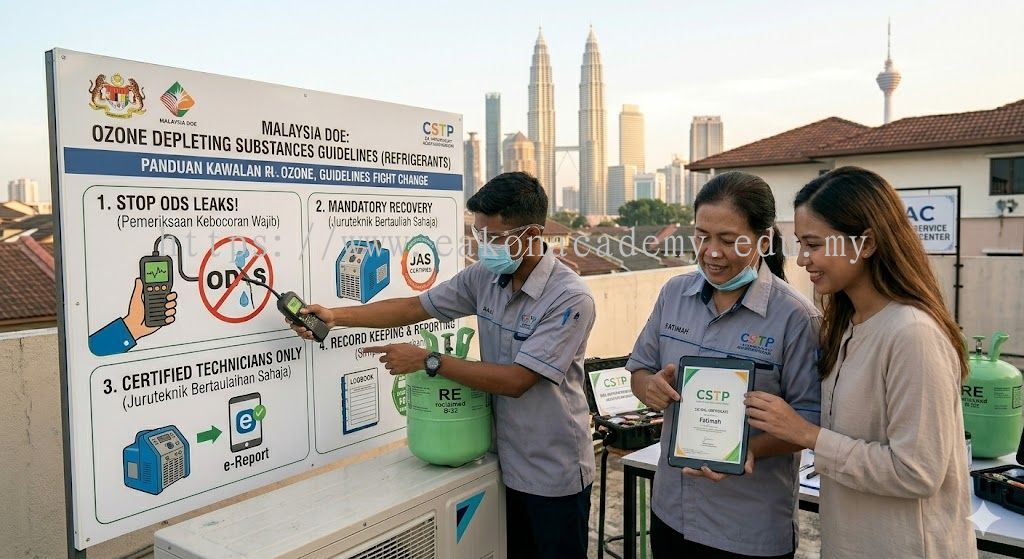
OZONE DEPLETING SUBSTANCES GUIDELINES MALAYSIA DOE
Ozone depleting substances guidelines Malaysia DOE refer to the official environmental regulations and control measures established by the Department of Environment (DOE) to manage, restrict, and phase out substances that damage the Earth’s ozone layer. These guidelines are a critical part of Malaysia’s environmental protection framework and are fully aligned with international agreements such as the Montreal Protocol, which aims to eliminate the production and use of ozone-depleting substances (ODS) worldwide. In the HVACR (Heating, Ventilation, Air Conditioning, and Refrigeration) industry, these guidelines are especially important because many traditional refrigerants contain chemicals that contribute to ozone depletion if released into the atmosphere.
In Malaysia, ozone depleting substances guidelines DOE cover a wide range of refrigerants and chemicals, including chlorofluorocarbons (CFCs), hydrochlorofluorocarbons (HCFCs), and other controlled substances that have been identified as harmful to the ozone layer. These substances are either being fully phased out or strictly regulated under DOE enforcement. The guidelines focus on controlling their import, usage, servicing, recovery, recycling, and disposal to ensure that emissions are minimized and gradually eliminated. In their place, environmentally friendly alternatives such as hydrofluoroolefins (HFOs), ammonia (NH ), carbon dioxide (CO ), and hydrocarbon refrigerants are promoted for use in modern HVACR systems.
A key component of ozone depleting substances guidelines Malaysia DOE is strict control over refrigerant handling practices. HVACR technicians are required to follow proper procedures when servicing or decommissioning equipment that may contain ODS refrigerants. This includes recovering refrigerants using certified equipment, preventing leaks during maintenance, and ensuring proper storage and disposal of recovered substances. Even small releases of ozone-depleting refrigerants can have long-term environmental impacts, making strict compliance essential for environmental protection and regulatory enforcement.
Training and certification are essential elements in ensuring compliance with ozone depleting substances guidelines Malaysia DOE. HVACR professionals must be properly trained to identify controlled substances, understand environmental regulations, and apply safe handling procedures in real-world applications. Without proper training, improper handling can lead to environmental damage, legal penalties, and safety risks. Institutions such as Eakon Academy play an important role in providing structured HVACR training programs that focus on ozone depleting substances guidelines, DOE compliance, and sustainable refrigerant management practices. These programs ensure that technicians are fully equipped to meet environmental standards and industry expectations.
Ozone depleting substances guidelines also contribute significantly to energy efficiency and system performance in HVACR operations. Older systems that use ODS refrigerants are often less efficient and more prone to leaks and breakdowns. By transitioning to compliant refrigerants and following proper maintenance procedures, HVACR systems can achieve better cooling performance, reduced energy consumption, and improved reliability. Compliance with DOE guidelines ensures that systems are not only environmentally safe but also economically efficient.
In addition to environmental and operational benefits, ozone depleting substances guidelines Malaysia DOE support the country’s broader sustainability and climate protection goals. By strictly controlling and eliminating ozone-depleting chemicals, Malaysia is actively contributing to global efforts to restore and protect the ozone layer. Companies that comply with these guidelines demonstrate strong environmental responsibility, enhance their corporate sustainability profile, and align with international environmental standards. Compliance also reduces regulatory risks and ensures smoother approval processes for HVACR operations and maintenance activities.
In conclusion, ozone depleting substances guidelines Malaysia DOE are essential for ensuring environmental protection, regulatory compliance, and sustainable HVACR practices. By following DOE regulations, adopting alternative refrigerants, and participating in professional training programs offered by institutions such as Eakon Academy, HVACR professionals can strengthen their expertise and contribute to a cleaner, safer, and more environmentally responsible future for Malaysia.
更多 EAKON ACADEMY SDN BHD 相关资料 Malaysia
