
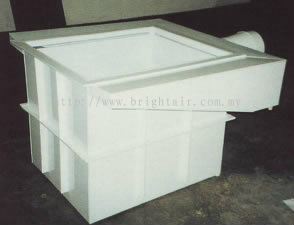
Mechanical Fabrication

Mechanical Fabrication

分类: Mechanical Fabrication 当前有货
欲了解更多详情,请游览我们的官方网站 brightair.com.my

详情

Mechanical Engineering • Fabrication Works

Mechanical Fabrication

Get dependable Mechanical Fabrication for industrial facilities—covering custom fabrication, structural supports, ducting, platforms, hoppers, skids, and equipment modifications with quality welding and accurate fit-up.

Accurate Fit-Up
Precise measurement and fabrication reduce rework and speed up installation on site.
Quality Welding
Controlled welding procedures support strong joints and dependable service life.
Site-Ready Delivery
Fabricated components prepared for fast installation, alignment, and commissioning.

What does Mechanical Fabrication include?

Mechanical Fabrication covers the manufacture and assembly of metal components used in industrial operations—ranging from frames and platforms to ducting, hoppers, chutes, guards, tanks, and custom equipment supports.

A well-managed fabrication scope improves safety and uptime by ensuring parts fit correctly, loads are supported properly, and installation is completed with minimal disruption.

Why invest in professional mechanical fabrication?

Industrial fabrication is not just “making metal.” It is about structural integrity, safe access, and consistent performance—especially in plants where vibration, heat, dust, and continuous operation are common.

Stronger Structures & Safer Access

Platforms, ladders, handrails, and supports are built for stability and worker safety.

  • Access platforms and walkways
  • Handrails, toe plates, guards
  • Equipment bases and frames

Custom Fit for Your Process

Fabrication based on site measurement reduces clashes and improves flow.

  • Chutes, hoppers, and transitions
  • Ducting and expansion joints
  • Custom brackets and supports

Reduced Downtime During Installation

Pre-fabricated spools and modules speed up shutdown work and commissioning.

  • Modular skids and assemblies
  • Pre-drilled and labeled parts
  • Faster alignment and tie-in
Common fabrication deliverables:
  • Dust collector ducting and supports
  • Equipment platforms and stair access
  • Hoppers, bins, and discharge chutes
  • Machine guards and safety covers
  • Structural frames and baseplates
  • Custom modifications and retrofits

How does a mechanical fabrication project work?

We deliver fabrication through a controlled workflow—from site measurement and drawings to fabrication, surface finishing, and onsite installation—so the final assembly meets function, safety, and durability expectations.

Fabrication workflow (typical)

  1. Site survey (measurements, clearance checks, load points).
  2. Design & detailing (shop drawings, material list, fabrication plan).
  3. Cutting & forming (plate, channel, beam, pipe, and sheet works).
  4. Welding & assembly (fit-up, welding, grinding, dimensional checks).
  5. Finishing (painting/coating, galvanizing coordination where required).
  6. Installation (rigging, alignment, anchoring, safety handover).

Quality checks you can expect

  • Dimensional verification before delivery
  • Weld inspection and visual acceptance checks
  • Trial fit for critical assemblies (when needed)
  • Load and safety review for platforms/handrails

Note: QA/QC scope depends on project requirements, operating conditions, and client specifications.

What maintenance is recommended after installation?

Fabricated components last longer with simple preventive checks—especially in dusty, wet, corrosive, or high-vibration environments. Scheduled inspections help you catch minor issues before they become shutdown problems.

Routine inspections

  • Check bolts, anchors, and baseplates for loosening
  • Inspect weld areas for cracks or corrosion
  • Review handrails/guards for damage or missing fasteners

For high-vibration equipment, inspection frequency should be increased.

Surface protection

  • Touch up paint or coating after abrasion or impact
  • Keep drain paths clear to prevent water pooling
  • Monitor corrosion hotspots (joints, edges, weld seams)

A small touch-up plan can extend service life significantly.

Good practice: Keep as-built drawings and part labels. It makes future modifications and spare part fabrication faster and more accurate.

FAQ

Frequently asked questions about industrial mechanical fabrication and onsite installation.

Common materials include mild steel, stainless steel, and selected alloys depending on the application. Material choice typically depends on load requirements, corrosion exposure, temperature, and client specifications.

Yes. We can fabricate based on approved drawings, site measurements, or existing samples. For tight-fit projects, a site survey helps confirm dimensions, clearances, and installation constraints to reduce rework.

Yes. Typical onsite scope includes rigging, alignment, anchoring, bracket/support installation, and retrofit modifications. Work is coordinated with plant safety procedures, access permits, and shutdown schedules where required.

Quality is managed through proper fit-up practices, welding procedure control, dimensional checks, and visual inspection. For critical applications, additional inspection requirements can be applied based on project specification.

Note: Always follow your facility’s safety procedures and local regulations for hot work, lifting, and onsite fabrication activities.

更多 BrightAir Engineering Sdn Bhd 相关资料
BrightAir Engineering Sdn Bhd
BrightAir Engineering Sdn Bhd Plant Mechanical Engineering Works in Penang, Pollution Control Engineering Malaysia, Fluid & Gas Piping System in Butterworth ~ BrightAir Engineering Sdn Bhd