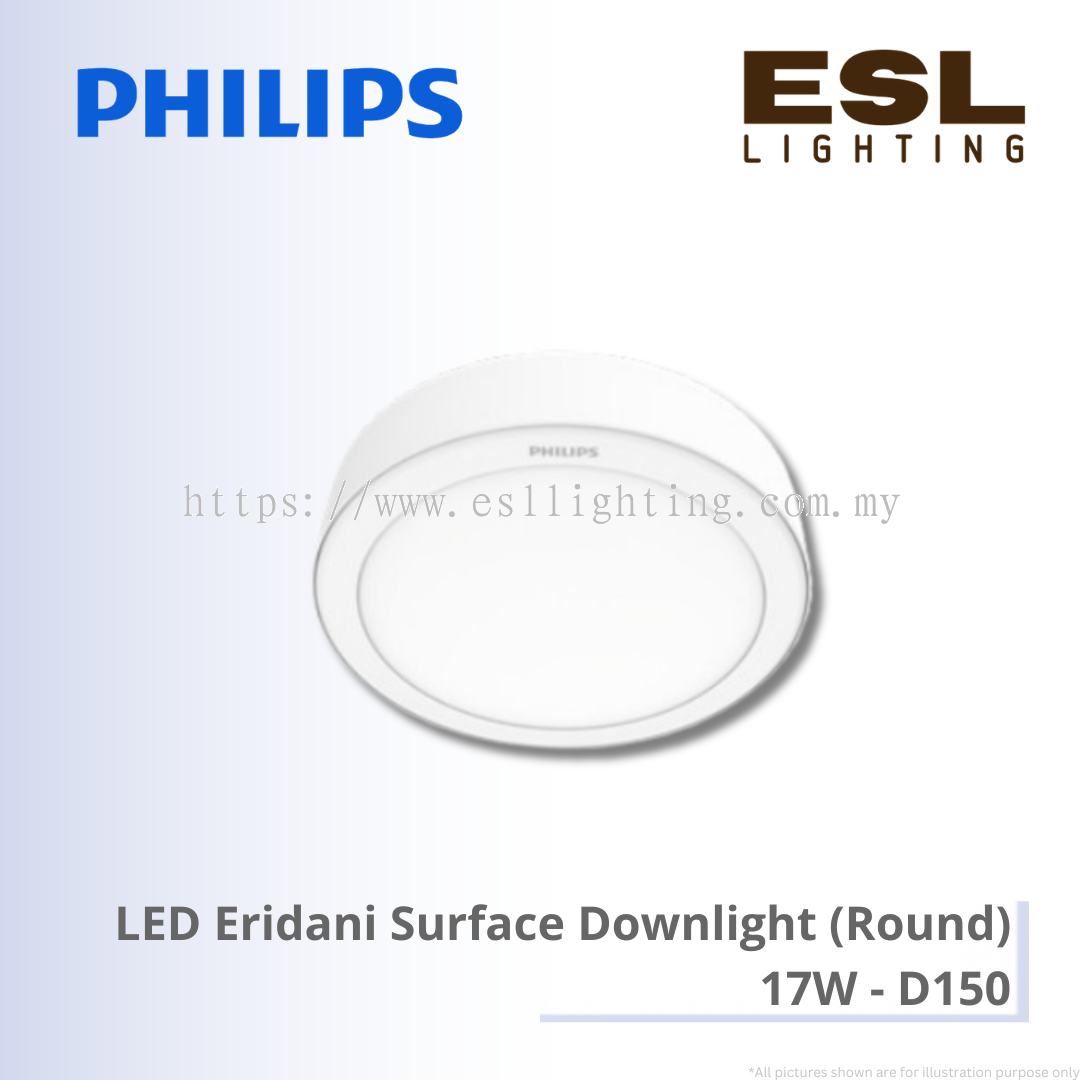
Q1: What is the difference between a surface downlight and a recessed downlight?
A: A surface downlight mounts directly onto flat surfaces like concrete ceilings, making it fully visible. A recessed downlight sits inside a false ceiling cutout so the fixture body remains hidden flush with the plasterboard.
Q2: Does the Philips Eridani 17W D150 require a false plaster ceiling?
A: No. This specific model is a surface-mounted ceiling light, meaning it installs straight onto solid concrete surfaces without needing any structural cuts.
Q3: What does the D150 code mean on Philips downlights?
A: The D150 code denotes the physical dimensions and structural profile tier of the light. For this surface model, it represents its footprint scale, which aligns closely with standard 6-inch architectural light classes.
Q4: Is the Philips Eridani Surface Downlight 17W dimmable?
A: No, this model is non-dimmable. Connecting it to an analog wall dimmer switch can cause visual flickering or permanent internal damage to the LED driver circuits.
Q5: Which color temperature should I choose: 3000K, 4000K, or 6500K?
A:
Choose 3000K (Warm White) for a cozy bedroom feel, 4000K (Cool White) for functional balanced areas like kitchens, and 6500K (Cool Daylight) for bright workspaces requiring extreme text clarity.
Q6: What is the lifespan of the Philips Eridani LED downlight series?
A:
It features a rated operational lifespan of 15,000 hours. If used for roughly 4 hours daily, the unit will continuously perform for over 10 years before requiring replacement.
Q7: How many lumens does the 17W Philips Eridani downlight produce?
A: The 3000K version generates 1190 lumens, while both the 4000K and 6500K options emit a slightly brighter 1275 lumens for enhanced operational visibility.
Q8: What does a CRI of 80 mean for my room?
A:
A Color Rendering Index (CRI) of 80 ensures that colors underneath the light appear highly accurate, natural, and accurately balanced to the human eye, preventing washed-out or green-tinted tones.
Q9: Can I install this surface downlight in a bathroom?
A: It can be used in dry zones of a bathroom (like vanity areas), but it is not recommended for wet zones or enclosed shower cubicles as it is an indoor-rated fixture sensitive to high ambient moisture.