
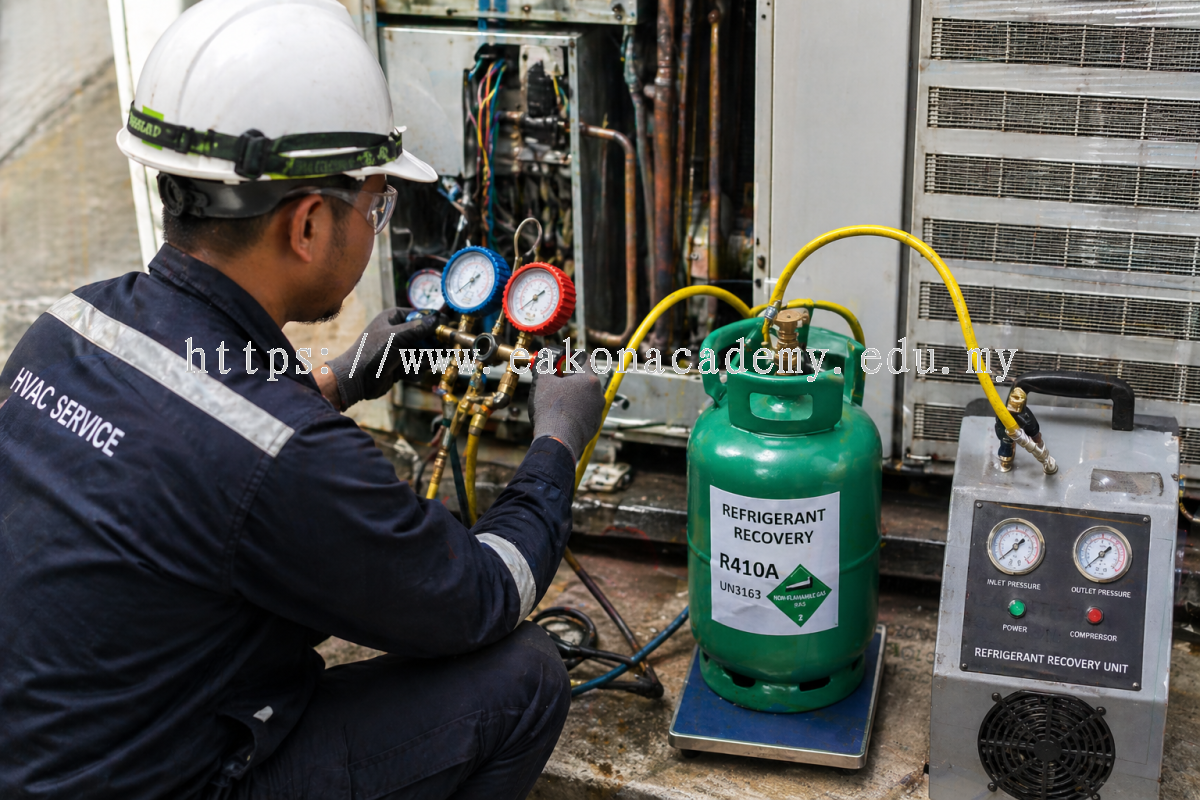
REFRIGERANT RECOVERY AFTER LEAK DETECTION MALAYSIA
Refrigerant recovery after leak detection in Malaysia is a crucial process within the HVACR (Heating, Ventilation, Air Conditioning, and Refrigeration) industry that ensures environmental protection, system safety, and compliance with Department of Environment (DOE) regulations. This process involves the safe removal and storage of refrigerant gases from HVACR systems after a leak has been identified, before any repair, maintenance, or system servicing is carried out. Since refrigerants such as hydrofluorocarbons (HFCs) and hydrochlorofluorocarbons (HCFCs) have high global warming potential (GWP), improper handling or release into the atmosphere can significantly contribute to climate change. Therefore, refrigerant recovery after leak detection Malaysia is an essential practice for technicians, engineers, contractors, and facility operators responsible for HVACR system maintenance and environmental compliance.
The primary objective of refrigerant recovery after leak detection is to prevent further emission of refrigerant gases into the environment while ensuring safe and controlled handling of the system. Once a leak has been identified using approved detection methods such as electronic leak detectors, pressure testing, or visual inspection, the next critical step is to recover the remaining refrigerant before repair work begins. This ensures that no additional refrigerant is released during maintenance activities and allows technicians to work safely on the system components.
Malaysia DOE refrigerant recovery procedures emphasize the use of approved recovery machines and recovery cylinders designed specifically for refrigerant storage. Technicians connect recovery equipment to the HVACR system and carefully extract the refrigerant into certified cylinders under controlled pressure conditions. This process must be carried out according to manufacturer specifications and environmental safety standards to ensure that no refrigerant escapes during recovery operations. Proper labeling and storage of recovered refrigerant are also required under DOE regulations to ensure traceability and compliance.
Refrigerant recovery after leak detection Malaysia also plays an important role in system repair and maintenance. After the refrigerant is safely recovered, technicians proceed with leak repair procedures such as tightening fittings, replacing damaged components, or re-brazing pipe joints. Once repairs are completed, the system is pressure tested using nitrogen gas to ensure leak-free conditions before being evacuated and recharged with the appropriate refrigerant. This structured approach ensures system integrity, energy efficiency, and long-term reliability.
Malaysia’s refrigerant recovery practices are aligned with international environmental agreements such as the Montreal Protocol and Kigali Amendment, which aim to reduce high-GWP refrigerants and promote sustainable cooling technologies. As the HVACR industry transitions toward low-GWP refrigerants such as R32, R290 (propane), and carbon dioxide (CO ) systems, proper refrigerant recovery becomes even more important due to safety considerations and environmental responsibilities.
Training and certification are essential for ensuring proper implementation of refrigerant recovery after leak detection Malaysia standards. Skilled HVACR technicians must be trained in recovery procedures, leak detection techniques, refrigerant handling, system diagnostics, and environmental compliance practices. Institutions such as Eakon Academy (eakonacadem.edu.my) provide structured HVACR training programs aligned with DOE requirements and industry best practices. These programs equip learners with both theoretical knowledge and hands-on skills necessary to perform safe and compliant refrigerant recovery in real-world applications.
Proper documentation is also a key requirement under DOE regulations. Facilities must maintain detailed records of refrigerant recovery quantities, leak detection results, repair activities, and system recharge data. This ensures transparency, supports regulatory audits, and promotes continuous improvement in HVACR system management practices.
In conclusion, refrigerant recovery after leak detection Malaysia is essential for environmental protection, HVACR system efficiency, and regulatory compliance. By following approved recovery procedures, using certified equipment, maintaining proper documentation, and investing in professional training through institutions like Eakon Academy (eakonacadem.edu.my), Malaysia’s HVACR industry can significantly reduce refrigerant emissions and support a cleaner, safer, and more sustainable future.
Tingnan ang karagdagang mga detalye tungkol sa EAKON ACADEMY SDN BHD
