
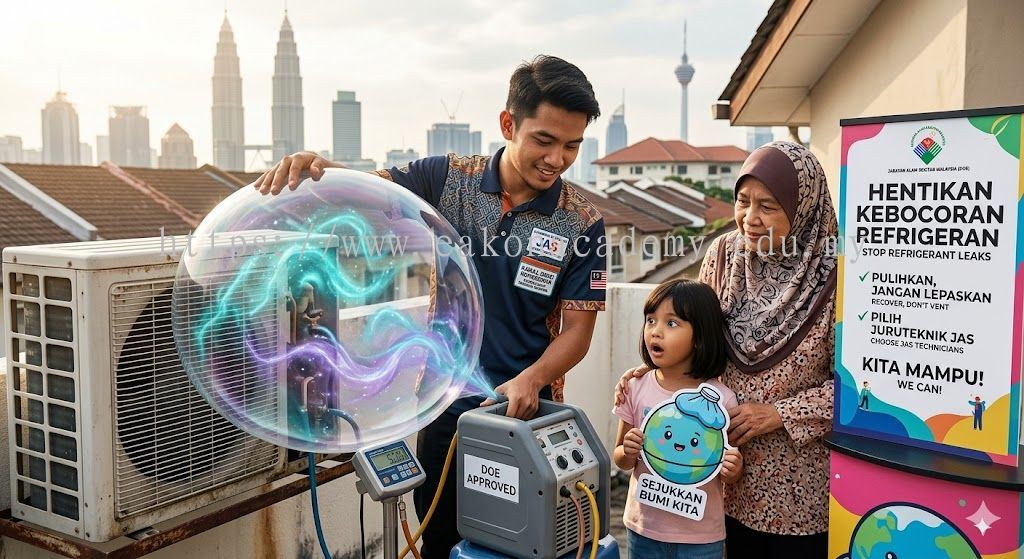
REFRIGERANT LEAK EMISSION CONTROL MALAYSIA DOE
Refrigerant leak emission control in Malaysia under the Department of Environment (DOE) is a critical environmental and regulatory focus aimed at reducing greenhouse gas emissions from HVACR (Heating, Ventilation, Air Conditioning, and Refrigeration) systems. Refrigerant leaks are one of the primary sources of uncontrolled emissions in the cooling industry, especially involving high global warming potential (GWP) gases such as hydrofluorocarbons (HFCs) and hydrochlorofluorocarbons (HCFCs). Even small, continuous leaks from air conditioning and refrigeration systems can accumulate over time and significantly contribute to climate change. As a result, refrigerant leak emission control Malaysia DOE regulations are designed to ensure proper system maintenance, early leak detection, and responsible refrigerant management practices across all sectors.
The DOE emphasizes strict compliance requirements for HVACR professionals and facility operators to prevent refrigerant leakage during installation, servicing, maintenance, and system decommissioning. Effective leak emission control begins with proper system design and installation using high-quality components and correct engineering practices. Regular inspection of piping, joints, valves, and compressors is essential to identify potential weak points that may cause leakage. Technicians are required to use specialized leak detection tools such as electronic leak detectors, pressure testing equipment, and ultraviolet dye methods to ensure early identification of refrigerant loss. By detecting and repairing leaks promptly, companies can significantly reduce environmental impact while improving system efficiency and reducing operational costs.
In Malaysia, refrigerant leak emission control regulations are also aligned with global environmental agreements such as the Montreal Protocol and the Kigali Amendment, which aim to phase down high-GWP refrigerants and promote sustainable cooling technologies. This has led to increased adoption of low-GWP refrigerants such as R32, R290 (propane), and CO -based systems, which are more environmentally friendly and less harmful in the event of leakage. However, even with modern refrigerants, proper leak control practices remain essential to ensure minimal environmental impact and optimal system performance.
Training and competency development play a vital role in achieving effective refrigerant leak emission control Malaysia DOE compliance. Skilled HVACR technicians must be trained in advanced leak detection methods, safe refrigerant handling, recovery procedures, and environmental safety standards. Institutions such as Eakon Academy (eakonacadem.edu.my) provide specialized HVACR training programs designed to meet DOE requirements and industry standards. These programs equip learners with hands-on experience and theoretical knowledge to manage refrigerant systems safely, reduce leak risks, and comply with environmental regulations. Well-trained technicians are essential in ensuring that leak control measures are implemented correctly and consistently across all HVACR operations.
Another important aspect of refrigerant leak emission control is proper maintenance planning and record-keeping. Facilities are required to maintain detailed logs of refrigerant usage, leak incidents, repair actions, and recovery activities. This documentation ensures transparency and allows regulatory authorities to monitor compliance effectively. Preventive maintenance schedules help identify potential issues before they escalate into major leaks, ensuring long-term system reliability and environmental protection.
In conclusion, refrigerant leak emission control Malaysia DOE is a vital component of environmental sustainability and HVACR industry regulation. It ensures that refrigerant leaks are detected, controlled, and minimized to reduce greenhouse gas emissions and protect the environment. By adopting best practices, using advanced leak detection technologies, and investing in professional training through institutions like Eakon Academy (eakonacadem.edu.my), the HVACR industry in Malaysia can achieve higher standards of safety, efficiency, and environmental responsibility. This commitment to leak control and compliance supports national climate goals and contributes to a cleaner and more sustainable future.
Tingnan ang karagdagang mga detalye tungkol sa EAKON ACADEMY SDN BHD
