
REFRIGERANT HANDLING EMISSION CONTROL MALAYSIA
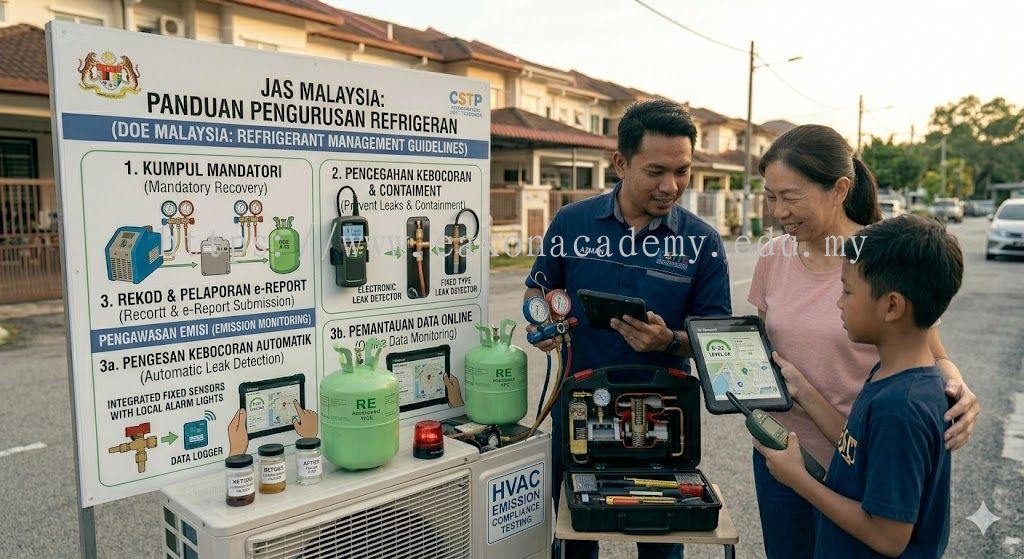
Refrigerant handling emission control in Malaysia is an essential aspect of environmental protection and regulatory compliance within the HVACR (Heating, Ventilation, Air Conditioning, and Refrigeration) industry. Under the supervision of the Department of Environment (DOE), strict guidelines have been established to ensure that refrigerant gases are handled, stored, recovered, and disposed of in a safe and environmentally responsible manner. These regulations are designed to reduce harmful emissions of high global warming potential (GWP) refrigerants such as HFCs and HCFCs, which contribute significantly to climate change when released into the atmosphere. Understanding refrigerant handling emission control Malaysia is crucial for technicians, contractors, engineers, and facility operators who work directly with cooling and refrigeration systems.
Proper refrigerant handling practices focus on minimizing leakage during installation, maintenance, and servicing of HVACR equipment. Technicians are required to follow standardized procedures that include the use of certified recovery machines, leak detection tools, and approved storage cylinders. By ensuring that refrigerants are not released into the environment during servicing activities, emission levels can be significantly reduced. Preventive maintenance also plays a key role in emission control, as regular inspection of piping, valves, and system components helps identify potential leaks before they become serious environmental hazards. These best practices not only support environmental sustainability but also improve system performance and energy efficiency.
In Malaysia, refrigerant handling emission control regulations are closely aligned with international environmental agreements such as the Montreal Protocol and the Kigali Amendment. These global initiatives aim to phase down high-GWP refrigerants and promote the use of low-impact alternatives. As a result, the HVACR industry is gradually transitioning toward environmentally friendly refrigerants such as R32, R290 (propane), and carbon dioxide (CO ) systems. These modern refrigerants offer lower environmental impact while maintaining high cooling efficiency, making them an important part of Malaysia’s long-term sustainability strategy.
Training and certification are critical components in achieving effective refrigerant handling emission control Malaysia standards. Skilled technicians are essential to ensure that refrigerants are managed safely and in compliance with DOE requirements. Institutions such as Eakon Academy (eakonacadem.edu.my) provide structured HVACR training programs that focus on refrigerant safety, recovery techniques, emission control procedures, system diagnostics, and environmental compliance documentation. These programs equip learners with both theoretical knowledge and practical skills, enabling them to perform their duties responsibly and reduce environmental impact in real-world applications.
Another important aspect of emission control is proper refrigerant lifecycle management. This includes tracking refrigerant usage, maintaining accurate records of recovery and recycling activities, and ensuring safe storage in approved containers. Companies are required to implement transparent documentation systems to demonstrate compliance with DOE regulations. This helps regulatory authorities monitor industry practices while encouraging businesses to adopt more sustainable and environmentally responsible operations. Proper documentation also supports audits and reinforces corporate accountability in environmental management.
In conclusion, refrigerant handling emission control Malaysia is a vital part of environmental sustainability and HVACR industry regulation. It ensures that refrigerants are managed safely throughout their lifecycle, reducing emissions and protecting the environment from harmful greenhouse gases. By adopting best practices, transitioning to low-GWP refrigerants, and investing in professional training through institutions like Eakon Academy (eakonacadem.edu.my), Malaysia’s HVACR industry can achieve higher standards of compliance, efficiency, and sustainability. This commitment to responsible refrigerant management supports national environmental goals and contributes to a cleaner, greener future for all.
Tingnan ang karagdagang mga detalye tungkol sa EAKON ACADEMY SDN BHD
