
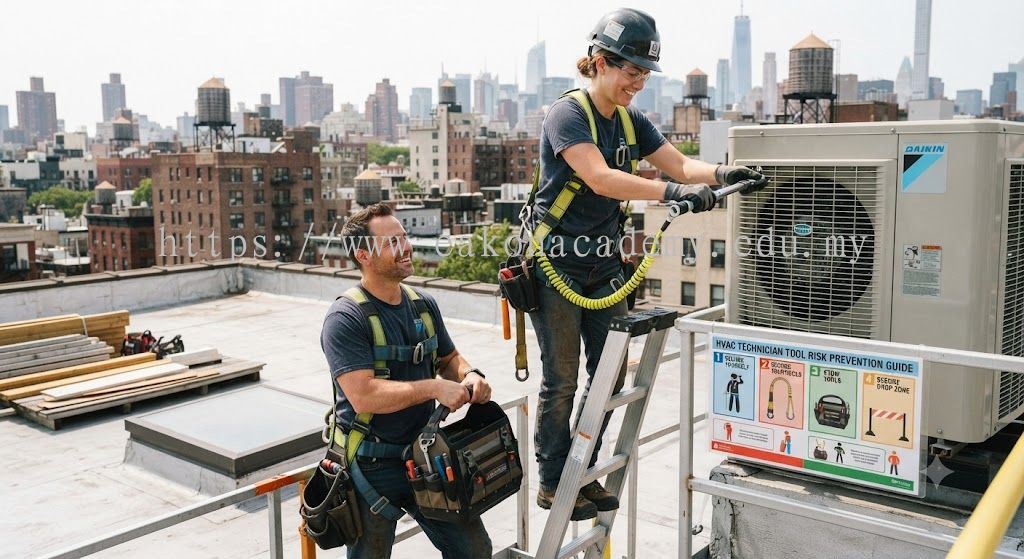
Air Conditioning Technician Tool Risk Prevention Guide: Improving HVAC Workplace Safety and Professional Installation Practices
Air conditioning technician tool risk prevention guide is an essential resource for HVAC professionals who aim to improve workplace safety, reduce accidents, and enhance the quality of air conditioning installation, maintenance, and repair activities. HVAC technicians depend on a wide range of tools and equipment every day, including power tools, electrical testing devices, refrigeration service instruments, hand tools, lifting equipment, and installation accessories. Without proper tool management and safety procedures, these tools can become potential hazards that may cause injuries, equipment damage, project delays, and workplace incidents. A comprehensive air conditioning technician tool risk prevention guide helps technicians understand common tool-related hazards, implement effective control measures, and develop safe working habits. At Eakon Academy (eakonacadem.edu.my), our HVAC training programs focus on practical safety knowledge, professional tool handling techniques, and industry-standard procedures to prepare technicians for safe and efficient air conditioning operations.
Proper tool risk prevention begins with understanding the potential hazards associated with HVAC equipment. Air conditioning technicians often work with sharp tools such as pipe cutters, knives, and sheet metal tools that can cause cuts or puncture injuries if handled incorrectly. Power tools such as drills, grinders, and impact drivers can create risks involving electrical shock, rotating components, excessive vibration, and accidental activation. Refrigeration tools including manifold gauges, vacuum pumps, recovery machines, and pressure testing equipment require careful operation to prevent refrigerant leaks, pressure-related accidents, and equipment failure. Identifying these risks before starting work allows technicians to apply appropriate safety controls and minimize unnecessary hazards.
A key element of an effective air conditioning technician tool risk prevention guide is conducting regular tool inspections. Before beginning any installation or maintenance task, technicians should check all tools for signs of damage, wear, corrosion, loose components, or improper operation. Electrical tools should be inspected for damaged cables, broken insulation, defective switches, and battery issues. Hand tools should be checked for secure handles, sharp cutting surfaces, and proper alignment. Measuring instruments such as multimeters, clamp meters, and pressure gauges should be calibrated regularly to maintain accuracy. Routine inspections help prevent equipment failure and ensure technicians are working with safe and reliable tools.
Selecting the correct tool for each HVAC task is another important safety practice. Using unsuitable tools can increase the risk of accidents and reduce installation quality. For example, using improper flaring tools may create refrigerant leaks, incorrect torque application may damage connections, and unsuitable drilling equipment may result in unsafe mounting conditions for indoor and outdoor air conditioning units. Professional technicians should always follow manufacturer recommendations and use tools designed specifically for HVAC applications. Proper tool selection improves efficiency, protects equipment, and supports high-quality installation outcomes.
Safe electrical tool handling is a major focus within HVAC tool risk prevention. Air conditioning systems involve electrical components such as compressors, fan motors, control boards, isolators, and circuit breakers. Technicians must use properly rated electrical testing instruments, insulated hand tools, and appropriate personal protective equipment when performing electrical work. Electrical isolation procedures, lockout and tagout practices, and voltage verification should be followed before maintenance activities begin. These safety measures reduce the possibility of electric shock, short circuits, and damage to expensive HVAC components.
Tool storage and organization also play an important role in preventing workplace incidents. Disorganized tools can create trip hazards, increase search time, and lead to accidental damage. HVAC technicians should maintain organized toolboxes, storage bags, tool belts, and service carts to keep equipment secure and accessible. Sharp tools should be stored safely, power tools should be protected from moisture, and heavy equipment should be positioned correctly to prevent falling hazards. Good housekeeping creates a safer working environment and improves overall job efficiency.
Working at height requires additional tool risk prevention methods for HVAC technicians. Many air conditioning installations involve rooftop outdoor units, ceiling-mounted systems, elevated pipework, and commercial building applications. In these situations, tools should be secured using tool lanyards, tethering systems, or suitable retention devices to prevent dropped object incidents. Technicians should use certified ladders, scaffolding, and elevated work platforms while maintaining proper balance and safe access procedures. Preventing dropped tools protects workers below, customers, and surrounding property from potential injuries or damage.
Personal protective equipment (PPE) is another essential component of HVAC tool safety. Technicians should wear suitable safety equipment including protective gloves, safety glasses, safety footwear, helmets, hearing protection, and appropriate clothing depending on the work environment. PPE helps reduce exposure to common hazards such as sharp edges, flying particles, electrical risks, refrigerant contact, and hot surfaces during brazing operations. Combining PPE with safe tool handling procedures creates multiple layers of protection for HVAC professionals.
Training and continuous improvement are important factors in reducing tool-related risks. HVAC technicians should receive hands-on training covering safe tool operation, hazard identification, equipment inspection, emergency procedures, and proper maintenance practices. Regular safety training ensures technicians remain updated with modern HVAC technologies, new tools, and changing workplace safety requirements. Companies that prioritize professional training often experience fewer accidents, improved productivity, and stronger customer confidence.
At Eakon Academy (eakonacadem.edu.my), we are committed to developing skilled HVAC professionals through practical and industry-focused training programs. Our courses emphasize safe air conditioning installation practices, professional tool handling, workplace hazard prevention, electrical safety, refrigerant management, equipment maintenance, and occupational safety compliance. By following an effective air conditioning technician tool risk prevention guide, technicians can reduce workplace hazards, improve operational performance, protect valuable HVAC systems, and deliver higher-quality services to customers. Proper tool safety management is not only a requirement for professional HVAC work but also a foundation for building a safer, more efficient, and successful air conditioning industry.
More detail about EAKON ACADEMY SDN BHD Malaysia
