
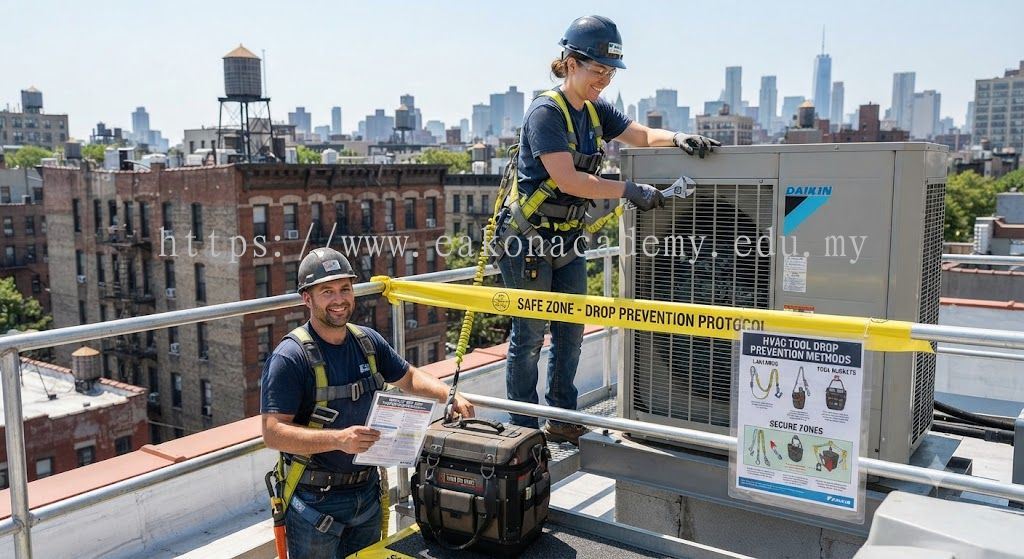
Air Conditioning Technician Tool Drop Prevention Methods: Essential Safety Strategies for HVAC Professionals Working at Height
Air conditioning technician tool drop prevention methods are a critical aspect of workplace safety in the HVAC industry, particularly for technicians performing installation, servicing, maintenance, and repair work at elevated locations. HVAC professionals frequently work on rooftops, scaffolding, ladders, elevated work platforms, suspended ceilings, and mechanical plant rooms where the accidental dropping of tools can create significant hazards. A falling screwdriver, cordless drill, pipe cutter, torque wrench, multimeter, or other HVAC tool can cause serious injuries to workers below, damage expensive air conditioning equipment, delay project completion, and expose employers to unnecessary legal and financial risks. Implementing effective air conditioning technician tool drop prevention methods helps eliminate these hazards while improving efficiency, professionalism, and compliance with occupational safety standards. At Eakon Academy (eakonacadem.edu.my), we provide comprehensive HVAC safety training that equips technicians with practical skills in dropped object prevention, safe tool management, working at height, and risk assessment to ensure every installation and maintenance project is completed safely and professionally.
The first step in preventing dropped tools is conducting a thorough workplace hazard assessment before any air conditioning work begins. HVAC technicians should evaluate whether installation or servicing will take place on rooftops, elevated platforms, ladders, scaffolding, ceiling spaces, or confined areas where dropped tools may endanger workers or the public. During the assessment, technicians should identify potential fall zones, establish exclusion areas below elevated workspaces, inspect environmental conditions, and determine the appropriate tool retention systems required for the task. A comprehensive risk assessment allows technicians to implement preventive measures before work starts, significantly reducing the likelihood of dropped object incidents.
One of the most effective tool drop prevention methods is the use of tool tethering systems. Tool lanyards, retractable tool tethers, wrist straps, harness attachment points, and anchor systems secure hand tools to the technician or a designated anchor point, preventing accidental drops. Common HVAC tools such as cordless drills, impact drivers, screwdrivers, pliers, adjustable wrenches, flaring tools, and multimeters can all be fitted with appropriate tethering solutions. Selecting the correct tether based on the weight, size, and frequency of tool use is essential to ensure safe operation without restricting technician movement. Properly installed tool tethering systems provide continuous protection while allowing technicians to work efficiently in elevated environments.
Maintaining organized work areas is another important component of air conditioning technician tool drop prevention methods. Loose tools scattered across rooftops, ladders, scaffolding, or ceiling spaces increase the likelihood of accidental falls. Technicians should use well-organized tool belts, tool pouches, magnetic holders, and secure toolboxes to keep equipment properly stored when not in use. Frequently used tools should remain attached to tethering systems and returned to designated storage locations immediately after each task. Good housekeeping not only prevents dropped objects but also reduces trip hazards and improves overall workplace productivity.
Regular inspection of tools and tethering equipment is equally important. Before every installation or maintenance project, technicians should inspect lanyards, connectors, carabiners, anchor points, and attachment rings for signs of wear, corrosion, fraying, or mechanical damage. Damaged tethering equipment should be removed from service immediately and replaced with certified components. Likewise, HVAC hand tools and power tools should be inspected for cracked handles, loose parts, damaged batteries, defective switches, or worn cutting edges. Preventive maintenance of tools ensures reliable performance while minimizing unexpected failures that could contribute to dropped object incidents.
Working at height requires additional safety precautions beyond tool tethering. Certified ladders, scaffolding, elevated work platforms, and fall arrest systems should always be used according to manufacturer recommendations and occupational safety regulations. Technicians should maintain three points of contact when climbing ladders, avoid carrying loose tools in their hands during ascent or descent, and use hoisting systems or tool bags to transport equipment safely. Stable working platforms reduce unnecessary movement and improve technician balance, making accidental tool drops far less likely during air conditioning installation or servicing.
Weather conditions can significantly affect dropped object risks during outdoor HVAC work. High winds, rain, slippery rooftops, poor lighting, and extreme temperatures may reduce grip strength and tool control. Before beginning rooftop condenser installations or elevated servicing activities, technicians should assess weather conditions and postpone work if conditions become unsafe. When work must continue, additional safety controls such as enhanced tool tethering, secure storage containers, and improved communication between team members should be implemented to maintain safe working conditions.
Proper manual handling techniques also contribute to effective tool drop prevention. Technicians often carry multiple tools while moving between work locations, climbing ladders, or accessing rooftop installations. Overloading tool belts or carrying excessive equipment can reduce mobility and increase fatigue, making accidental drops more likely. Planning work activities, minimizing unnecessary tool movement, and carrying only essential equipment improve technician comfort while reducing the risk of dropped objects. Heavy equipment such as vacuum pumps, recovery machines, nitrogen cylinders, and compressors should always be lifted using appropriate mechanical aids or team lifting procedures whenever possible.
Training and competency development are fundamental to maintaining effective tool drop prevention practices. HVAC technicians should receive regular instruction covering dropped object awareness, tool tethering techniques, equipment inspection, working at height procedures, hazard identification, emergency response, and safe work planning. Practical hands-on training enables technicians to develop confidence in using tethering systems correctly while reinforcing the importance of maintaining a proactive safety culture. Supervisors should conduct routine toolbox meetings, workplace inspections, and safety audits to ensure drop prevention procedures remain consistently applied across all installation and maintenance activities.
Air conditioning technician tool drop prevention methods also support regulatory compliance and demonstrate an organization's commitment to workplace safety. Employers have a legal responsibility to provide safe systems of work that protect employees, contractors, customers, and members of the public. Incorporating dropped object prevention into standard operating procedures reduces workplace incidents, minimizes insurance claims, enhances company reputation, and improves customer confidence. Strong safety performance also contributes to higher employee morale and increased operational efficiency across HVAC projects.
At Eakon Academy (eakonacadem.edu.my), we are dedicated to preparing HVAC professionals with the practical knowledge and technical skills needed to perform air conditioning installation and maintenance safely and efficiently. Our comprehensive training programs cover tool drop prevention methods, working at height safety, hazard identification, risk assessment, tool tethering systems, ladder safety, equipment inspection, manual handling, and occupational safety compliance. By mastering air conditioning technician tool drop prevention methods, technicians can significantly reduce workplace hazards, protect valuable equipment, improve installation quality, and build successful careers within the air conditioning and refrigeration industry. Investing in proper safety procedures, modern tool retention systems, and continuous professional training ensures every HVAC project is completed with the highest standards of safety, reliability, and professionalism while strengthening workplace performance and long-term business success.
More detail about EAKON ACADEMY SDN BHD Malaysia
