
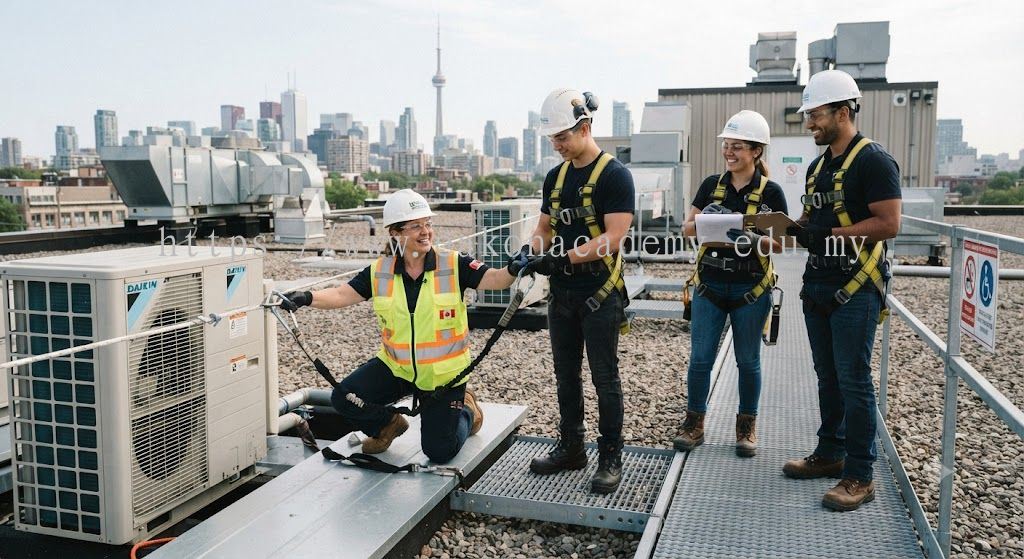
HVAC Fall Prevention Training for Technicians: Professional Working at Height Safety Skills for the Air Conditioning Industry
HVAC fall prevention training for technicians is a comprehensive professional safety program designed to equip air conditioning and refrigeration technicians with the essential knowledge, practical skills, and workplace awareness required to prevent falls while performing HVAC installation, maintenance, servicing, inspection, and repair activities. As HVAC professionals frequently work on rooftops, ladders, elevated platforms, ceiling spaces, mechanical rooms, and high-rise buildings, fall hazards remain one of the leading causes of workplace injuries within the industry. A structured fall prevention training program enables technicians to identify hazards, perform effective risk assessments, apply proper safety procedures, and safely complete work at height. At Eakon Academy, HVAC fall prevention training combines classroom learning with hands-on practical exercises to prepare technicians for real-world working environments while promoting a strong culture of occupational safety throughout Malaysia.
The HVAC industry requires technicians to perform a wide variety of elevated tasks during residential, commercial, and industrial projects. These include installing split air conditioning systems, servicing rooftop package units, maintaining VRF and VRV systems, replacing compressors, inspecting ductwork, installing copper refrigerant piping, conducting electrical troubleshooting, and carrying out preventive maintenance on elevated equipment. Every worksite presents unique safety challenges such as unstable access routes, slippery rooftop surfaces, poor weather conditions, overhead electrical hazards, falling objects, and confined working spaces. HVAC fall prevention training for technicians helps participants understand these risks and implement effective control measures before beginning any installation or maintenance activity.
One of the most important topics covered in the training program is workplace hazard identification. HVAC technicians learn how to inspect work areas carefully and recognize conditions that could increase the likelihood of falls or other workplace accidents. This includes evaluating roof edges, floor openings, ladder placement, structural stability, platform conditions, access points, weather conditions, nearby machinery, and surrounding pedestrian traffic. Early hazard identification allows technicians to develop safer work plans and significantly reduce unnecessary exposure to risk.
Risk assessment is another core component of HVAC fall prevention training for technicians. Before performing any elevated HVAC work, technicians are trained to assess the likelihood and severity of potential hazards using systematic risk assessment methods. They learn how to evaluate working heights, determine appropriate access equipment, identify emergency escape routes, assess environmental conditions, and implement suitable control measures before commencing work. Proper risk assessment improves planning, supports compliance with workplace safety standards, and reduces the probability of accidents.
Personal protective equipment (PPE) and fall protection systems play a vital role in every fall prevention program. Participants receive practical instruction on selecting, inspecting, fitting, and correctly using safety helmets, full-body harnesses, shock-absorbing lanyards, anchor points, lifelines, safety footwear, gloves, and eye protection. The course also emphasizes routine PPE inspections and maintenance to ensure equipment remains safe and reliable. Understanding the correct application of fall protection systems enables technicians to work more confidently while minimizing the risk of serious injuries.
Ladder safety is another essential subject within HVAC fall prevention training for technicians. Since ladders are among the most commonly used access tools in the HVAC industry, participants learn how to select the correct ladder for each task, inspect ladders before use, position ladders on stable surfaces, maintain proper climbing techniques, and avoid unsafe practices such as overreaching or exceeding load capacities. The training also highlights situations where ladders may not be suitable and alternative access equipment should be considered.
For commercial and industrial HVAC projects, technicians are introduced to the safe use of scaffolding and Mobile Elevating Work Platforms (MEWPs). Participants learn equipment inspection procedures, operational safety guidelines, platform stability principles, and manufacturer recommendations. Understanding the safe operation of elevated access equipment enables technicians to perform maintenance and installation work more efficiently while maintaining high safety standards.
Safe handling of HVAC tools and materials is another important aspect of fall prevention. Air conditioning technicians often transport electrical testing devices, refrigerant recovery units, vacuum pumps, copper piping, compressors, power tools, and installation materials while working above ground level. Improperly secured equipment may become falling object hazards that endanger workers below. The training teaches technicians effective tool organization, secure storage methods, material handling techniques, and housekeeping practices that help maintain a safer work environment.
Electrical safety is integrated throughout the course because many elevated HVAC systems operate near live electrical installations. Participants receive training on safe electrical isolation procedures, lockout and tagout (LOTO) practices, voltage verification, insulated tool usage, and maintaining safe distances from energized equipment. These procedures reduce electrical risks while supporting safe work at height.
Emergency preparedness and rescue planning are essential components of professional HVAC fall prevention training. Technicians learn emergency communication procedures, incident reporting protocols, rescue planning, first-response actions, and evacuation techniques for working-at-height incidents. Being prepared for emergencies helps technicians respond quickly, protect team members, and minimize the consequences of unexpected situations.
For HVAC contractors, maintenance companies, and facility management organizations, investing in HVAC fall prevention training for technicians provides substantial long-term benefits. Properly trained employees contribute to fewer workplace accidents, improved compliance with occupational safety regulations, enhanced technician confidence, increased productivity, reduced operational downtime, and higher customer satisfaction. A company that prioritizes fall prevention training also demonstrates its commitment to employee wellbeing, professional service quality, and responsible workplace management.
Eakon Academy is dedicated to developing highly skilled HVAC professionals through practical, industry-oriented education and comprehensive safety training. The HVAC fall prevention training for technicians program equips participants with advanced knowledge of hazard identification, workplace risk assessment, ladder safety, rooftop safety, personal protective equipment, fall arrest systems, elevated platform safety, emergency response planning, and safe HVAC installation and maintenance procedures. Through expert instruction and hands-on practical experience, technicians develop the competence, confidence, and professional safety mindset required to perform air conditioning work safely and efficiently. By investing in professional HVAC fall prevention training, technicians and employers contribute to creating a safer, more productive, and highly qualified HVAC workforce while supporting the continued growth of Malaysia's air conditioning and refrigeration industry.
More detail about EAKON ACADEMY SDN BHD Malaysia
