
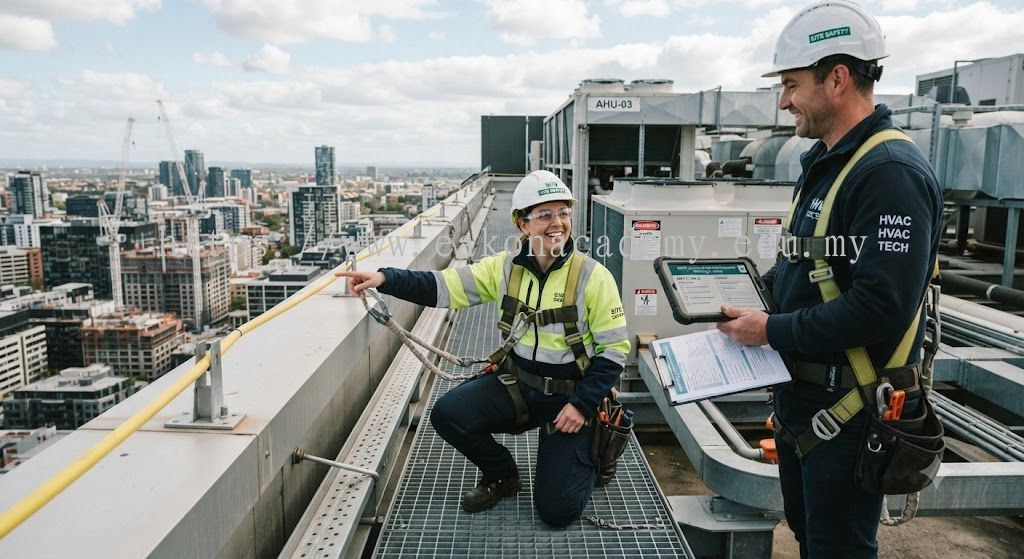
Air Conditioning Outdoor Unit Height Safety Procedures: Essential Guidelines for Safe HVAC Installation
Air conditioning outdoor unit height safety procedures are important guidelines that help HVAC technicians perform outdoor condenser unit installation, maintenance, and repair work safely when working at elevated locations. Installing outdoor air conditioning units often requires technicians to operate at height on building walls, balconies, rooftops, and commercial structures. These tasks involve handling heavy equipment, tools, refrigerant piping, and electrical components in challenging environments. Without proper height safety knowledge and correct installation procedures, technicians may face serious hazards including falls, injuries, equipment damage, and workplace accidents. Eakon Academy provides professional HVAC training programs that focus on improving technician skills, safety awareness, and safe working practices for the HVAC industry.
Before installing an outdoor air conditioning unit at height, technicians must perform proper planning and risk assessment. Air conditioning outdoor unit height safety procedures begin with identifying potential hazards such as unstable working surfaces, unsafe access points, weak mounting locations, electrical risks, weather conditions, and improper lifting methods. A detailed assessment helps technicians determine the correct safety controls, equipment requirements, and installation methods before beginning work. Proper preparation reduces risks and ensures that outdoor unit installation can be completed safely and efficiently.
One of the most important aspects of outdoor unit installation safety is selecting suitable access equipment. Depending on the installation location, HVAC technicians may use ladders, scaffolding, mobile elevated work platforms (MEWP), or other approved access systems. All equipment should be inspected before use to ensure it is stable, safe, and suitable for the working environment. Technicians must understand proper setup methods, safe operating procedures, and equipment limitations to prevent falls and accidents during outdoor unit installation activities.
Handling outdoor air conditioning units at height requires careful lifting techniques and proper teamwork. Outdoor condenser units can be heavy and difficult to position, especially when installed on external walls or high-rise buildings. Air conditioning outdoor unit height safety procedures include using appropriate lifting methods, securing equipment properly, and maintaining clear communication between technicians. Proper planning prevents sudden movements, dropped equipment, and unnecessary strain injuries during installation work.
Personal protective equipment (PPE) is a critical part of safe outdoor unit installation at height. HVAC technicians should use safety helmets, protective footwear, gloves, safety harnesses, lanyards, and fall protection systems when required. Safety equipment must be inspected regularly to ensure it provides effective protection. Proper training helps technicians understand how to use PPE correctly and apply fall prevention methods when working near roof edges, balconies, or elevated installation areas.
During outdoor unit installation, technicians must also manage tools, materials, copper piping, refrigerant equipment, and electrical components safely. Loose tools or unsecured materials can fall and create serious hazards for workers and people below. Technicians should use tool bags, secure equipment properly, maintain clean work areas, and follow good housekeeping practices. These safety measures improve workplace organization and reduce the risk of accidents.
Air conditioning outdoor unit height safety procedures are especially important for commercial projects and high-rise building installations. Larger HVAC systems, VRV/VRF systems, and commercial outdoor units may require advanced safety planning, additional manpower, and specialized access equipment. Technicians must understand emergency response procedures, safe installation methods, and effective teamwork to complete complex projects successfully.
Implementing proper height safety procedures for outdoor air conditioning unit installation helps HVAC companies improve workplace safety, reduce accident risks, and maintain professional service standards. Trained technicians are more confident when handling difficult installation conditions and can complete projects with better efficiency and reliability. Safety knowledge is essential for technicians working in residential, commercial, and industrial HVAC environments.
Eakon Academy is committed to developing skilled HVAC professionals through practical training that combines technical knowledge with workplace safety practices. Learning air conditioning outdoor unit height safety procedures enables participants to gain important skills in hazard assessment, fall prevention, equipment handling, and safe installation techniques. These skills help technicians meet industry expectations and provide high-quality HVAC services.
By following proper air conditioning outdoor unit height safety procedures, HVAC professionals can protect themselves, improve installation quality, and create safer working environments. Height safety training is an essential foundation for every air conditioning technician who wants to enhance their technical abilities, reduce workplace hazards, and build a successful career in the HVAC industry.
More detail about EAKON ACADEMY SDN BHD Malaysia
