
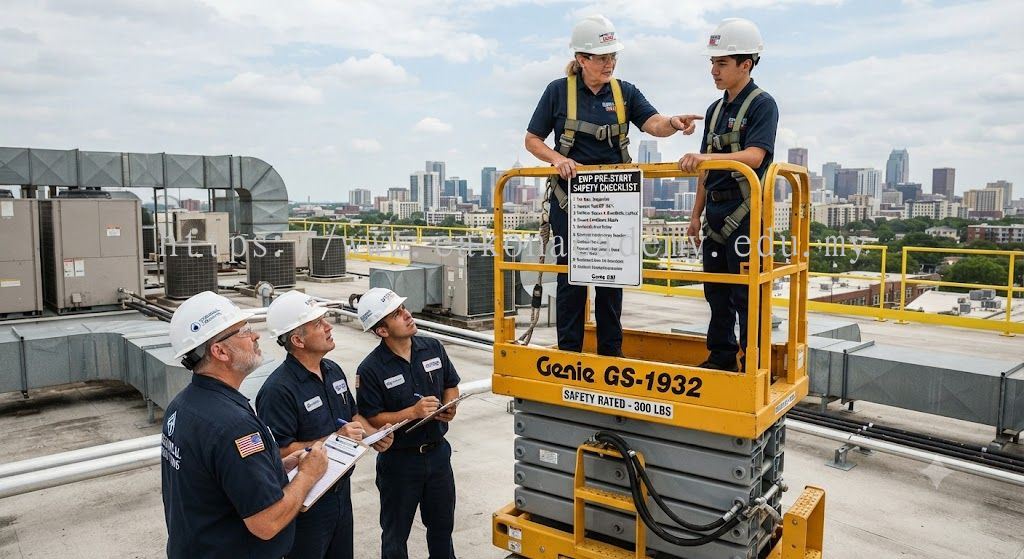
Air Conditioning Work Platform Safety Checklist: A Complete Guide for Safe HVAC Work at Height
Working at height is a routine part of many air conditioning installation, servicing, inspection, and maintenance projects. HVAC technicians frequently access rooftop condensing units, ceiling-mounted cassette systems, ventilation equipment, cooling towers, ductwork, and commercial air conditioning systems located several metres above ground level. To ensure every task is carried out safely, an air conditioning work platform safety checklist is an essential tool that helps technicians identify hazards, inspect equipment, verify safety controls, and comply with workplace safety requirements before starting work. At Eakon Academy (eakonacadem.edu.my), we believe that combining technical HVAC expertise with strong safety practices creates highly competent professionals who can work confidently in residential, commercial, and industrial environments throughout Malaysia. A structured work platform safety checklist not only protects workers from accidents but also improves efficiency, equipment reliability, and overall project quality.
Before using any elevated work platform, HVAC technicians should begin with a comprehensive site assessment. The work area must be inspected for potential hazards such as uneven or soft ground, overhead electrical power lines, low ceilings, nearby structures, vehicle traffic, pedestrian movement, weather conditions, and restricted access areas. Identifying these hazards before positioning the work platform allows technicians to implement appropriate control measures that significantly reduce the risk of falls, collisions, or equipment instability. Proper planning also ensures that the correct type of elevated work platform is selected for the specific air conditioning installation or servicing task.
A critical section of every air conditioning work platform safety checklist involves inspecting the equipment before operation. Technicians should carefully examine the work platform for visible damage, hydraulic leaks, worn tyres, damaged guardrails, faulty controls, emergency stop buttons, batteries or fuel systems, outriggers, warning alarms, and emergency lowering systems. Any defects identified during the inspection should be reported immediately, and the equipment should not be used until it has been repaired and approved for safe operation. Routine pre-use inspections help prevent mechanical failures that could lead to serious workplace incidents while working at height.
Operator competency is another essential element of a successful work platform safety checklist. Every technician operating a Mobile Elevated Work Platform (MEWP), scissor lift, boom lift, or aerial work platform should receive proper training before using the equipment. Professional air conditioning work platform safety training provides participants with practical knowledge of machine controls, safe operating procedures, platform positioning, emergency response, hazard recognition, load management, and equipment limitations. Well-trained operators are more capable of making safe decisions on-site while minimizing operational risks during HVAC installation and maintenance activities.
Personal Protective Equipment (PPE) should always be included in any work platform safety checklist. HVAC technicians should wear safety helmets, protective gloves, safety footwear with slip-resistant soles, eye protection, and high-visibility clothing while working on elevated platforms. Depending on workplace policies and equipment manufacturer recommendations, technicians may also be required to wear a full-body safety harness connected to an approved anchor point within the work platform. Proper inspection of PPE before each use ensures that damaged or worn equipment is replaced before beginning work, providing an additional level of protection against falls and other workplace hazards.
Another important component of the checklist is verifying the stability of the work platform. Before raising the platform, technicians should confirm that the machine is positioned on firm, level ground capable of supporting its weight. Outriggers and stabilizers should be fully deployed where required, and the platform's maximum load capacity should never be exceeded. HVAC tools, refrigerant cylinders, replacement components, and other equipment carried on the platform must be securely stored to prevent shifting loads or falling objects that could endanger workers below. Maintaining platform stability is essential for safe operation throughout the duration of the air conditioning servicing or installation project.
Weather conditions should also be assessed before operating any elevated work platform. Strong winds, heavy rainfall, thunderstorms, poor visibility, or slippery surfaces can significantly increase the risk of accidents while working at height. An effective air conditioning work platform safety checklist reminds technicians to monitor weather forecasts continuously and suspend operations whenever environmental conditions exceed the manufacturer's safe operating limits. Prioritizing weather safety helps protect both personnel and equipment while reducing unnecessary workplace risks.
Communication between team members is another important factor in maintaining a safe work environment. HVAC projects often involve multiple technicians, electricians, contractors, and facility personnel working simultaneously. Establishing clear communication procedures before elevating the platform helps prevent collisions, accidental movement of machinery, and misunderstandings during servicing activities. Ground personnel should remain alert to monitor surrounding hazards, maintain exclusion zones, and provide assistance during emergency situations. Effective teamwork enhances both safety and operational efficiency on busy commercial and industrial job sites.
An air conditioning work platform safety checklist should also include emergency preparedness. Before beginning work, technicians should understand emergency lowering procedures, evacuation plans, rescue methods, and communication protocols in case of equipment failure or medical emergencies. Every worker should know the location of first aid equipment, emergency contact numbers, fire extinguishers, and designated assembly points. Preparing for emergencies before work begins enables faster response times and minimizes the impact of unexpected incidents.
Routine preventive maintenance of elevated work platforms is equally important. Scheduled inspections, servicing, lubrication, hydraulic system maintenance, battery checks, and mechanical repairs help ensure the equipment remains safe and reliable throughout its operational lifespan. Employers who implement preventive maintenance programs experience fewer equipment breakdowns, lower repair costs, and improved workplace safety while supporting compliance with occupational safety regulations.
At Eakon Academy (eakonacadem.edu.my), we are committed to developing highly skilled HVAC professionals through comprehensive technical and workplace safety training. Our air conditioning work platform safety training combines classroom instruction with practical hands-on experience, enabling technicians to confidently inspect, operate, and manage elevated work platforms in real-world environments. Participants learn industry best practices for hazard identification, equipment inspection, risk assessment, emergency response, and safe work procedures that support long-term career success. Whether performing residential air conditioning installation, commercial HVAC maintenance, industrial cooling system servicing, or rooftop equipment inspections, following a comprehensive air conditioning work platform safety checklist helps technicians protect themselves, safeguard their colleagues, maintain regulatory compliance, and deliver professional HVAC services with confidence, efficiency, and the highest standards of workplace safety.
More detail about EAKON ACADEMY SDN BHD Malaysia
