
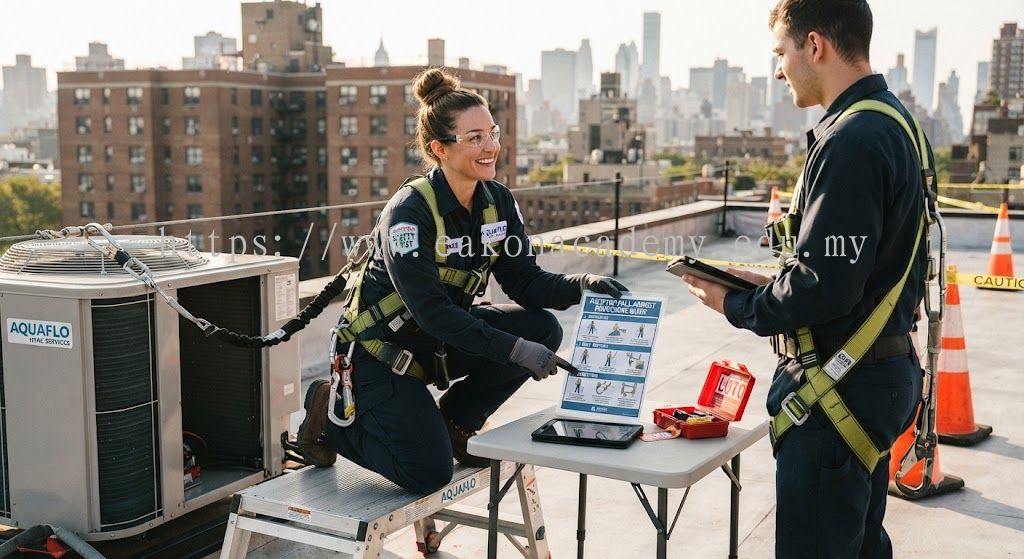
HVAC Fall Arrest System Safety Procedures for Safe Working at Height
HVAC fall arrest system safety procedures are an important part of workplace safety training for air conditioning technicians who perform installation, maintenance, and repair activities at height. HVAC professionals frequently work in environments that require access to elevated areas such as rooftops, building exteriors, ceilings, mechanical rooms, and commercial facilities. Without proper fall arrest knowledge and safety procedures, technicians may face serious risks including falls, injuries, and workplace accidents. Eakon Academy provides professional HVAC safety training to help technicians understand the correct application of fall arrest systems and develop safer working practices in the air conditioning industry.
A proper HVAC fall arrest system safety procedure begins with identifying potential hazards before starting any work activity. Technicians should conduct a detailed risk assessment to evaluate working conditions, determine possible fall risks, and select suitable safety control measures. Understanding the work environment, checking access routes, inspecting equipment, and preparing emergency procedures are important steps in creating a safe working area. Effective planning helps reduce accidents and ensures that HVAC technicians can complete their tasks with improved confidence and protection.
A fall arrest system is designed to protect HVAC technicians by reducing the impact and consequences of a fall while working at height. Important components of a fall arrest system include full-body safety harnesses, energy-absorbing lanyards, lifelines, connectors, and approved anchor points. Each component must be selected correctly and used according to recommended safety procedures. HVAC technicians need proper training to understand how these systems function, how to inspect equipment before use, and how to connect safety devices correctly during air conditioning work.
Regular inspection and maintenance of fall arrest equipment are essential procedures for HVAC technicians. Safety harnesses, lanyards, and connectors should be checked for signs of damage, excessive wear, or defects before every use. Equipment that shows damage or does not meet safety requirements should not be used. Proper storage and maintenance practices also help extend the lifespan of fall protection equipment and ensure that technicians receive reliable protection during elevated HVAC activities.
HVAC fall arrest system safety procedures also include correct working techniques when using ladders, scaffolding, platforms, and rooftop access systems. Air conditioning technicians often need to install outdoor condenser units, repair refrigerant piping, perform electrical checks, or maintain commercial HVAC equipment at height. Maintaining stable working positions, avoiding unsafe movements, and following established safety practices are important to prevent falls and injuries. Professional safety training helps technicians understand how to combine technical HVAC skills with proper height safety procedures.
For commercial and industrial HVAC projects, fall arrest system knowledge is especially important due to the complexity and scale of the work environment. Technicians working on VRV/VRF systems, rooftop air conditioning units, chillers, and large mechanical cooling systems may encounter higher risks when accessing elevated equipment. Proper fall arrest training enables technicians to manage these challenges while maintaining productivity, safety, and professional service quality.
Eakon Academy focuses on delivering practical HVAC safety education that supports technicians, contractors, and companies in improving workplace safety standards. The HVAC fall arrest system safety procedures training helps participants develop essential skills related to hazard assessment, equipment handling, fall prevention methods, and safe working practices. By combining HVAC technical knowledge with occupational safety awareness, technicians can become more competent and prepared for modern industry requirements.
Investing in HVAC fall arrest system safety procedures training benefits both individual technicians and HVAC businesses. A trained workforce can reduce workplace accidents, improve operational efficiency, and create a stronger safety culture within the organisation. Choose Eakon Academy to enhance your HVAC safety knowledge and develop the skills needed for safer air conditioning installation, maintenance, and repair work at height.
More detail about EAKON ACADEMY SDN BHD Malaysia
