
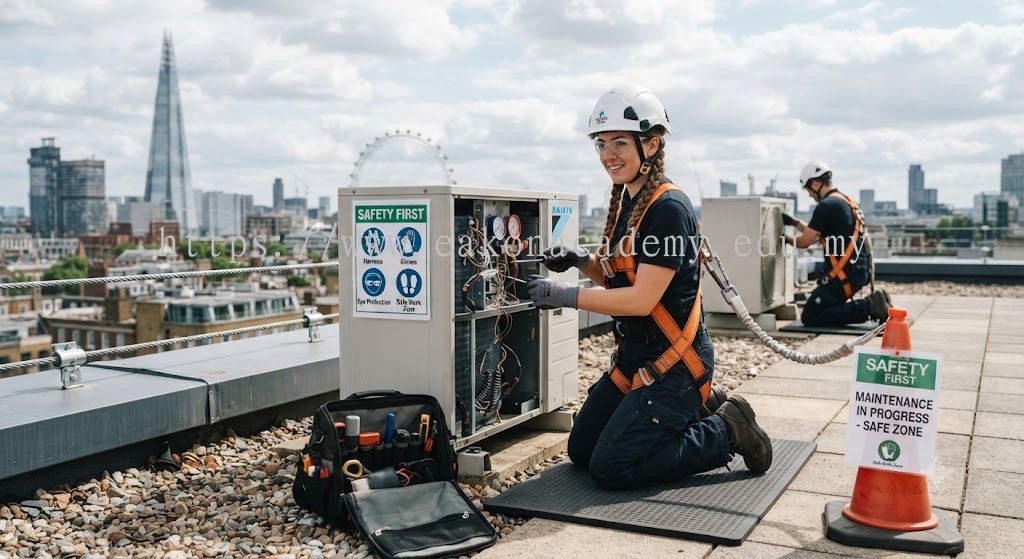
Air Conditioning Outdoor Unit Maintenance Safety: Essential Safety Practices for HVAC Technicians
Air conditioning outdoor units are critical components of HVAC systems that require regular inspection, cleaning, servicing, and preventive maintenance to ensure efficient cooling performance and longer equipment lifespan. Outdoor unit maintenance involves various technical tasks, including electrical inspection, condenser coil cleaning, refrigerant checking, fan motor inspection, component testing, and system troubleshooting. However, these activities also involve potential workplace hazards such as electrical risks, sharp metal edges, rotating components, refrigerant exposure, heavy equipment handling, and working at height. Understanding proper air conditioning outdoor unit maintenance safety practices is essential for protecting HVAC technicians, preventing accidents, and ensuring professional service quality. At Eakon Academy (eakonacadem.edu.my), our HVAC training programmes focus on developing skilled technicians who combine technical expertise with strong workplace safety awareness for residential, commercial, and industrial air conditioning systems.
Safety preparation should always begin before any outdoor unit maintenance activity. HVAC technicians should conduct a workplace inspection and identify possible hazards around the equipment and surrounding environment. Factors such as outdoor unit location, electrical supply condition, access limitations, weather conditions, rooftop conditions, equipment weight, and nearby activities should be considered before starting work. A proper risk assessment helps technicians select suitable safety equipment, prepare the correct tools, and establish safe working procedures to reduce accident risks.
One of the most important safety procedures during outdoor unit maintenance is electrical safety control. Outdoor condenser units contain electrical components such as compressors, fan motors, capacitors, contactors, control boards, and wiring connections that may create electrical hazards. Before opening electrical panels or performing maintenance, technicians should isolate the power supply and verify that the system is completely de-energised. The use of insulated tools, voltage testers, electrical gloves, and lockout/tagout procedures helps prevent electric shock, burns, and accidental equipment activation during maintenance work.
Another important aspect of outdoor unit maintenance safety is proper personal protective equipment (PPE) usage. HVAC technicians should wear appropriate protective equipment based on the maintenance activity being performed. Safety helmets protect against falling objects and accidental impacts, while safety glasses protect eyes from dust, debris, cleaning chemicals, and refrigerant exposure. Protective gloves reduce the risk of cuts from sharp condenser fins, sheet metal panels, and electrical components. Safety footwear with anti-slip soles and toe protection improves stability while protecting feet from dropped tools and heavy equipment parts.
Outdoor units are often installed in challenging locations such as rooftops, balconies, external walls, and elevated platforms. Therefore, working at height safety is an important consideration for outdoor unit maintenance. Technicians servicing rooftop condenser units or elevated installations should use suitable fall protection equipment, including full-body safety harnesses, shock-absorbing lanyards, certified anchor points, and appropriate access equipment. Ladders should be inspected before use and positioned securely, while elevated work platforms should only be operated by trained personnel. Proper height safety practices help prevent serious fall-related injuries.
Handling refrigerants safely is another essential part of outdoor unit maintenance. Technicians may perform refrigerant leak checks, pressure testing, recovery, vacuuming, and charging procedures during servicing activities. Incorrect refrigerant handling can create safety risks and affect system performance. Proper equipment such as refrigerant leak detectors, recovery machines, recovery cylinders, manifold gauges, vacuum pumps, charging scales, and protective gloves should be used. Understanding refrigerant properties and following safe handling procedures helps protect technicians and the environment.
Outdoor unit maintenance also requires attention to mechanical hazards. Components such as condenser fans, fan motors, and moving parts can cause injuries if the equipment starts unexpectedly. Technicians should ensure power is isolated before touching internal components and should avoid placing hands near moving parts. Warning signs and communication between team members can further improve safety during maintenance activities.
Cleaning activities also require proper safety procedures. Condenser coil cleaning may involve the use of water, compressed air, cleaning chemicals, and specialised tools. Technicians should use appropriate protective equipment and follow manufacturer recommendations when applying cleaning solutions. Care should be taken to prevent water from entering electrical components, as moisture can create equipment failure and electrical hazards.
Safe handling of tools is another important part of outdoor unit maintenance safety. HVAC technicians commonly use tools such as multimeters, pressure gauges, screwdrivers, torque wrenches, fin combs, vacuum pumps, and power tools. Tools should be inspected regularly and maintained properly to ensure safe operation. Damaged tools can increase the risk of injuries and reduce maintenance quality. Organised tool storage also helps prevent accidents caused by misplaced equipment.
Heavy lifting and equipment handling should also be considered during outdoor unit maintenance. Outdoor units contain compressors, motors, and metal components that may be difficult to move. Incorrect lifting techniques can cause muscle strain, back injuries, or equipment damage. Technicians should use proper lifting methods, mechanical assistance, and teamwork when handling heavy HVAC components. Planning equipment movement before starting work improves both safety and efficiency.
Weather conditions can significantly affect outdoor unit maintenance safety. Technicians working outdoors may experience rain, strong winds, high temperatures, or slippery surfaces that increase workplace risks. Maintenance activities should be postponed when weather conditions become unsafe. Proper hydration, suitable work clothing, and regular breaks are also important when performing outdoor HVAC work in hot environments.
Emergency preparation is an essential part of professional HVAC maintenance. Technicians should understand procedures for responding to electrical incidents, refrigerant exposure, falls, equipment failure, and other workplace emergencies. Worksites should have access to first aid equipment, emergency communication methods, and appropriate rescue procedures. Regular safety training helps technicians respond effectively when unexpected situations occur.
Continuous training and professional development are important for improving outdoor unit maintenance safety standards. HVAC technicians should receive regular education on electrical safety, refrigerant handling, PPE usage, working at height procedures, equipment inspection, hazard identification, and emergency response. Skilled technicians who understand safety practices can complete maintenance work more efficiently while protecting themselves and customers.
At Eakon Academy (eakonacadem.edu.my), we are dedicated to providing professional HVAC training that develops technicians with both advanced technical abilities and strong safety awareness. Our programmes cover air conditioning installation, outdoor unit servicing, preventive maintenance, troubleshooting, refrigerant handling, electrical safety, working at height protection, PPE requirements, and industry best practices. Through hands-on learning and practical training, students gain the confidence and knowledge required to perform HVAC maintenance safely and professionally. By following proper Air Conditioning Outdoor Unit Maintenance Safety procedures, technicians can reduce workplace hazards, improve service reliability, protect equipment, and deliver high-quality air conditioning solutions while maintaining the highest standards of safety and professionalism.
More detail about EAKON ACADEMY SDN BHD Malaysia
