
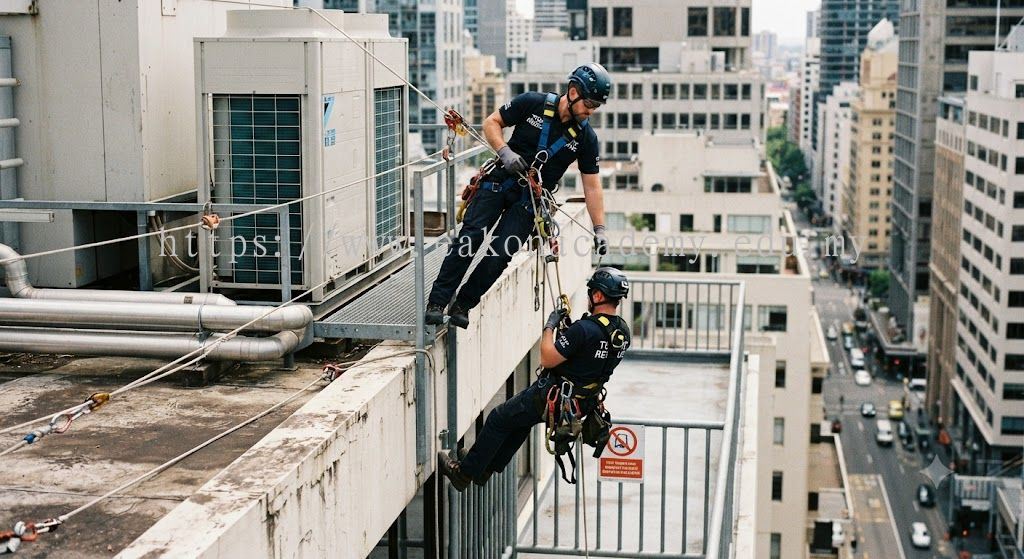
Aircond Working at Height Rescue Equipment: Essential Emergency Rescue Systems for Safe HVAC Operations
Working at height is a routine part of air conditioning installation, servicing, maintenance, and repair, particularly when technicians install outdoor condenser units, maintain rooftop HVAC systems, service VRF and VRV equipment, inspect cooling towers, or repair commercial air conditioning systems. While fall prevention measures such as safety harnesses, lanyards, anchor points, and elevated work platforms significantly reduce the likelihood of accidents, every HVAC worksite must also be prepared for emergencies. Having the correct aircond working at height rescue equipment is essential for ensuring that technicians can be rescued quickly and safely if a fall or workplace incident occurs. An effective rescue plan not only protects workers from further injury but also helps employers comply with Malaysia's Occupational Safety and Health (OSH) regulations and recognised work-at-height safety standards. At Eakon Academy (eakonacadem.edu.my), we provide comprehensive HVAC safety training that includes fall protection, emergency rescue procedures, and the correct use of rescue equipment, preparing technicians to respond confidently to real-world emergencies.
One of the most important principles of working at height is understanding that fall protection alone is not enough. If a technician falls while wearing a full-body harness, they may remain suspended until rescued. Prolonged suspension can lead to suspension trauma, also known as orthostatic intolerance, where restricted blood circulation may result in unconsciousness or life-threatening medical complications. This is why every air conditioning project involving work at height should include a documented rescue plan and appropriate rescue equipment before work begins. A rapid rescue response can significantly reduce injuries and improve survival outcomes, making rescue preparedness an essential component of every HVAC safety programme.
A complete aircond working at height rescue equipment system begins with a properly fitted full-body safety harness. Modern harnesses distribute fall arrest forces across the shoulders, chest, thighs, and pelvis while providing secure attachment points for rescue operations. Every harness should be inspected before use for worn webbing, damaged stitching, cracked buckles, bent D-rings, or signs of deterioration. Harnesses involved in any fall arrest event should be removed from service immediately and replaced according to manufacturer recommendations. Rescue operations rely heavily on the integrity of the harness, making regular inspection and maintenance essential.
Rescue equipment also includes rescue kits specifically designed for work-at-height emergencies. These kits often contain pre-rigged ropes, descenders, pulleys, rescue connectors, lifting devices, carabiners, anchor slings, and controlled descent systems that allow trained personnel to recover a suspended worker safely. Compact rescue kits are particularly useful for air conditioning technicians working on rooftops, elevated platforms, or building façades because they can be transported easily and deployed quickly during emergencies. Proper training ensures technicians understand how to assemble, inspect, and operate rescue equipment safely without creating additional hazards.
Certified anchor points play a vital role during rescue operations. Rescue systems depend on strong structural anchor points capable of supporting both the suspended worker and the rescue team. Air conditioning technicians should only use certified roof anchors, engineered structural steel members, permanent fall protection systems, or approved temporary anchorage devices designed for rescue applications. Refrigerant piping, electrical conduits, cable trays, handrails, and lightweight structural members should never be used as rescue anchor points because they may fail under load. Professional work-at-height training teaches technicians how to identify appropriate anchor points and establish safe rescue systems before beginning elevated work.
Self-retracting lifelines (SRLs) with integrated rescue functions are becoming increasingly popular throughout the HVAC industry. These advanced fall protection devices automatically arrest falls while allowing trained rescuers to raise or lower a suspended worker using a built-in retrieval mechanism. Rescue-enabled SRLs provide a faster response than traditional rescue methods and are particularly valuable during rooftop maintenance, commercial air conditioning servicing, and elevated work platform operations. Selecting the appropriate rescue-capable fall protection system depends on the work environment, available access routes, and site-specific risk assessment.
Safe access equipment also contributes to effective emergency response. Elevated work platforms, boom lifts, and scissor lifts often provide the quickest method of reaching suspended technicians during certain rescue situations. Operators should understand emergency lowering controls, platform rescue procedures, and equipment limitations before beginning work. Routine inspection of elevated work platforms ensures they remain operational if needed during an emergency. Where ladders or scaffolding are used, emergency access routes should be kept clear to allow rapid rescue without unnecessary delays.
Communication equipment forms another essential part of every rescue plan. Two-way radios, mobile communication devices, emergency alarms, and clearly established reporting procedures enable technicians to request assistance immediately following an incident. Every member of the work team should understand emergency communication protocols, know the location of rescue equipment, and be familiar with their individual responsibilities during an emergency. Good communication significantly improves rescue efficiency while reducing confusion in high-pressure situations.
First aid equipment should always be available wherever work at height is performed. Comprehensive first aid kits, automated external defibrillators (AEDs) where appropriate, emergency blankets, and trauma supplies help provide immediate care while waiting for emergency medical services. Technicians should also receive first aid training covering fall injuries, suspension trauma, fractures, electrical shock, bleeding control, and emergency casualty management. Immediate medical attention following a fall is critical, even if the worker appears unharmed, because internal injuries may not be immediately visible.
Every air conditioning worksite should begin with a comprehensive workplace risk assessment. The assessment should identify fall hazards, roof conditions, weather, access routes, structural stability, electrical risks, rescue anchor points, communication methods, emergency services access, and the specific rescue equipment required for the task. Rescue planning should never be left until after an incident occurs. Instead, rescue procedures should be fully documented, communicated to all personnel, and practised regularly through realistic emergency drills.
Training remains one of the most important factors in successful work-at-height rescue. Air conditioning technicians should receive regular practical instruction covering fall arrest systems, rescue equipment operation, suspension trauma awareness, emergency communications, casualty handling, controlled descent techniques, rescue planning, and workplace risk assessment. Employers who invest in ongoing rescue training create safer workplaces while reducing the consequences of workplace accidents and improving compliance with Malaysian occupational safety requirements.
At Eakon Academy (eakonacadem.edu.my), we are committed to developing highly competent HVAC professionals who understand that emergency preparedness is an essential part of workplace safety. Our specialised HVAC training programmes combine practical air conditioning installation and servicing techniques with comprehensive education in working at height, fall protection systems, rescue equipment, emergency response procedures, ladder safety, elevated work platform operation, and workplace risk management. Students receive valuable hands-on experience using industry-standard rescue equipment under the guidance of experienced instructors, preparing them to respond confidently during real-world emergencies. By understanding and correctly applying Aircond Working at Height Rescue Equipment, technicians can minimise the consequences of workplace incidents, protect themselves and their colleagues, comply with Malaysian safety regulations, and deliver professional air conditioning services while maintaining the highest standards of occupational health and safety.
More detail about EAKON ACADEMY SDN BHD Malaysia
