
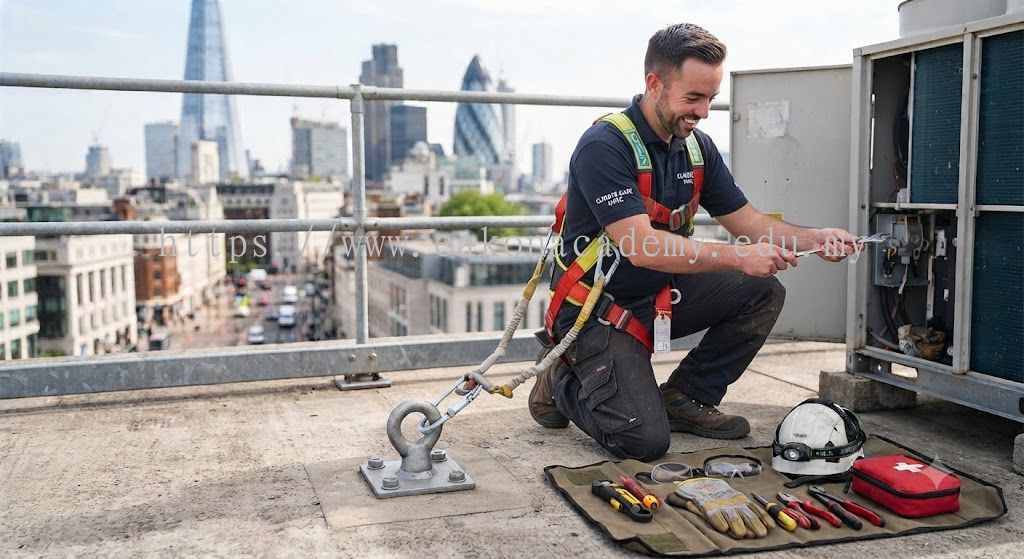
Air Conditioning Safety Belts and Harness System: Complete Fall Protection Guide for HVAC Technicians Working at Height
Working at height is a routine part of air conditioning installation, servicing, maintenance, and repair, particularly when technicians install outdoor condenser units, maintain rooftop HVAC systems, inspect cooling towers, or service commercial VRF and VRV equipment. These tasks expose workers to significant fall hazards, making the use of a reliable air conditioning safety belts and harness system an essential part of every HVAC safety programme. Modern fall protection systems are designed to protect technicians from serious injuries while ensuring compliance with Malaysian occupational safety regulations and international safety standards. At Eakon Academy (eakonacadem.edu.my), we believe that mastering fall protection equipment is just as important as developing technical air conditioning skills. Our hands-on training programmes prepare HVAC professionals to work safely, confidently, and efficiently in residential, commercial, and industrial environments.
A modern fall protection system begins with a properly fitted full-body safety harness, which has replaced traditional safety belts in most working-at-height applications. While older safety belts were commonly used for positioning, they are generally not suitable for fall arrest because they can concentrate impact forces around the waist during a fall. In contrast, a full-body harness distributes these forces across the shoulders, chest, thighs, and pelvis, greatly reducing the risk of severe injury. Air conditioning technicians should understand how to correctly wear, adjust, and inspect a harness before every use. All buckles, straps, D-rings, stitching, and webbing should be checked carefully for signs of wear, cuts, corrosion, fraying, or damage. Proper inspection ensures that the equipment remains dependable and capable of protecting the technician when working at height.
The harness works together with a lanyard or self-retracting lifeline (SRL) to form an effective fall protection system. Shock-absorbing lanyards are commonly used during HVAC installation because they reduce the force generated during a fall, helping to minimise injuries. Adjustable restraint lanyards prevent technicians from reaching dangerous edges, while positioning lanyards allow workers to maintain stability when both hands are needed for installation or servicing tasks. Self-retracting lifelines offer greater mobility while reducing fall distance, making them suitable for many commercial HVAC applications. Selecting the appropriate connection device depends on the work environment, access requirements, and the type of air conditioning equipment being installed or maintained.
Anchor points are one of the most critical components of any safety belts and harness system. A high-quality harness provides little protection if it is attached to an unsuitable anchor. Certified anchor points must be capable of supporting the required fall arrest loads and should comply with recognised safety standards. Air conditioning technicians should never connect their lanyards to electrical conduits, refrigerant piping, guardrails, temporary scaffolding components, or other structures that are not specifically designed for fall protection. During professional HVAC training, technicians learn how to identify approved anchor points, assess structural integrity, and select suitable anchorage systems for different installation environments.
Working on rooftops, balconies, elevated platforms, or building façades requires more than wearing a harness. A comprehensive risk assessment should be completed before any work begins. HVAC technicians should evaluate hazards such as fragile roofing materials, slippery surfaces, strong winds, overhead electrical lines, unstable structures, falling object risks, limited access routes, and nearby vehicle traffic. The assessment should determine whether additional safety measures such as elevated work platforms, scaffolding, guardrails, exclusion zones, or rescue equipment are required. Careful planning helps reduce accidents while ensuring that technicians have the appropriate safety equipment before commencing work.
Routine inspection and maintenance of fall protection equipment are equally important. Harnesses, lanyards, connectors, and anchor devices should be stored in clean, dry conditions away from excessive sunlight, moisture, chemicals, oils, and sharp objects that may weaken the materials over time. Before every use, technicians should inspect all components for damage or deterioration. Any equipment that has been involved in a fall arrest incident must be removed from service immediately and replaced, even if no visible defects are present. Maintaining detailed inspection records also supports workplace compliance and demonstrates an employer's commitment to occupational safety.
Safe working practices complement the use of safety belts and harness systems. Air conditioning technicians should always maintain three points of contact when climbing ladders, avoid overreaching beyond safe working positions, secure tools using tool lanyards to prevent falling objects, and communicate effectively with ground personnel throughout the installation process. Weather conditions should also be monitored carefully, as rain, lightning, strong winds, or poor visibility can significantly increase fall risks during outdoor HVAC work. If conditions become unsafe, work should be suspended until it is safe to continue.
Emergency preparedness is another essential element of working at height. Every HVAC project should include a documented rescue plan that outlines how a technician will be safely recovered following a fall. Workers should understand the dangers of suspension trauma, know how to activate emergency response procedures, and participate in regular rescue drills. Quick and effective rescue can significantly reduce the severity of injuries and improve overall workplace safety.
As Malaysia's HVAC industry continues to expand, employers increasingly seek technicians who combine advanced technical expertise with strong safety competencies. Professionals who understand the correct use of safety harnesses, fall arrest systems, anchor points, and working-at-height procedures are highly valued across residential, commercial, and industrial sectors. Demonstrating competence in fall protection not only improves workplace safety but also enhances career opportunities and builds client confidence in the quality and professionalism of HVAC services.
At Eakon Academy (eakonacadem.edu.my), our comprehensive HVAC training programmes integrate practical air conditioning installation techniques with specialised working-at-height safety education. Students receive hands-on experience using full-body harnesses, lanyards, self-retracting lifelines, anchor systems, elevated work platforms, and workplace risk assessment procedures under the guidance of experienced instructors. Our goal is to develop technicians who can perform air conditioning installation, servicing, and maintenance safely while meeting the highest standards of occupational health and safety. By understanding and correctly applying an effective Air Conditioning Safety Belts and Harness System, HVAC professionals can minimise fall risks, comply with Malaysian safety regulations, improve operational efficiency, and deliver reliable, high-quality air conditioning services with confidence and professionalism.
More detail about EAKON ACADEMY SDN BHD Malaysia
