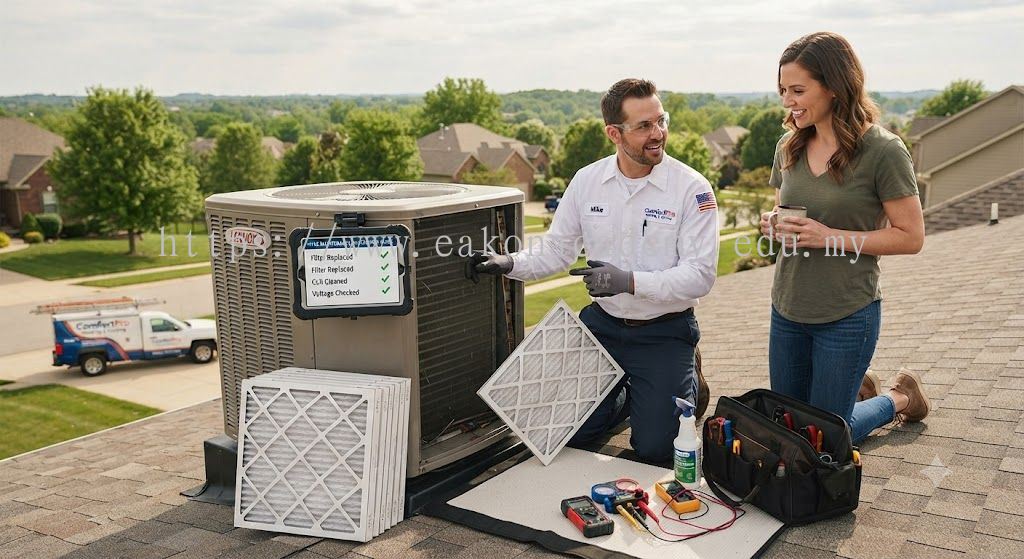
HVAC Maintenance Procedures Guide for Efficient System Servicing, Preventive Care, and Professional Technician Training
HVAC maintenance procedures guide is an essential resource for technicians, engineers, contractors, and building operators who want to understand the correct methods for inspecting, servicing, and maintaining heating, ventilation, and air conditioning systems. Proper HVAC maintenance procedures help improve system efficiency, reduce operating costs, prevent unexpected breakdowns, and extend the lifespan of HVAC equipment. At Eakon Academy, we provide professional HVAC training programs that focus on practical maintenance techniques, troubleshooting skills, inspection procedures, and industry-standard servicing practices to prepare technicians for modern HVAC challenges.
A complete HVAC maintenance procedures guide provides a structured approach for maintaining different types of HVAC systems, including split air conditioners, commercial HVAC units, VRF systems, chillers, and industrial cooling equipment. Regular maintenance ensures that important components such as compressors, evaporators, condensers, fans, motors, electrical controls, and refrigerant circuits operate efficiently. By following proper HVAC maintenance procedures, technicians can identify potential problems early and take preventive action before major system failures occur.
One of the first steps in an effective HVAC maintenance procedure is performing a detailed system inspection. Technicians should examine indoor and outdoor units, air filters, coils, refrigerant piping, electrical connections, drainage systems, and control components. Visual inspections help identify issues such as dirt accumulation, corrosion, loose connections, abnormal sounds, and signs of component damage. Proper inspection techniques allow technicians to evaluate HVAC system conditions accurately and recommend suitable maintenance solutions.
Air filter inspection and cleaning are important procedures included in every HVAC maintenance procedures guide. Filters help prevent dust and contaminants from entering the HVAC system while maintaining proper airflow. When filters become dirty or blocked, airflow decreases, energy consumption increases, and system performance is affected. Regular filter maintenance improves efficiency, supports better indoor air quality, and reduces unnecessary stress on HVAC components.
Cleaning HVAC components is another essential maintenance procedure. Evaporator coils, condenser coils, blower fans, and drainage systems must be cleaned regularly to maintain proper heat transfer and airflow. Dirt and debris buildup can reduce cooling capacity and increase energy usage. Through hands-on HVAC training, technicians can learn safe cleaning methods and proper servicing techniques for various HVAC equipment types.
Refrigerant inspection and management are also important sections of an HVAC maintenance procedures guide. Technicians need to understand how to check refrigerant pressures, inspect refrigerant lines, detect leaks, perform vacuum procedures, and apply correct charging techniques. Improper refrigerant conditions can reduce cooling performance, increase electricity consumption, and cause damage to compressors. Professional refrigerant servicing knowledge helps technicians maintain reliable and efficient HVAC system operation.
Electrical inspection and troubleshooting are critical parts of HVAC maintenance procedures. Technicians should check wiring connections, capacitors, contactors, motors, control panels, and safety devices to ensure all electrical components function correctly. Early detection of electrical problems helps prevent system failures, improve safety, and reduce repair costs. Proper troubleshooting skills enable technicians to diagnose faults and perform effective maintenance work.
Drainage inspection is another important maintenance procedure that should not be overlooked. Blocked condensate drains can cause water leakage, moisture problems, and possible damage to HVAC equipment or surrounding structures. Regular cleaning and inspection of drain pans and drainage pipes help maintain proper system operation and prevent unnecessary issues.
A professional HVAC maintenance procedures guide should also include maintenance documentation and reporting. Recording inspection findings, repair activities, component replacements, and system performance data allows technicians and facility managers to monitor equipment conditions and plan future servicing. Accurate maintenance records improve decision-making and support long-term HVAC management strategies.
Energy efficiency is one of the main benefits of following proper HVAC maintenance procedures. Well-maintained HVAC systems provide better cooling performance, consume less energy, reduce operational expenses, and support sustainable building management. Regular servicing helps ensure HVAC equipment continues operating efficiently under different working conditions.
Eakon Academy offers comprehensive HVAC training courses designed to teach HVAC maintenance procedures, system inspection methods, preventive maintenance strategies, troubleshooting techniques, and professional servicing skills. Our training programs are suitable for beginners, HVAC technicians, contractors, and industry professionals who want to strengthen their technical knowledge and career opportunities.
By following this HVAC maintenance procedures guide, technicians can deliver reliable servicing solutions, improve system performance, and maintain customer satisfaction. Visit eakonacadem.edu.my to explore professional HVAC training programs that provide the practical skills and industry knowledge required for successful HVAC maintenance and servicing careers.
More detail about EAKON ACADEMY SDN BHD Malaysia