
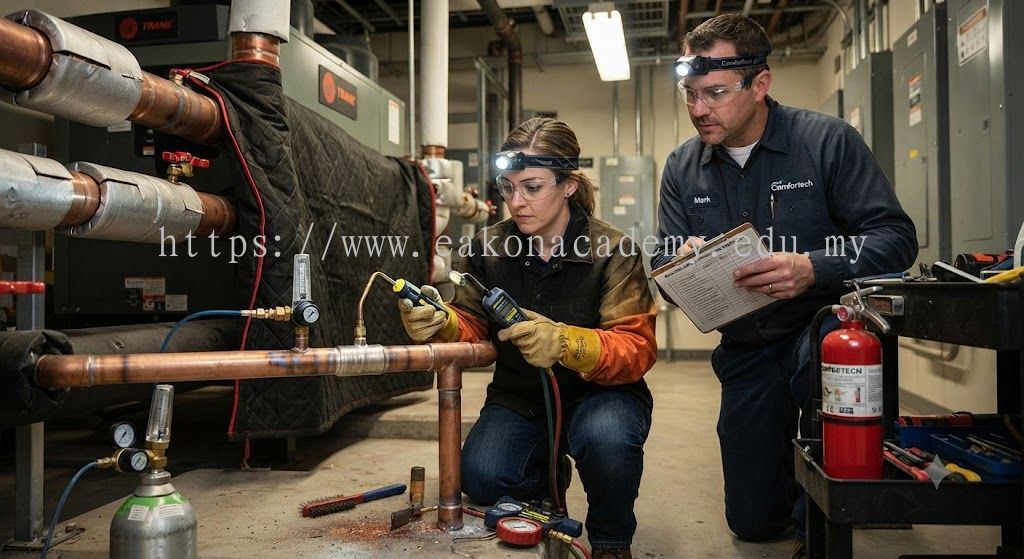
HVAC BRAZING SAFETY INSPECTION PRACTICES TECHNICIANS | PROFESSIONAL QUALITY CONTROL & REFRIGERATION TRAINING
HVAC brazing safety inspection practices for technicians are essential procedures that ensure every refrigeration and air-conditioning installation meets strict safety, quality, and performance standards. In HVAC-R systems, brazed copper joints must be strong, clean, and completely leak-free to maintain proper refrigerant flow and system efficiency. Without proper inspection practices, even a small defect in a brazed joint can lead to refrigerant leakage, pressure loss, compressor failure, energy inefficiency, and potential safety hazards. Therefore, safety inspection practices are a critical part of professional HVAC training and fieldwork for all technicians.
A key aspect of HVAC brazing safety inspection practices is visual inspection of brazed joints. After completing the brazing process, technicians must carefully examine each joint to ensure proper filler flow, uniform bonding, and complete coverage around the pipe connection. A well-executed brazed joint should appear smooth, evenly distributed, and free from cracks, holes, or overheating marks. Visual inspection helps identify early signs of poor workmanship that could compromise system reliability in the future.
Another important inspection practice involves checking for overheating damage during the brazing process. Excessive heat can weaken copper tubing, damage insulation, and affect nearby system components. HVAC technicians must be trained to recognize discoloration, warping, or oxidation marks that indicate improper heat control. Identifying these issues during inspection ensures that corrective actions can be taken before the system is commissioned.
Leak testing is one of the most critical components of HVAC brazing safety inspection practices for technicians. After brazing, the entire piping system must be pressure tested using nitrogen or other approved testing methods to ensure there are no refrigerant leaks. Even microscopic leaks can significantly reduce system performance and increase operational costs. Proper leak detection techniques, including the use of soap solution or electronic leak detectors, help verify joint integrity and system safety before operation.
Internal pipe condition inspection is also important in advanced HVAC systems. During brazing, nitrogen purging is used to prevent internal oxidation, commonly known as black scale formation. However, improper purging techniques can still lead to internal contamination. HVAC technicians must ensure that internal piping surfaces remain clean and free from debris or oxidation buildup, which could restrict refrigerant flow and damage system components such as compressors and expansion valves.
Another essential part of inspection practices is verifying joint strength and structural integrity. Technicians must ensure that all brazed joints are mechanically stable and properly aligned. Poor alignment or insufficient filler penetration can lead to weak joints that may fail under pressure or vibration during system operation. Proper inspection ensures long-term durability and reliability of the entire HVAC system.
Documentation and compliance checking are also key elements of HVAC brazing safety inspection practices. Technicians are often required to record inspection results, pressure test values, and installation details to ensure compliance with industry standards and project specifications. Proper documentation helps maintain quality control and provides traceability for future maintenance or troubleshooting work.
At eakonacadem.edu.my, we emphasize comprehensive HVAC training that integrates hands-on brazing skills with strict safety inspection practices. Our programs cover copper pipe brazing techniques, nitrogen purging methods, leak testing procedures, and real-world inspection standards to ensure students are fully prepared for professional HVAC work environments. This combination of practical and theoretical knowledge builds strong technical competency and safety awareness.
HVAC brazing safety inspection practices for technicians are essential for ensuring system reliability, safety, and long-term performance. By mastering proper inspection techniques, HVAC professionals can detect defects early, prevent system failures, and deliver high-quality refrigeration installations. These practices are a fundamental part of building a successful and professional career in the HVAC industry.
More detail about EAKON ACADEMY SDN BHD Malaysia
