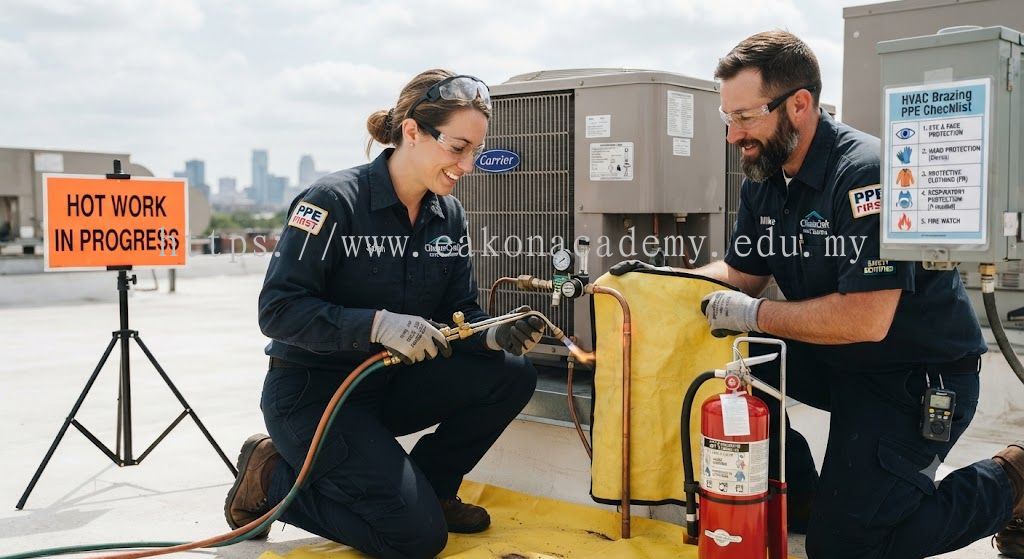
HVAC BRAZING PPE SAFETY PRACTICES | PROFESSIONAL PERSONAL PROTECTIVE EQUIPMENT TRAINING FOR TECHNICIANS
HVAC brazing PPE safety practices are a fundamental requirement for ensuring technician safety, injury prevention, and professional workmanship in refrigeration and air-conditioning installation work. Brazing in HVAC-R systems involves high-temperature flames, molten metal, pressurized gases, and metal joining processes that expose technicians to multiple workplace hazards. Without proper Personal Protective Equipment (PPE), the risk of burns, eye injuries, inhalation of fumes, and fire-related accidents significantly increases. Therefore, understanding and applying correct HVAC brazing PPE safety practices is essential for all HVAC technicians, trainees, and industry professionals.
A core element of HVAC brazing PPE safety is the use of appropriate eye and face protection. During brazing operations, intense heat and bright flames can cause severe eye damage if proper safety goggles or welding shields are not used. Heat-resistant goggles with proper shading protect technicians from harmful infrared and ultraviolet radiation as well as flying sparks and molten metal splashes. Eye protection is one of the most critical PPE components in any HVAC brazing task.
Hand protection is another essential aspect of HVAC brazing PPE safety practices. Technicians must wear high-quality heat-resistant gloves designed to withstand high temperatures and prevent burns when handling hot copper tubing or brazing tools. Proper gloves also improve grip and control when working with torches and piping, reducing the risk of accidental slips or injuries during installation work. Consistent use of protective gloves ensures safer handling of all brazing materials.
Body protection is equally important in HVAC brazing operations. Flame-resistant clothing, such as long-sleeved jackets and protective workwear, helps shield technicians from sparks, heat exposure, and accidental flame contact. Wearing synthetic or non-protective materials during brazing can be extremely dangerous, as they may melt or catch fire easily. Therefore, proper flame-retardant attire is a mandatory requirement in professional HVAC safety training programs.
Foot protection is also a key part of HVAC brazing PPE safety practices. Safety boots with heat-resistant soles and reinforced toe caps protect technicians from falling tools, hot metal fragments, and accidental burns. Proper footwear ensures stability and reduces the risk of workplace injuries in busy HVAC installation environments, especially on construction or industrial job sites.
Respiratory protection is another important safety consideration, especially when working in confined or poorly ventilated spaces. Brazing processes can produce harmful fumes and gases that may affect respiratory health if inhaled over time. In such environments, HVAC technicians are trained to use appropriate masks or respirators to ensure safe breathing conditions while performing brazing tasks. Proper ventilation is also essential to maintain air quality and reduce exposure to hazardous fumes.
Beyond individual protective equipment, HVAC brazing PPE safety practices also include proper training and awareness. Technicians must understand how to correctly wear, inspect, and maintain their PPE to ensure maximum protection. Damaged or improperly fitted equipment can reduce safety effectiveness and increase the risk of accidents. Regular safety training helps reinforce correct PPE usage and builds a strong safety culture in HVAC workplaces.
At eakonacadem.edu.my, we emphasize comprehensive safety training as part of all our HVAC programs. Our courses provide hands-on brazing experience combined with essential PPE safety education, including fire protection, nitrogen purging safety, and proper tool handling techniques. This ensures that students develop both technical skills and strong safety awareness before entering real-world HVAC environments.
HVAC brazing PPE safety practices are essential for protecting technicians, improving job performance, and ensuring long-term success in the refrigeration and air-conditioning industry. By consistently using proper protective equipment and following safety procedures, HVAC professionals can minimize risks, prevent injuries, and deliver high-quality, reliable installation work. Mastering PPE safety is a key foundation for every successful HVAC career.
More detail about EAKON ACADEMY SDN BHD Malaysia