
HVAC BRAZING FIRE SAFETY PRACTICES TECHNICIANS | PROFESSIONAL REFRIGERATION SAFETY TRAINING & INDUSTRY STANDARDS
HVAC brazing fire safety practices for technicians are essential for ensuring safe, controlled, and professional operation during refrigeration and air-conditioning installation work. Brazing in HVAC-R systems involves high-temperature flames, combustible gases, and metal heating processes that present serious fire risks if proper safety procedures are not followed. Without strict fire safety practices, incidents such as workplace fires, gas ignition, equipment damage, and personal injury can easily occur. Therefore, understanding and applying HVAC brazing fire safety practices is a critical skill for all HVAC technicians working in the field.
A fundamental element of HVAC brazing fire safety is proper job site preparation and hazard identification. Before starting any brazing work, technicians must inspect the surrounding area to ensure it is free from flammable materials such as paper, oil, plastic, insulation, and chemical substances. Maintaining a clean and controlled workspace significantly reduces the risk of accidental fire ignition. Proper ventilation is also essential to prevent the accumulation of flammable gases and fumes during brazing operations.
Safe handling and storage of fuel gases such as oxygen and acetylene are another key aspect of fire safety in HVAC brazing. Gas cylinders must always be stored in an upright and secured position, away from heat sources, sparks, and direct sunlight. Technicians are trained to regularly inspect hoses, regulators, and fittings for leaks or damage before ignition. Even a small gas leak can create a highly dangerous fire hazard if not detected early. Proper gas management is a core requirement in professional HVAC safety training.
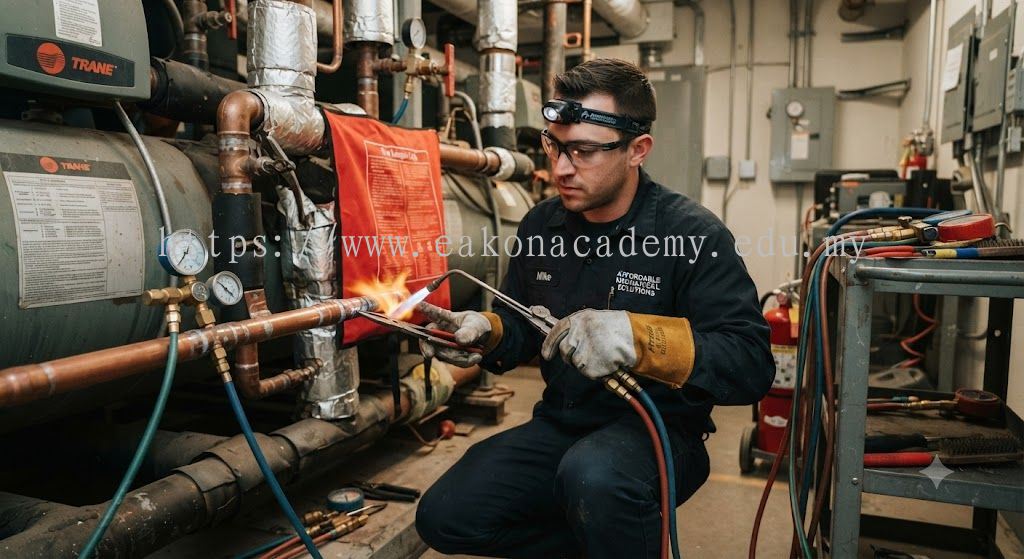
Personal protective equipment (PPE) plays a vital role in preventing fire-related injuries during brazing operations. HVAC technicians must wear flame-resistant clothing, heat-resistant gloves, safety goggles, and protective footwear to protect themselves from sparks, molten metal, and high temperatures. Proper PPE usage ensures that technicians are protected from burns and reduces the severity of injuries in case of unexpected fire exposure.
Controlled torch handling and flame management are critical HVAC brazing fire safety practices. Improper torch use can result in uncontrolled flames that may ignite nearby materials. Technicians must be trained to adjust flame intensity correctly, maintain safe torch angles, and apply heat only to the designated brazing joint. Maintaining control over the flame ensures both safe operation and high-quality brazed connections in copper piping systems.
Fire prevention also includes the use of nitrogen purging during brazing processes. While nitrogen is used to prevent internal oxidation in copper tubing, it must be regulated properly to avoid excessive pressure buildup. Controlled nitrogen flow helps maintain internal pipe cleanliness while supporting safer brazing conditions. Proper understanding of gas behavior is essential for reducing fire-related risks in HVAC systems.
Emergency preparedness is another important component of HVAC brazing fire safety practices. Technicians must always have access to fire extinguishers and be trained in basic fire response procedures. Knowing how to quickly react to gas leaks, fire outbreaks, or equipment malfunctions can significantly reduce damage and prevent serious injuries. Regular safety drills and training programs help reinforce fire safety awareness among HVAC professionals.
At eakonacadem.edu.my, we are committed to providing high-quality HVAC training programs that emphasize both technical skills and safety awareness. Our courses include hands-on brazing practice combined with comprehensive fire safety education, nitrogen purging techniques, and proper handling of HVAC tools and equipment. This ensures that students are fully prepared to work safely and confidently in real-world environments.
HVAC brazing fire safety practices for technicians are essential for maintaining a secure working environment and ensuring long-term success in the refrigeration and air-conditioning industry. By following proper fire safety procedures, HVAC technicians can prevent accidents, protect equipment, and deliver reliable, high-quality installations. Mastering these safety practices not only improves job performance but also builds a strong foundation for a professional HVAC career.
More detail about EAKON ACADEMY SDN BHD Malaysia
