
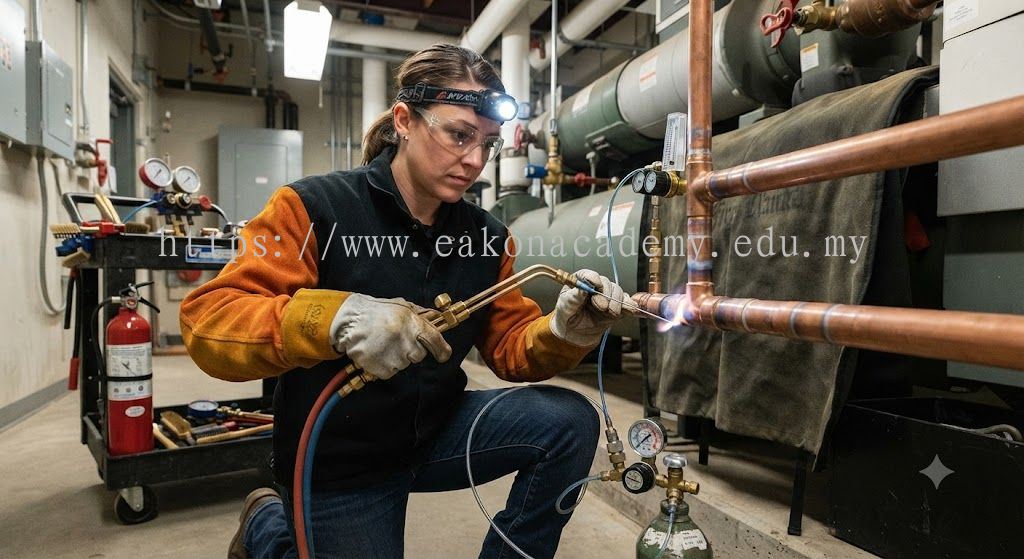
HVAC BRAZING ACCIDENT PREVENTION SAFETY PRACTICES | PROFESSIONAL REFRIGERATION TRAINING & INDUSTRY SAFETY STANDARDS
HVAC brazing accident prevention safety practices are essential for ensuring safe, efficient, and professional refrigeration and air-conditioning installation work. In the HVAC-R industry, brazing involves the use of high-temperature flames, pressurized gases, and metal joining processes that can present significant safety risks if not handled correctly. Accidents such as burns, fire hazards, gas leaks, and equipment damage can occur when proper safety procedures are not followed. Therefore, mastering accident prevention techniques is a critical requirement for all HVAC technicians, installers, and trainees working with copper piping systems.
A fundamental aspect of HVAC brazing accident prevention is proper workplace preparation and risk assessment. Before any brazing work begins, technicians must ensure that the working environment is safe, well-ventilated, and free from flammable materials. Identifying potential hazards such as gas cylinders, electrical wiring, and combustible objects helps reduce the risk of fire and accidents during the brazing process. Proper job site preparation ensures that HVAC technicians can perform their tasks in a controlled and safe environment.
Another key safety practice is the correct handling and storage of gas cylinders used in brazing operations, such as oxygen and acetylene. Cylinders must always be stored upright, secured properly, and kept away from heat sources or direct sunlight. Improper handling of gas cylinders can lead to dangerous leaks or explosions. HVAC technicians are trained to check regulators, hoses, and connections regularly to ensure there are no leaks or damage before starting any brazing work.
Personal protective equipment (PPE) plays a crucial role in HVAC brazing accident prevention safety practices. Technicians must wear safety goggles, heat-resistant gloves, flame-retardant clothing, and safety boots to protect themselves from burns, sparks, and hot metal splashes. Proper PPE usage significantly reduces the risk of injury during brazing operations and ensures compliance with industry safety standards.
Heat control and safe torch handling techniques are also vital in preventing accidents during HVAC brazing. Improper use of oxy-acetylene or air-acetylene torches can result in uncontrolled flames, overheating, or accidental ignition of nearby materials. HVAC technicians must be trained to adjust flame intensity correctly, maintain proper torch angles, and apply heat only to the intended joint area. Controlled heating not only improves joint quality but also minimizes safety risks in the workplace.
Nitrogen purging safety practices are another important element in modern HVAC brazing. Introducing nitrogen into copper piping systems helps prevent internal oxidation, but it must be done with proper pressure control. Excessive nitrogen pressure can cause pipe damage or system failure. Therefore, technicians must learn how to regulate nitrogen flow safely to maintain system integrity while preventing internal contamination.
Emergency preparedness is also a key component of accident prevention in HVAC brazing work. Technicians should always have fire extinguishers readily available and be trained in basic fire response procedures. Understanding how to react quickly in case of gas leaks, burns, or fire incidents can significantly reduce injury severity and equipment damage. Regular safety training ensures that HVAC personnel are always prepared for unexpected situations.
At eakonacadem.edu.my, we emphasize strong safety culture and professional training in all HVAC programs. Our courses are designed to provide hands-on experience in brazing techniques while focusing heavily on accident prevention, safe torch handling, nitrogen purging methods, and industry-standard safety procedures. This ensures that students are fully prepared to work safely and confidently in real-world HVAC environments.
HVAC brazing accident prevention safety practices are essential for maintaining a safe working environment and ensuring long-term success in the refrigeration and air-conditioning industry. By following proper safety procedures, HVAC technicians can reduce risks, improve installation quality, and enhance overall system reliability. Mastering these practices not only protects workers but also ensures efficient and professional HVAC system performance.
More detail about EAKON ACADEMY SDN BHD Malaysia
