
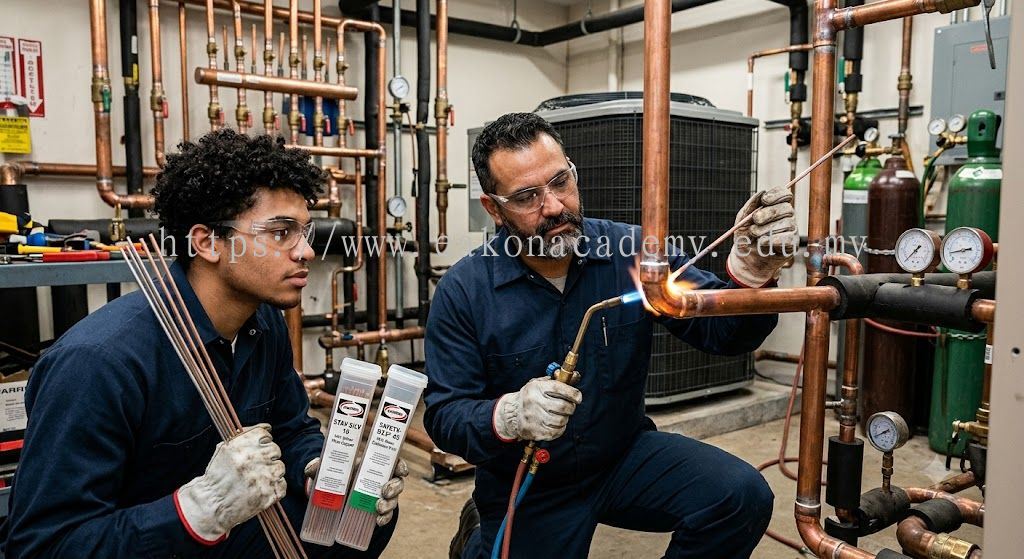
HVAC Refrigeration Brazing Filler Alloy Selection: Essential Guide for High-Performance Cooling and Leak-Free System Reliability
The HVAC refrigeration brazing filler alloy selection is a fundamental process in the installation, maintenance, and repair of refrigeration and air conditioning systems. In modern HVAC-R applications, system performance depends heavily on the quality of brazed joints that connect copper pipes, valves, compressors, and heat exchange components. Selecting the correct brazing filler alloy ensures strong mechanical bonding, leak-free operation, and long-term system durability under high pressure and fluctuating temperature conditions. At eakonacadem.edu.my, we provide professional HVAC training programs designed to help learners understand and apply proper brazing alloy selection techniques for real-world refrigeration systems.
A complete understanding of HVAC refrigeration brazing filler alloy selection begins with identifying the different types of brazing alloys used in refrigeration systems. The most commonly used alloys include phosphorus-copper alloys, silver-based alloys, and specialized high-performance filler metals designed for industrial refrigeration applications. Phosphorus-copper alloys are widely used in copper-to-copper refrigeration piping because they offer excellent flow characteristics and self-fluxing properties. These alloys are cost-effective and suitable for standard refrigeration systems, including domestic air conditioners and light commercial units.
Silver-based brazing alloys play a more advanced role in the HVAC refrigeration brazing filler alloy selection process. These alloys contain varying percentages of silver, which significantly enhances ductility, strength, and resistance to vibration and thermal stress. High-silver-content alloys are particularly important in commercial refrigeration systems, cold storage facilities, and industrial cooling plants where systems operate under high pressure and continuous load conditions. They are also essential for joining dissimilar metals such as copper to steel or brass, ensuring strong and reliable bonding in complex system designs.
Temperature compatibility is another critical factor in HVAC refrigeration brazing filler alloy selection. Each alloy has a specific melting range that determines how it behaves during the brazing process. If the wrong alloy is selected, it may fail to melt properly or may cause overheating of the copper piping, leading to oxidation and internal damage. Proper alloy selection ensures smooth capillary action, allowing the molten filler metal to flow evenly through the joint and form a strong metallurgical bond. This is essential for maintaining refrigeration system efficiency and preventing refrigerant leaks.
Mechanical strength and pressure resistance are key performance considerations in refrigeration systems. HVAC-R systems operate under continuous pressure cycles, thermal expansion, and vibration from compressors and moving components. The correct brazing filler alloy ensures that joints maintain structural integrity under these conditions without cracking or weakening over time. Silver-based alloys typically provide superior performance in high-stress environments, while phosphorus-copper alloys are ideal for standard refrigeration applications where moderate stress conditions are expected.
Corrosion resistance is also an important aspect of HVAC refrigeration brazing filler alloy selection. Refrigeration systems often operate in environments exposed to moisture, chemicals, and varying temperatures, all of which can contribute to corrosion if improper materials are used. High-quality brazing alloys help protect joints from oxidation and degradation, ensuring long-term system reliability and reducing maintenance costs. This is especially critical in industrial refrigeration systems where downtime can result in significant operational losses.
Proper brazing techniques are equally important alongside alloy selection. These include thorough pipe cleaning, precise joint fitting, controlled heating, and nitrogen purging during brazing. Nitrogen purging prevents internal oxidation and ensures that the inside of the refrigeration piping remains clean and free from contaminants that could damage compressors, expansion valves, and other critical components. Without proper technique, even the best brazing alloy cannot deliver optimal performance.
Safety is another essential consideration in HVAC refrigeration brazing filler alloy selection and application. Technicians must use certified materials, follow manufacturer guidelines, and wear appropriate protective equipment during brazing operations. Proper handling of high-temperature tools and gases ensures a safe working environment and compliance with HVAC industry safety standards.
At eakonacadem.edu.my, our HVAC-R training programs provide comprehensive instruction on brazing filler alloy selection, refrigeration piping installation, nitrogen purging, system commissioning, and troubleshooting techniques. Students gain hands-on experience working with different brazing alloys in simulated and real-world environments, allowing them to develop the skills needed for professional HVAC-R work.
Mastering HVAC refrigeration brazing filler alloy selection is essential for ensuring strong, efficient, and reliable cooling systems. Proper alloy selection leads to improved joint strength, reduced refrigerant leakage, enhanced energy efficiency, and extended equipment lifespan, making it a critical competency for every HVAC-R technician in the industry.
More detail about EAKON ACADEMY SDN BHD Malaysia
