HVAC Copper Joint Brazing Safety Techniques for Professional Refrigeration and Air Conditioning Work
HVAC copper joint brazing safety techniques are essential practices that ensure technicians can perform copper pipe brazing in refrigeration and air conditioning systems safely, efficiently, and in compliance with industry standards. These techniques are critical because brazing involves high-temperature flames, pressurized gas cylinders, and metalwork operations that can pose significant risks if not handled correctly. At Eakon Academy, we emphasize HVAC copper joint brazing safety techniques as a core part of our training programs, ensuring learners develop both technical skills and strong safety awareness for real-world HVAC environments.
In HVAC systems, copper brazing is used to join pipes using a filler metal heated above 450°C, creating strong and durable connections. However, without proper safety procedures, this process can lead to burns, fire hazards, gas leaks, or equipment damage. HVAC copper joint brazing safety techniques are designed to minimize these risks while ensuring high-quality installation work. Proper safety practices not only protect technicians but also improve the reliability and performance of HVAC systems.
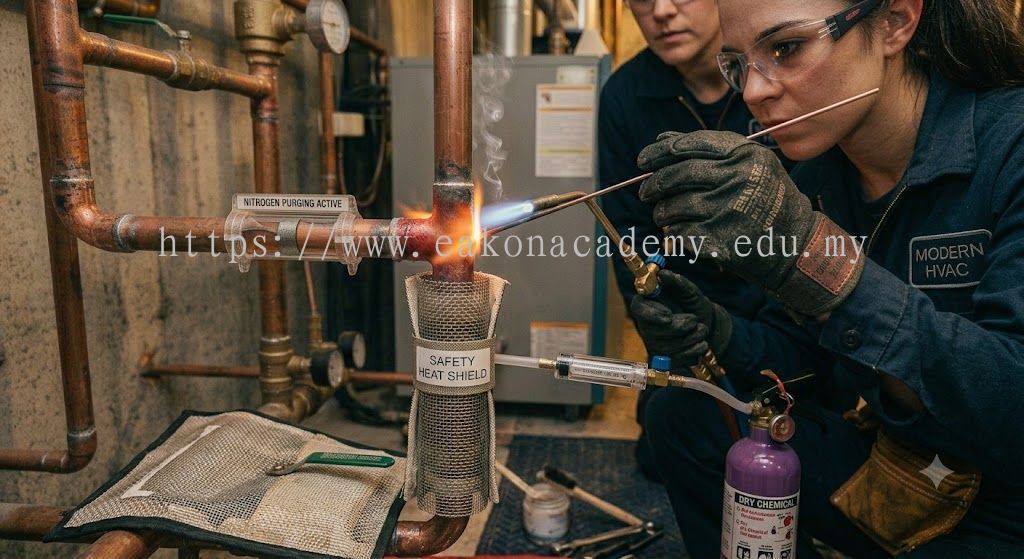
One of the most important HVAC copper joint brazing safety techniques is the correct use of personal protective equipment (PPE). Technicians must wear heat-resistant gloves, safety goggles or face shields, flame-resistant clothing, and safety boots to protect themselves from burns and sparks. Proper PPE usage is essential when working with oxy-acetylene torches or other high-temperature brazing equipment. At Eakon Academy, students are trained to consistently apply PPE standards before beginning any brazing task.
Another critical safety practice is proper handling of gas cylinders used in brazing operations. HVAC copper joint brazing safety techniques require technicians to secure oxygen and acetylene cylinders in an upright position, ensure regulators are properly installed, and check for leaks before operation. Improper handling of gas cylinders can result in dangerous accidents, including fire or explosion risks. Regular inspection and correct storage procedures are key components of safe HVAC work environments.
Ventilation is also a vital part of HVAC copper joint brazing safety techniques. Brazing should always be performed in well-ventilated areas to prevent the buildup of harmful fumes and gases. In enclosed spaces, proper exhaust systems or portable ventilation equipment must be used to maintain safe air quality. This is especially important in confined HVAC installation environments such as mechanical rooms or indoor maintenance areas.
Fire prevention is another essential aspect of HVAC copper joint brazing safety techniques. Technicians must ensure that flammable materials are removed from the work area before brazing begins. Fire blankets or protective barriers should be used when working near sensitive equipment or combustible surfaces. Having a fire extinguisher readily available is also a mandatory safety requirement in professional HVAC installations.
Proper training and skill development are central to HVAC copper joint brazing safety techniques. Technicians must understand how to control flame intensity, maintain safe distances, and apply correct heating methods to avoid overheating or damaging copper pipes. At Eakon Academy, hands-on training ensures learners practice these safety techniques in controlled environments before working on real HVAC systems.
Another important safety consideration is nitrogen purging during brazing operations. HVAC copper joint brazing safety techniques include using nitrogen gas to prevent internal oxidation in copper pipes while brazing. This not only improves system performance but also reduces the risk of contamination-related failures, ensuring long-term reliability of HVAC systems.
The demand for technicians trained in HVAC copper joint brazing safety techniques continues to grow as the HVAC industry expands globally. Employers value professionals who can perform high-quality brazing work while maintaining strict safety standards. Proper safety training reduces workplace accidents, improves system performance, and ensures compliance with industry regulations.
In conclusion, HVAC copper joint brazing safety techniques are essential for protecting technicians and ensuring reliable HVAC system performance. From PPE usage and gas cylinder handling to ventilation, fire prevention, and proper training, each safety step plays a critical role in successful brazing operations. With professional training from Eakon Academy, learners can master both technical and safety aspects of HVAC brazing and build a strong career in the refrigeration and air conditioning industry.
More detail about EAKON ACADEMY SDN BHD Malaysia