HVAC Copper Joint Brazing Inspection Methods for Quality Assurance in Refrigeration and Air Conditioning Systems
HVAC copper joint brazing inspection methods are essential quality control procedures used to ensure that copper pipe connections in refrigeration and air conditioning systems are strong, reliable, and completely leak-free. These inspection methods play a critical role in verifying the integrity of brazed joints after installation, helping to prevent refrigerant loss, system inefficiency, and equipment failure. At Eakon Academy, we provide professional HVAC training that includes HVAC copper joint brazing inspection methods, equipping learners with the skills needed to evaluate, test, and ensure high-quality brazing workmanship in real-world applications.
In HVAC systems, copper brazing is used to join pipes using a high-temperature filler metal that creates a strong metallurgical bond. However, even a properly executed brazing process must be followed by thorough inspection to confirm joint quality. HVAC copper joint brazing inspection methods ensure that each connection meets industry standards for strength, sealing performance, and long-term durability. These methods are especially important in systems such as air conditioners, chillers, cold rooms, and industrial refrigeration systems where leaks can lead to serious performance issues.
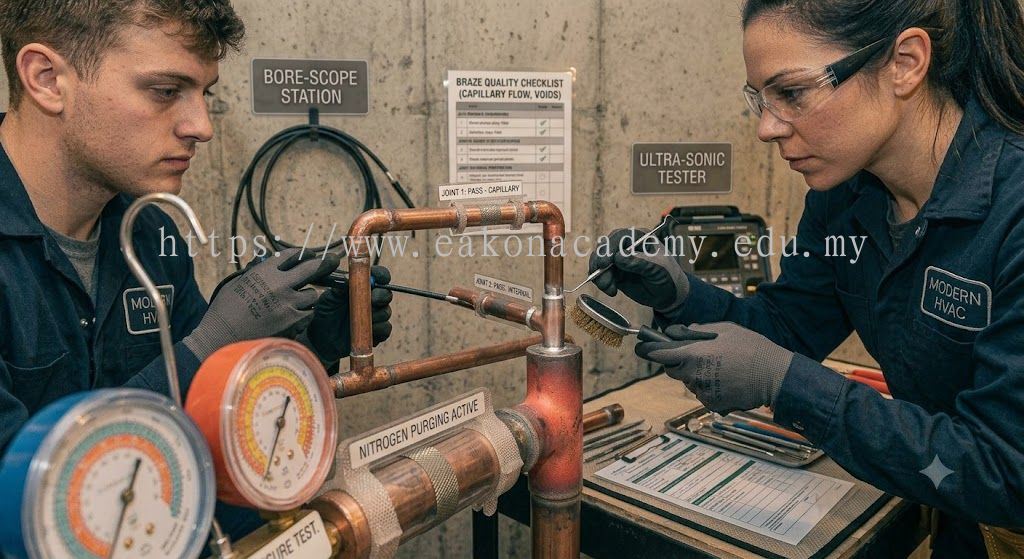
One of the primary HVAC copper joint brazing inspection methods is visual inspection. Technicians carefully examine the brazed joint for uniformity, smooth filler metal flow, and proper coverage around the joint area. A well-brazed joint should show consistent coloration and complete sealing without gaps, cracks, or voids. Visual inspection is the first and most important step in identifying potential defects in the brazing process.
Another key method in HVAC copper joint brazing inspection methods is leak testing. This involves pressurizing the system with nitrogen or another safe testing gas to check for any refrigerant leaks at the brazed joints. Leak detection tools such as electronic leak detectors or soap bubble solutions are commonly used to identify even the smallest leaks. Ensuring leak-free joints is critical for maintaining system efficiency and preventing environmental refrigerant loss.
Pressure testing is also an important part of HVAC copper joint brazing inspection methods. In this process, the piping system is subjected to controlled pressure levels to verify the strength and integrity of brazed joints. Any drop in pressure indicates a potential leak or weak joint that must be repaired. Pressure testing ensures that the system can safely operate under real-world conditions without failure.
Nitrogen holding tests are another advanced technique used in HVAC copper joint brazing inspection methods. After pressurizing the system with nitrogen, technicians monitor pressure stability over a specific period. A stable pressure reading indicates that the brazed joints are secure and leak-free. This method is widely used in professional HVAC installations to ensure long-term reliability.
Internal inspection and cleanliness checks are also part of HVAC copper joint brazing inspection methods. Ensuring that the inside of the copper tubing is free from oxidation, debris, and contamination is essential for maintaining smooth refrigerant flow and preventing compressor damage. This is why nitrogen purging during brazing is often combined with post-installation inspection procedures.
Safety and compliance verification are also important components of HVAC copper joint brazing inspection methods. Technicians must ensure that all brazed joints meet industry safety standards and installation guidelines. At Eakon Academy, learners are trained to follow strict inspection protocols to ensure professional-quality HVAC work that meets industry expectations.
The demand for skilled technicians trained in HVAC copper joint brazing inspection methods continues to grow across residential, commercial, and industrial sectors. Employers highly value professionals who can not only perform brazing but also accurately inspect and verify joint quality to ensure system reliability and efficiency.
In conclusion, HVAC copper joint brazing inspection methods are essential for maintaining high standards in refrigeration and air conditioning systems. From visual inspection and leak testing to pressure checks and nitrogen holding tests, each method plays a vital role in ensuring system performance and safety. With professional training from Eakon Academy, learners can master these inspection techniques and build a successful career in the global HVAC industry.
More detail about EAKON ACADEMY SDN BHD Malaysia