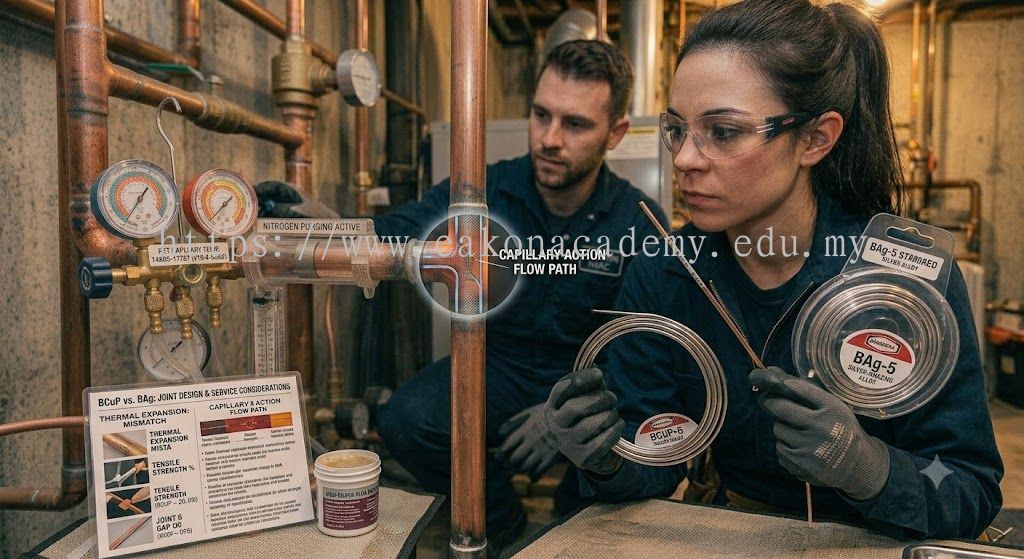
HVAC Copper Joint Brazing Filler Rod Selection for High-Performance Refrigeration and Air Conditioning Systems
HVAC copper joint brazing filler rod selection is a critical technical process in refrigeration and air conditioning systems that directly affects the strength, durability, and leak-free performance of copper pipe joints. Choosing the correct filler rod ensures that brazed connections can withstand high pressure, vibration, and thermal expansion commonly found in HVAC applications. At Eakon Academy, we provide professional HVAC training that focuses on HVAC copper joint brazing filler rod selection, helping learners understand how material choice impacts system reliability and long-term performance.
In HVAC systems, copper brazing involves joining copper pipes using a filler metal that melts at temperatures above 450°C. The selection of the correct filler rod is essential because different HVAC applications require different levels of strength, flow characteristics, and temperature resistance. HVAC copper joint brazing filler rod selection ensures that technicians use the appropriate alloy composition to achieve strong metallurgical bonding and prevent refrigerant leakage in systems such as air conditioners, chillers, cold rooms, and refrigeration units.
One of the most commonly used materials in HVAC copper joint brazing filler rod selection is silver-based alloys. These filler rods provide excellent strength, fluidity, and corrosion resistance, making them ideal for high-pressure refrigeration systems. The percentage of silver content in the rod affects its melting temperature and bonding strength. Higher silver content generally improves flow and joint strength, making it suitable for critical HVAC applications where reliability is essential.
Another important factor in HVAC copper joint brazing filler rod selection is understanding base metal compatibility. Copper-to-copper joints require filler rods that can bond effectively without causing brittleness or weak spots. Proper selection ensures smooth capillary action, allowing the molten filler metal to flow evenly into the joint gap and create a strong, leak-free seal. At Eakon Academy, trainees are taught how to match filler rods with different HVAC system requirements for optimal performance.
Temperature control is also closely linked to HVAC copper joint brazing filler rod selection. Different filler rods melt at different temperature ranges, and technicians must select rods that match the heating capabilities of their brazing equipment, such as oxy-acetylene or air-fuel torches. Using the correct filler rod ensures proper melting behavior, preventing overheating or underheating issues that could compromise joint strength.
Flux compatibility is another important consideration in HVAC copper joint brazing filler rod selection. Flux is often used to prevent oxidation and improve metal flow during brazing. Selecting a filler rod that works effectively with the appropriate flux ensures clean, smooth, and strong joints. Proper flux application combined with correct rod selection enhances the overall quality of HVAC installations.
Nitrogen purging is often used alongside HVAC copper joint brazing filler rod selection to maintain internal pipe cleanliness. By introducing nitrogen gas during brazing, internal oxidation is prevented, ensuring that the filler metal bonds properly without contamination. This results in improved refrigerant flow and long-term system efficiency.
Safety is also a key part of HVAC copper joint brazing filler rod selection training. Technicians must understand how to handle filler rods safely, apply correct heating techniques, and follow proper workplace safety procedures. At Eakon Academy, safety is integrated into all HVAC training modules to ensure learners are fully prepared for professional fieldwork.
The demand for skilled HVAC technicians who understand copper joint brazing filler rod selection continues to grow across residential, commercial, and industrial sectors. Proper material selection improves system reliability, reduces maintenance costs, and enhances energy efficiency, making it a highly valued skill in the HVAC industry.
In conclusion, HVAC copper joint brazing filler rod selection is a fundamental aspect of achieving high-quality refrigeration and air conditioning systems. From material compatibility and temperature control to flux usage, nitrogen purging, and safety practices, each factor plays a crucial role in successful brazing. With professional training from Eakon Academy, learners can master these essential skills and build a strong career in the global HVAC industry.
More detail about EAKON ACADEMY SDN BHD Malaysia