HVAC Brazing vs Soldering Safety Comparison – Understanding Safe Copper Pipe Joining Practices in HVAC Systems
Understanding the HVAC brazing vs soldering safety comparison is essential for HVAC technicians, refrigeration engineers, and air conditioning professionals who work with copper piping systems in residential, commercial, and industrial applications. Safety during copper pipe joining is a critical factor in HVAC installation and maintenance because improper handling of high-temperature tools, refrigerants, and metal joints can lead to accidents, equipment damage, or poor system performance. Eakon Academy provides professional HVAC training programs designed to help technicians develop safe working practices, technical knowledge, and hands-on skills in brazing, soldering, and modern refrigeration system installation.
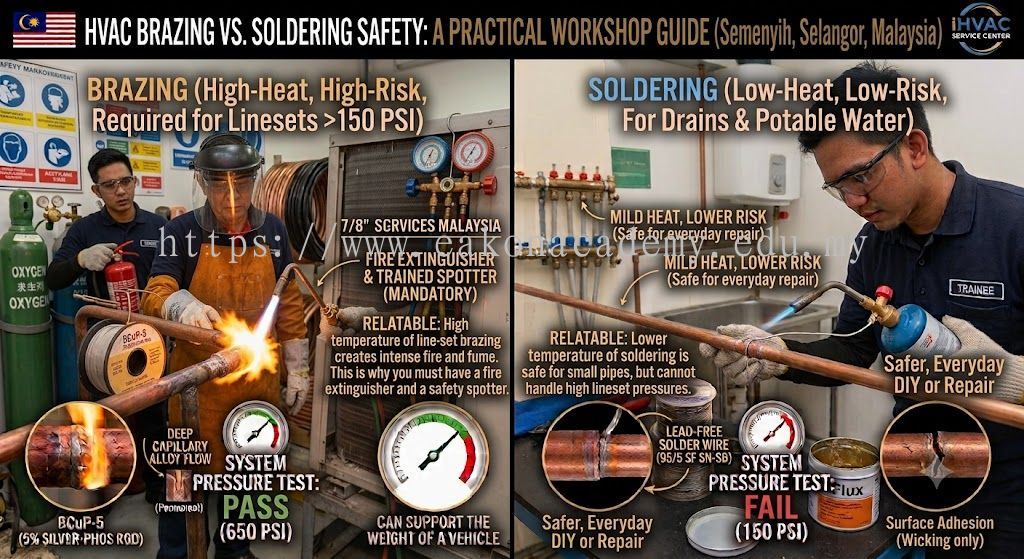
When evaluating the HVAC brazing vs soldering safety comparison, brazing generally requires stricter safety control due to the higher temperatures involved. Brazing operates above 450°C and uses powerful heating equipment such as oxy-acetylene or similar torches. Because of this, technicians must be trained to handle open flames, high heat, and pressurized gas cylinders safely. Proper protective equipment, controlled work environments, and correct procedures are essential to prevent burns, fire hazards, and equipment damage during HVAC brazing work.
HVAC brazing safety practices include proper ventilation, flame control, safe gas handling, and correct use of personal protective equipment such as gloves, goggles, and fire-resistant clothing. Technicians must also ensure that surrounding materials are protected from heat exposure to avoid fire risks. Another important safety practice is nitrogen purging during brazing, which helps prevent internal oxidation inside copper pipes and ensures safer, cleaner refrigeration systems.
In comparison, HVAC soldering safety involves lower working temperatures, making it generally easier and less hazardous in terms of heat exposure. Soldering uses filler materials that melt below 450°C, reducing the risk of extreme heat-related accidents. However, safety is still important, especially when working with flux materials, heated tools, and confined spaces. Proper ventilation is required to avoid inhaling fumes produced during soldering, and technicians must still use protective equipment to prevent burns and injuries.
The HVAC brazing vs soldering safety comparison also includes equipment handling and workplace risk management. Brazing requires more advanced safety awareness because of the combination of high heat and pressurized gases. Soldering, while simpler, still requires caution when working with heated tools and chemical flux agents. In both methods, proper training is essential to ensure technicians can identify hazards, follow correct procedures, and maintain safe working conditions.
Another important safety consideration in HVAC work is the risk of system contamination and damage caused by improper joining techniques. Poor brazing or soldering can lead to refrigerant leaks, system inefficiency, and potential equipment failure. While this is not a direct physical safety issue, it can result in long-term operational hazards and costly repairs. Proper training ensures technicians understand how to create strong, leak-free joints that maintain system safety and performance.
Eakon Academy offers professional HVAC and refrigeration training programs that emphasize both technical skills and workplace safety. Our courses cover copper pipe brazing techniques, refrigeration system installation, air conditioning servicing, refrigerant handling, and HVAC safety standards. By learning the correct HVAC brazing vs soldering safety comparison, technicians can improve their awareness of risks and develop safe working habits in real-world HVAC environments.
For individuals searching for HVAC brazing training, copper pipe safety techniques, refrigeration installation safety courses, or professional HVAC technician training, understanding safety differences between brazing and soldering is a fundamental requirement. Proper training reduces workplace accidents, improves installation quality, and ensures compliance with industry safety standards.
Visit eakonacadem.edu.my to explore professional HVAC training programs and enhance your knowledge of air conditioning and refrigeration safety practices. Mastering the HVAC brazing vs soldering safety comparison helps technicians work more safely, reduce risks, and build strong, reliable skills for a successful HVAC career.
More detail about EAKON ACADEMY SDN BHD Malaysia