Copper Tube Brazing vs Soldering HVAC Systems – Understanding the Best Joining Technique for Reliable Air Conditioning and Refrigeration
Understanding copper tube brazing vs soldering HVAC systems is an important part of professional HVAC knowledge for technicians, refrigeration specialists, and air conditioning engineers. The method used to connect copper tubing has a direct impact on system strength, refrigerant safety, energy efficiency, and the long-term performance of HVAC equipment. Eakon Academy provides professional HVAC training programs designed to help technicians develop practical skills in copper tube installation, brazing techniques, refrigeration systems, and modern air conditioning maintenance procedures.
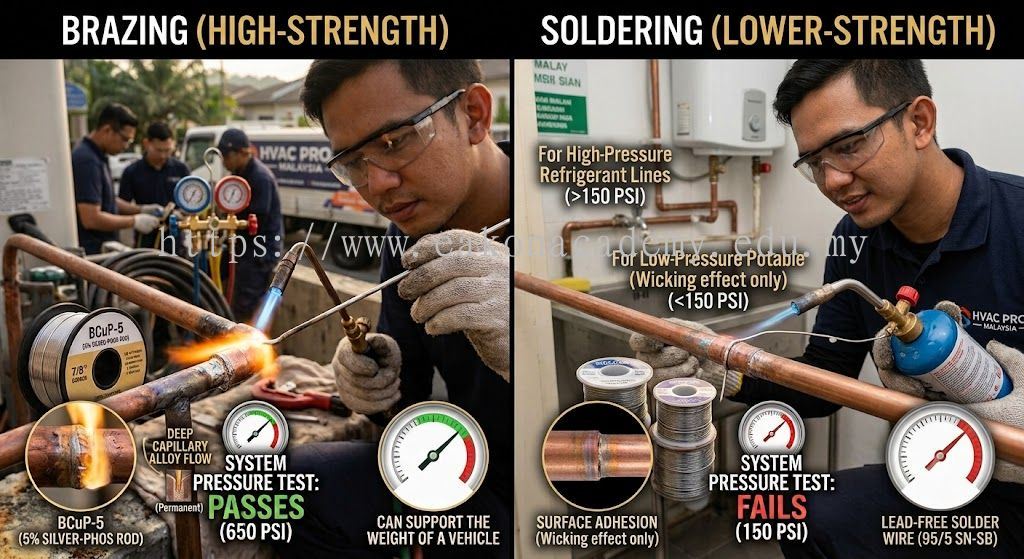
When comparing copper tube brazing vs soldering HVAC systems, brazing is generally considered the preferred method for refrigeration and air conditioning applications because it provides stronger and more reliable pipe connections. HVAC systems operate under high pressure and continuous temperature changes, requiring copper tube joints that can withstand vibration, thermal expansion, and demanding operating conditions. Brazing creates durable connections that help prevent refrigerant leakage and maintain efficient system performance.
Copper tube brazing for HVAC systems uses a high-temperature joining process where a brazing alloy melts above 450°C and flows into the connection area through capillary action. The copper tube remains solid while the filler material creates a strong bond between the pipe surfaces. This process produces excellent mechanical strength and allows HVAC piping systems to operate safely under high-pressure refrigeration conditions. Brazing is widely used for split air conditioning systems, VRF and VRV systems, refrigeration equipment, chillers, and commercial HVAC installations.
In contrast, soldering copper tubes in HVAC systems uses a lower-temperature joining process where solder materials melt below 450°C. Soldering can be useful for some low-pressure applications, but it is generally not recommended for refrigeration circuits that require high strength and pressure resistance. Modern HVAC systems depend on reliable copper tubing connections because refrigerant leaks can reduce cooling performance, increase energy consumption, and create additional maintenance problems.
The main difference between copper tube brazing and soldering HVAC systems is the strength, temperature resistance, and suitability for different applications. Brazed joints provide better durability and are designed to handle the pressure and operating conditions found in refrigeration systems. Soldered joints may not provide the same level of reliability when exposed to high-pressure refrigerants and frequent temperature fluctuations. Professional HVAC technicians must understand these differences to choose the correct joining technique for each installation.
Proper brazing techniques are essential for producing high-quality copper tube connections. HVAC technicians must learn correct pipe preparation, cleaning procedures, joint fitting, torch operation, and heat control. Excessive heat can damage copper tubing, while insufficient heat may prevent proper filler flow and create weak joints. Professional HVAC training teaches technicians how to achieve the correct brazing temperature, maintain proper joint quality, and perform reliable refrigeration pipe installations.
Another important part of copper tube brazing training is nitrogen purging. During the brazing process, oxygen inside copper pipes can cause oxidation and create unwanted contaminants. These particles may affect sensitive refrigeration components such as compressors, expansion valves, and filters. Using nitrogen during brazing helps maintain clean internal pipe surfaces and improves the reliability and lifespan of HVAC systems.
Eakon Academy specializes in HVAC and refrigeration training programs that combine technical knowledge with practical hands-on experience. Our courses cover essential skills including copper tube brazing, refrigeration piping installation, air conditioning servicing, refrigerant handling, troubleshooting methods, and professional HVAC maintenance procedures. These skills help technicians improve workmanship quality and meet modern industry requirements.
For anyone searching for HVAC brazing training, copper tube joining techniques, refrigeration installation courses, or professional air conditioning technician training, understanding copper tube brazing vs soldering HVAC systems is a fundamental step toward becoming a skilled HVAC professional. Proper training allows technicians to perform safer installations, reduce system failures, and deliver reliable cooling solutions.
Visit eakonacadem.edu.my to explore professional HVAC training courses and enhance your expertise in air conditioning and refrigeration technology. Mastering copper tube brazing vs soldering HVAC systems helps technicians build stronger installations, improve HVAC system performance, and develop valuable skills for long-term success in the HVAC industry.
More detail about EAKON ACADEMY SDN BHD Malaysia