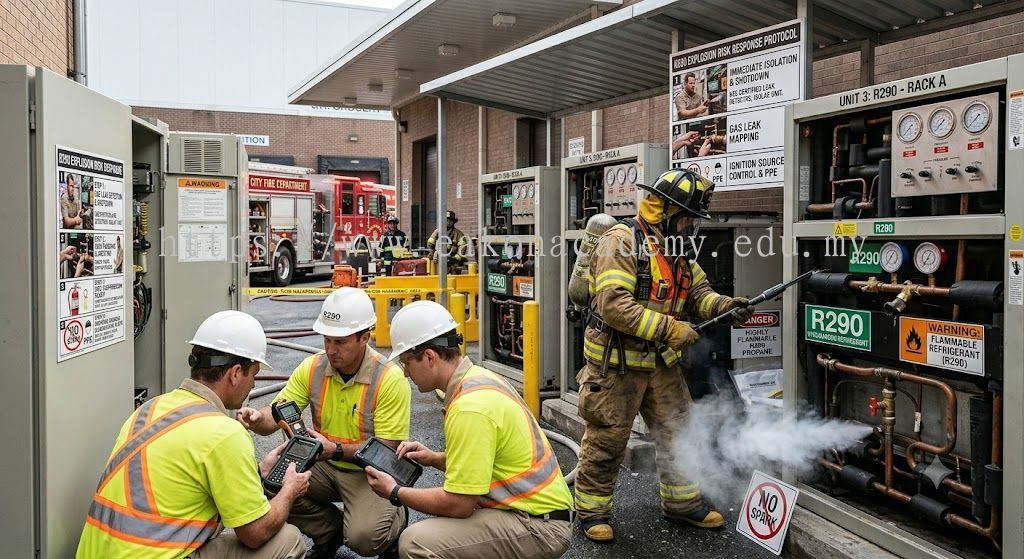
R290 EXPLOSION RISK RESPONSE – HVAC EMERGENCY CONTROL, FLAMMABLE REFRIGERANT SAFETY MANAGEMENT, AND INDUSTRIAL HAZARD MITIGATION
R290 explosion risk response is a critical safety discipline in modern HVAC and refrigeration systems that use propane (R290) as a low-GWP, energy-efficient refrigerant. While R290 is widely adopted due to its excellent environmental benefits and high cooling efficiency, it is also highly flammable, which creates a potential explosion risk if not properly managed. Understanding R290 explosion risk response procedures is essential for HVAC technicians, engineers, and safety professionals responsible for operating and maintaining refrigeration systems in residential, commercial, and industrial environments.
The primary goal of R290 explosion risk response is to prevent ignition of flammable refrigerant mixtures and to ensure rapid, controlled action in the event of a leak or hazardous condition. R290 can form explosive atmospheres when mixed with air within specific concentration ranges, especially in confined or poorly ventilated spaces. Therefore, early detection and immediate response are critical to minimizing risk. Gas detection systems designed for hydrocarbon refrigerants play a vital role in identifying leaks before they reach dangerous levels.
A key step in R290 explosion risk response is the immediate elimination of all ignition sources. This includes shutting down electrical equipment, avoiding the use of switches or mobile devices, and ensuring that no open flames or spark-generating tools are present in the affected area. Even a small ignition source can trigger a violent explosion if R290 concentrations are within the flammable range. Rapid hazard control is essential to preventing escalation into catastrophic events.
Ventilation is another critical component of explosion risk response procedures. Once a leak is detected, mechanical ventilation systems must be activated immediately to disperse the refrigerant gas and reduce its concentration below the lower explosive limit. Proper airflow management helps prevent gas accumulation in confined spaces such as mechanical rooms, refrigeration units, and industrial cooling plants. In some cases, natural ventilation may assist, but mechanical systems are generally required for effective and rapid gas removal.
System shutdown and isolation are also essential steps in R290 explosion risk response. Technicians must quickly activate emergency stop controls to shut down compressors and electrical systems associated with the refrigeration unit. Service valves must be closed to prevent further refrigerant release. Many modern HVAC systems are equipped with automatic safety shutdown mechanisms that respond instantly to gas detection signals, improving response time and reducing human intervention errors.
Personal safety is a top priority during explosion risk response situations. Technicians must use appropriate personal protective equipment (PPE), including anti-static clothing, safety goggles, gloves, and flame-resistant gear. Only trained and certified personnel should handle R290 emergency situations, as improper actions can significantly increase the risk of ignition or explosion. In high-risk scenarios, full evacuation of the area is mandatory, and coordination with emergency fire response teams is required.
Training and education are essential for effective R290 explosion risk response. Institutions such as eakonacadem.edu.my provide specialized HVAC training programs that prepare learners to handle flammable refrigerants safely. Through structured learning, practical simulations, and safety-focused coursework, technicians gain the skills needed to identify hazards, respond to leaks, and execute emergency procedures effectively. Compliance with international standards such as ISO 817 and EN 378 ensures that best safety practices are followed across the industry.
Post-incident procedures are also important in managing explosion risk. After an R290-related emergency, the system must be thoroughly inspected, repaired, and tested before being returned to service. A detailed incident report should document the cause, response actions, and corrective measures. This helps improve future safety protocols and reduces the likelihood of repeated incidents.
From an SEO perspective, R290 explosion risk response is a highly valuable keyword for HVAC training institutions, refrigeration safety platforms, and industrial safety content providers. By publishing detailed, authoritative content on this topic, websites such as eakonacadem.edu.my can improve search engine visibility, attract targeted organic traffic, and strengthen domain authority. This positions the website as a trusted educational resource for HVAC professionals and learners seeking advanced refrigeration safety knowledge.
In conclusion, R290 explosion risk response is essential for ensuring safe operation in HVAC systems using flammable refrigerants. With proper training, rapid response actions, and strict safety protocols, explosion risks can be effectively controlled. As the HVAC industry continues to adopt sustainable refrigerant technologies, explosion risk management will remain a critical competency for all professionals in the field.
More detail about EAKON ACADEMY SDN BHD Malaysia