R290 EMERGENCY VENTILATION PROCEDURES – HVAC SAFETY AIRFLOW CONTROL, FLAMMABLE REFRIGERANT GAS DISPERSION, AND INDUSTRIAL RISK MANAGEMENT
R290 emergency ventilation procedures are a critical safety component in modern HVAC and refrigeration systems that use propane (R290) as a low-GWP, energy-efficient refrigerant. While R290 is widely recognized for its environmental benefits and strong cooling performance, it is also highly flammable, which makes proper ventilation procedures essential in emergency situations. Effective ventilation is one of the most important safety controls used to reduce fire and explosion risks caused by refrigerant leaks. Understanding R290 emergency ventilation procedures is essential for HVAC technicians, engineers, and safety professionals working in residential, commercial, and industrial refrigeration environments.
The main objective of R290 emergency ventilation procedures is to quickly and safely disperse leaked refrigerant gas to prevent the formation of flammable air-gas mixtures. Since propane can ignite when mixed with air within certain concentration limits, controlling the indoor atmosphere during a leak is critical. Ventilation helps reduce gas concentration below the lower flammability limit, significantly lowering the risk of combustion. Proper airflow management ensures that R290 gas does not accumulate in confined spaces such as mechanical rooms, cold storage facilities, or enclosed HVAC plant areas.
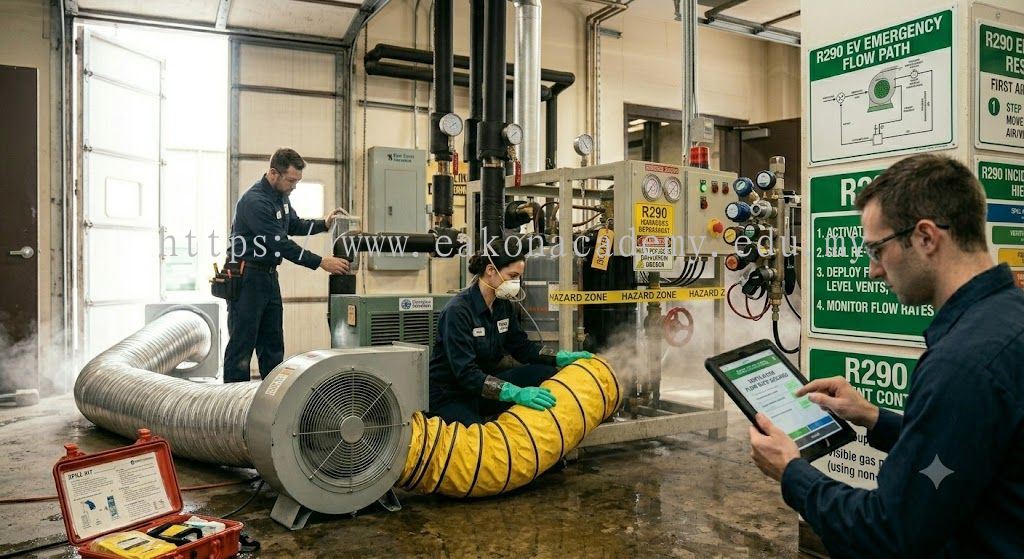
A key step in R290 emergency ventilation procedures is immediate activation of mechanical ventilation systems when a leak is detected. High-capacity exhaust fans and dedicated ventilation units must be switched on to remove accumulated refrigerant gas from the affected area. In properly designed HVAC systems, emergency ventilation is often automatically triggered by hydrocarbon gas detectors, ensuring rapid response even if personnel are not present. This automation greatly improves safety and reduces reaction time during critical incidents.
Natural ventilation also plays a supporting role in emergency procedures. In situations where mechanical systems are insufficient or unavailable, doors, vents, and windows should be opened to promote natural airflow and help disperse the gas. However, reliance on natural ventilation alone is not recommended in high-risk environments, as airflow may not be sufficient to control high concentrations of R290 gas. Therefore, a combination of mechanical and natural ventilation strategies is often used for maximum effectiveness.
Another important aspect of R290 emergency ventilation procedures is ensuring that ventilation systems are safe for use in flammable environments. All ventilation equipment must be explosion-proof or intrinsically safe to prevent ignition of refrigerant gas during operation. Electrical components, switches, and motors used in ventilation systems must comply with safety standards designed for hazardous atmospheres. Proper system design and maintenance are essential to ensure reliable performance during emergency situations.
During ventilation operations, system isolation and shutdown procedures should be carried out simultaneously. Technicians must ensure that refrigeration systems are shut down and service valves are closed to stop further refrigerant release. Ventilation alone cannot resolve the issue if the leak source remains active. Therefore, coordinated action between system shutdown and ventilation is critical in controlling the hazard effectively.
Personal safety is also a key consideration in R290 emergency ventilation procedures. Technicians must avoid entering areas with high gas concentration unless properly trained and equipped with appropriate personal protective equipment (PPE), including anti-static clothing, gloves, and safety goggles. Only authorized personnel should perform emergency ventilation operations, and evacuation may be required in severe leak scenarios. Coordination with emergency response teams ensures safe and controlled handling of the incident.
Training and education are essential for effective implementation of R290 emergency ventilation procedures. Institutions such as eakonacadem.edu.my provide specialized HVAC training programs that teach learners how to safely manage flammable refrigerants, including proper ventilation strategies during emergencies. Through practical training, simulations, and theoretical instruction, technicians gain the skills needed to respond effectively to real-world refrigerant leaks. Compliance with international standards such as ISO 817 and EN 378 further strengthens safety practices and ensures global industry alignment.
Post-incident procedures are also an important part of ventilation safety management. After the refrigerant gas has been safely dispersed, the system must be inspected, repaired, and tested before being returned to service. Proper documentation of the incident, including ventilation response actions, helps improve future safety planning and operational procedures.
From an SEO perspective, R290 emergency ventilation procedures is a highly valuable keyword for HVAC training centers, refrigeration safety platforms, and technical education websites. By publishing detailed and authoritative content on this topic, websites like eakonacadem.edu.my can improve search engine rankings, attract targeted organic traffic, and strengthen domain authority. This helps position the website as a trusted resource for HVAC professionals and learners seeking advanced refrigeration safety knowledge.
In conclusion, R290 emergency ventilation procedures are essential for ensuring safe and effective control of flammable refrigerant leaks in HVAC systems. With proper ventilation design, trained personnel, and coordinated emergency response actions, the risks associated with R290 can be significantly reduced. As the HVAC industry continues to adopt sustainable refrigerant technologies, ventilation safety will remain a critical competency for all professionals in the field.
More detail about EAKON ACADEMY SDN BHD Malaysia