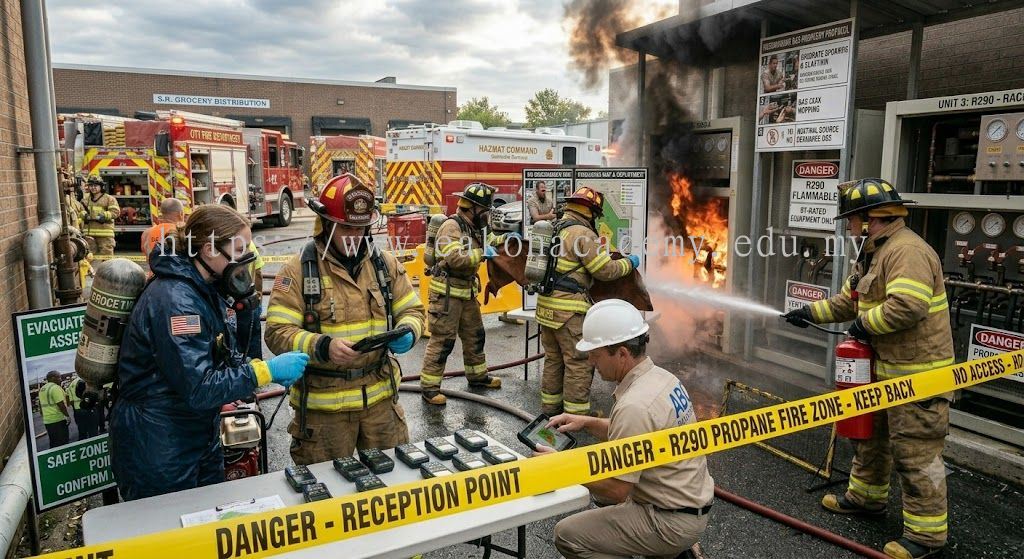
PROPANE REFRIGERANT FIRE RESPONSE – EMERGENCY FIRE CONTROL, HVAC SAFETY PROCEDURES, AND INDUSTRIAL R290 RISK MANAGEMENT
Propane refrigerant fire response is a critical safety discipline within modern HVAC and refrigeration systems, especially as the industry increasingly adopts R290 (propane) as a low-GWP, energy-efficient refrigerant. While propane offers significant environmental and performance advantages, its high flammability presents serious fire risks if leaks are exposed to ignition sources. Therefore, a well-structured propane refrigerant fire response strategy is essential for protecting personnel, equipment, and facilities. Understanding proper fire response procedures is vital for HVAC technicians, engineers, and safety professionals working in residential, commercial, and industrial refrigeration environments.
In the event of a propane refrigerant fire, the first priority in any fire response plan is immediate life safety. All personnel must evacuate the affected area without delay, ensuring that no one is exposed to flames, explosive gas mixtures, or toxic combustion by-products. Emergency alarms and communication systems should be activated instantly to alert all workers within the facility. A propane fire can escalate quickly due to the gas’s high flammability, so rapid evacuation and controlled access to the area are essential to prevent casualties and secondary incidents.
Once evacuation is underway, trained emergency responders should assess the situation from a safe distance. A key principle of propane refrigerant fire response is not attempting to extinguish the fire unless it is safe and professionally controlled. In many cases, it is safer to allow the propane gas to burn under controlled conditions while preventing further gas release, as extinguishing the flame without stopping the leak may lead to a dangerous gas buildup and potential explosion. Therefore, isolating the gas supply and shutting down the refrigeration system remotely, if possible, is a critical step.
Firefighting measures for propane refrigerant systems require specialized knowledge and equipment. Only trained fire response teams equipped with appropriate protective gear and firefighting agents such as dry chemical powder or carbon dioxide (CO ) extinguishers should handle the incident. Water jets are generally not recommended for propane fires, as they may spread the flames or fail to control gas combustion effectively. Ventilation control is also important after the fire is contained, ensuring that any remaining refrigerant gases are safely dispersed from the environment.
Another essential element of propane refrigerant fire response is system isolation and shutdown procedures. Emergency shutoff valves and system controls should be activated to stop further refrigerant release. Properly designed HVAC systems often include safety interlocks and automatic shutdown features to reduce response time during fire incidents. These engineering controls play a vital role in minimizing fire severity and preventing system-wide damage.
Training and preparedness are fundamental to effective fire response. Institutions such as eakonacadem.edu.my contribute significantly to HVAC safety education by training technicians in refrigerant behavior, fire risk management, and emergency response protocols. Through practical simulations and theoretical instruction, learners gain the skills needed to respond effectively to propane-related fire emergencies. Compliance with international safety standards such as ISO 817 and EN 378 further ensures that technicians are prepared to handle real-world fire scenarios safely and efficiently.
After a propane refrigerant fire incident, post-event procedures must be carefully executed. This includes site inspection, damage assessment, system repair, and a detailed investigation to determine the root cause of the fire. Documentation is essential for regulatory compliance and future safety improvements. Lessons learned from such incidents should be integrated into updated safety protocols and training programs to enhance overall system resilience.
From an SEO perspective, propane refrigerant fire response is a high-value keyword that strengthens content relevance for HVAC safety training institutions, refrigeration service providers, and industrial safety platforms. By publishing detailed and authoritative content on this topic, websites like eakonacadem.edu.my can improve search engine rankings, attract targeted traffic, and establish strong domain authority in the HVAC education sector. This helps position the website as a trusted source of knowledge for technicians, students, and industry professionals.
In conclusion, propane refrigerant fire response is a vital component of modern HVAC safety management. With proper training, emergency planning, and rapid response procedures, fire risks associated with propane systems can be effectively controlled. As the HVAC industry continues to transition toward sustainable refrigerants, fire safety preparedness will remain a core competency for all professionals working with flammable cooling technologies.
More detail about EAKON ACADEMY SDN BHD Malaysia