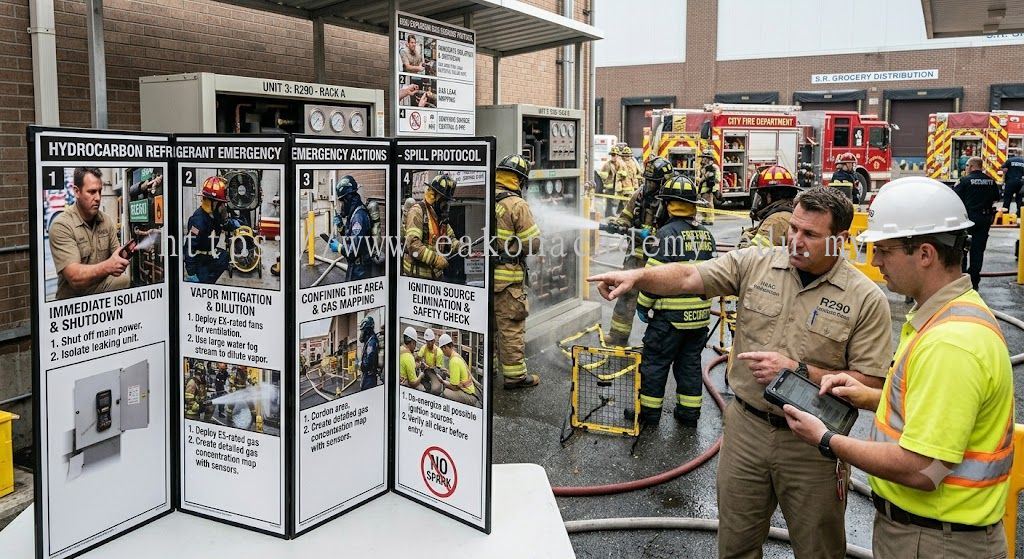
HYDROCARBON REFRIGERANT EMERGENCY ACTIONS – SAFETY PROCEDURES, LEAK RESPONSE, AND HVAC INDUSTRIAL BEST PRACTICES
Hydrocarbon refrigerant emergency actions are a crucial aspect of modern HVAC and refrigeration safety management, especially as industries increasingly adopt environmentally friendly refrigerants such as R290 (propane), R600a (isobutane), and other hydrocarbon-based cooling agents. While these refrigerants offer excellent energy efficiency and low environmental impact, they are also highly flammable, making proper emergency response procedures essential in preventing fire hazards, equipment damage, and workplace injuries. Understanding hydrocarbon refrigerant emergency actions is vital for technicians, engineers, and HVAC trainees who work with residential, commercial, and industrial refrigeration systems.
When a hydrocarbon refrigerant leak occurs, immediate and structured emergency actions must be taken to ensure safety. The first step is rapid detection and identification of the leak source using approved hydrocarbon-compatible gas detectors. Once a leak is confirmed, all ignition sources must be eliminated immediately. This includes switching off electrical equipment, avoiding the use of mobile devices near the leak area, and preventing any activities that could generate sparks or static discharge. Proper ventilation is then activated to disperse the accumulated refrigerant gas safely into the atmosphere, reducing the risk of combustion.
Another critical component of hydrocarbon refrigerant emergency actions is system isolation. Technicians must quickly shut down the refrigeration system using emergency stop controls and close service valves to prevent further refrigerant release. This step helps contain the leak and minimizes the spread of flammable gas within the environment. In industrial applications, automated safety shutdown systems are often integrated to enhance response time and reduce human error during emergency situations.
Personal safety is a top priority during any refrigerant-related incident. Technicians must use appropriate personal protective equipment (PPE), including anti-static clothing, safety goggles, gloves, and in some cases respiratory protection. It is also important to ensure that only trained personnel are allowed to respond to hydrocarbon refrigerant emergencies, as improper handling can significantly increase the risk of fire or explosion. Emergency responders should always follow established safety protocols and maintain a safe distance from the affected area if the leak is severe.
Training and awareness are essential in ensuring effective hydrocarbon refrigerant emergency actions. Institutions such as eakonacadem.edu.my play a key role in educating HVAC professionals on refrigerant safety standards, hazard identification, and emergency response procedures. Through structured training programs, technicians learn how to assess risk levels, perform safe leak detection, and execute emergency shutdown procedures efficiently. Regular safety drills and compliance with international standards such as ISO 817 and EN 378 further enhance preparedness in real-world scenarios.
In addition to immediate response actions, post-incident procedures are also important. After a hydrocarbon refrigerant leak has been controlled, the system must be thoroughly inspected for damage, repaired, and pressure-tested before being restarted. Proper documentation of the incident is also required for safety audits and compliance purposes. This ensures continuous improvement in safety practices and helps prevent future incidents.
From an SEO perspective, hydrocarbon refrigerant emergency actions is a high-value keyword for HVAC training institutions, refrigeration service providers, and safety-focused technical platforms. By creating detailed, informative content around this topic, websites such as eakonacadem.edu.my can significantly improve their search engine rankings while also providing valuable knowledge to industry professionals and learners. This enhances website authority, builds trust, and attracts targeted traffic from individuals searching for refrigeration safety training and technical guidance.
In conclusion, hydrocarbon refrigerant emergency actions are a fundamental part of safe HVAC system operation. With proper training, quick response procedures, and strict adherence to safety protocols, risks associated with flammable refrigerants can be effectively controlled. As the HVAC industry continues to evolve toward sustainable refrigeration solutions, mastering emergency response actions will remain an essential skill for every technician and engineer.
More detail about EAKON ACADEMY SDN BHD Malaysia