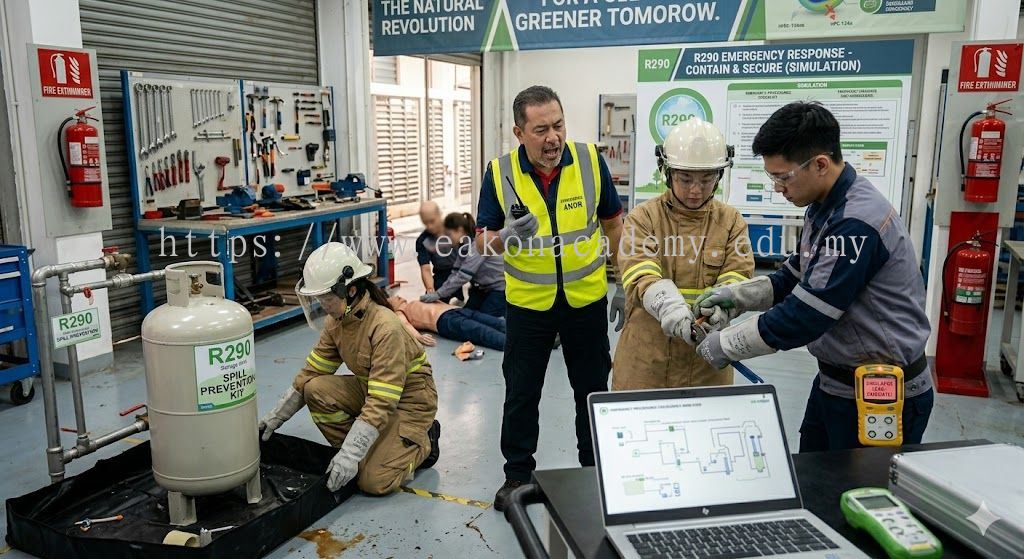
R290 EMERGENCY RESPONSE TRAINING: HVAC SAFETY PREPAREDNESS, FLAMMABLE REFRIGERANT INCIDENT MANAGEMENT AND PROFESSIONAL RISK CONTROL PROCEDURES
R290 emergency response training refers to a specialized HVAC-R safety program designed to equip technicians, engineers, and facility personnel with the knowledge and skills required to respond effectively to incidents involving propane (R290), a natural refrigerant known for its extremely low Global Warming Potential (GWP), high energy efficiency, and zero ozone depletion potential. Because R290 is classified as a flammable hydrocarbon refrigerant, emergency preparedness is essential to ensure rapid, safe, and controlled response in the event of leaks, fire hazards, or system failures.
One of the primary objectives of R290 emergency response training is to ensure technician and public safety during refrigerant-related incidents. Since R290 is flammable, improper handling or accidental leakage can create hazardous conditions if not managed correctly. Training programs focus on identifying emergency situations early, controlling ignition sources, evacuating affected areas, and implementing immediate safety measures. These skills are critical for minimizing risks and preventing accidents from escalating.
Environmental protection is another important aspect of R290 emergency response training. Traditional refrigerants often have high Global Warming Potential (GWP), contributing significantly to environmental damage when released. In contrast, R290 is a low-GWP refrigerant with zero ozone depletion potential. Emergency response training ensures that technicians understand how to contain and minimize refrigerant release during incidents, reducing environmental impact and supporting global sustainability goals.
Energy efficiency and system protection are also indirectly supported through emergency preparedness. While R290 systems are highly efficient under normal conditions, emergency situations such as leaks or system failures can compromise performance. Proper response training helps technicians quickly identify issues, isolate affected components, and restore system stability, ensuring minimal downtime and continued operational efficiency.
A key component of R290 emergency response training is hazard identification and risk assessment. Technicians are trained to recognize early warning signs of refrigerant leaks, abnormal system behavior, and potential ignition risks. Understanding these indicators allows for faster response and more effective risk mitigation before incidents escalate.
Fire safety and explosion prevention are central elements of the training program. Because R290 is flammable, technicians must learn how to safely manage fire-related emergencies, including the use of appropriate fire extinguishers, isolation of energy sources, and safe evacuation procedures. These protocols are essential for protecting both personnel and property during emergency situations.
Leak containment and system shutdown procedures are also critical parts of R290 emergency response training. Technicians are trained to quickly isolate refrigerant systems, stop leaks, and prevent further release of gas. Proper shutdown procedures ensure that the system is brought to a safe state before repairs or recovery operations begin.
Emergency equipment usage is another important training area. Technicians learn how to use gas detectors, ventilation systems, fire suppression tools, and personal protective equipment (PPE) effectively during emergency situations. Proper use of equipment significantly improves response efficiency and safety outcomes.
From a professional development perspective, R290 emergency response training is essential for HVAC-R technicians and engineers working with flammable refrigerants. Institutions such as Eakon Academy Malaysia provide specialized training programs covering R290 safety protocols, emergency procedures, system installation, risk management, and maintenance practices. These programs ensure technicians are fully prepared to handle emergency situations with confidence and professionalism.
Furthermore, R290 emergency response training plays a critical role in building a safe and resilient HVAC workforce. As global adoption of low-GWP refrigerants continues to grow, emergency preparedness becomes increasingly important. This training not only enhances technical safety skills but also supports the global transition toward safer, greener, and more sustainable HVAC-R systems, ensuring rapid and effective response to potential refrigerant-related emergencies.
More detail about EAKON ACADEMY SDN BHD Malaysia