R290 PPE SAFETY REQUIREMENTS – PERSONAL PROTECTIVE EQUIPMENT STANDARDS, WORKPLACE SAFETY CONTROL AND PROFESSIONAL HVAC TRAINING
R290 PPE safety requirements are an essential part of modern refrigeration and air conditioning practices as the industry continues to adopt environmentally friendly refrigerants. R290, also known as propane refrigerant, is widely used due to its excellent energy efficiency, low global warming potential (GWP), and strong cooling performance. However, because R290 is classified as an A3 highly flammable hydrocarbon refrigerant, strict Personal Protective Equipment (PPE) requirements must be followed to ensure technician safety during installation, servicing, maintenance, storage, and handling operations. For HVAC technicians, refrigeration professionals, and organizations seeking technical expertise, eakonacadem.edu.my provides structured training and education focused on refrigerant safety, PPE standards, and modern HVAC industry best practices.
The importance of R290 PPE safety requirements lies in protecting workers from potential hazards such as refrigerant exposure, fire risks, mechanical injury, and accidental system leaks. While PPE does not eliminate hazards, it provides an essential layer of protection that reduces the severity of injuries in case of an incident. Proper use of PPE is a fundamental safety requirement in all environments where flammable refrigerants are present, ensuring that technicians can perform their tasks safely and confidently.
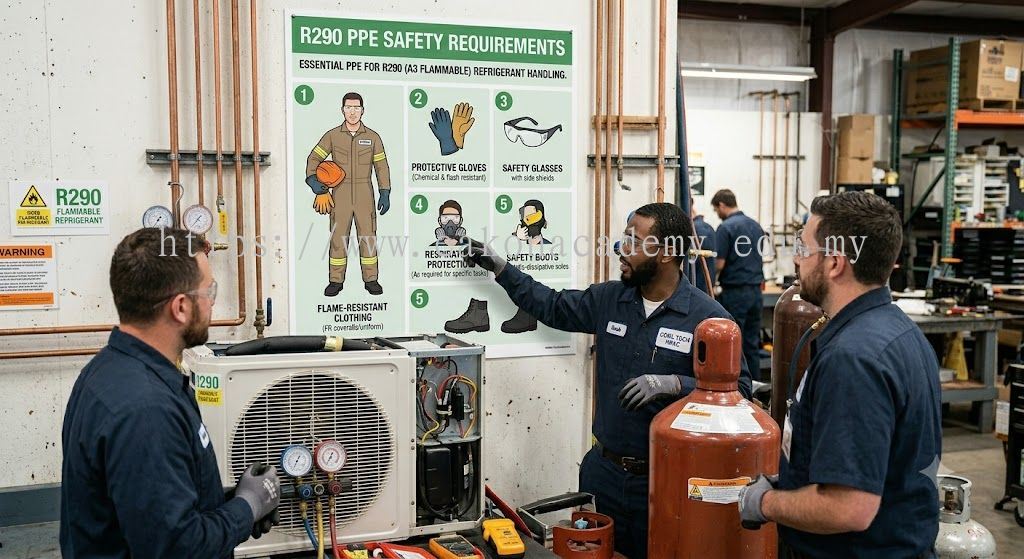
One of the key aspects of R290 PPE safety requirements is the use of appropriate protective clothing. Technicians must wear flame-resistant or anti-static clothing when working with R290 systems to reduce the risk of ignition from static electricity or sparks. Clothing should be made from materials that do not easily generate static charges and should fully cover the body to minimize exposure to refrigerant leaks. Proper footwear, such as anti-static safety boots, is also essential to ensure grounding and reduce electrical risks.
Another important element of PPE requirements is eye and face protection. Safety goggles or face shields must be worn to protect against potential refrigerant splashes or sudden gas releases during system servicing or maintenance. Although R290 is not highly toxic, exposure to pressurized gas can cause irritation or injury, making eye protection a critical safety measure in HVAC operations.
Hand protection is also a key component of R290 PPE safety requirements. Technicians must use appropriate protective gloves that are resistant to cold temperatures and chemical exposure. These gloves help protect against frostbite from refrigerant contact and reduce the risk of skin irritation. Proper gloves also improve grip and handling of tools and equipment during installation or servicing tasks.
Respiratory protection may be required in certain environments where there is a risk of high refrigerant concentration or poor ventilation. While R290 is not highly toxic, inhalation of high concentrations in confined spaces can displace oxygen and create hazardous conditions. In such cases, approved respiratory protection equipment must be used to ensure technician safety.
Another important aspect of PPE safety is the proper maintenance and inspection of protective equipment. PPE must be regularly checked for damage, wear, or defects before use. Damaged equipment should be replaced immediately to ensure maximum protection. Proper storage and maintenance of PPE also extend its lifespan and ensure readiness for use.
Training and professional competency are essential for understanding and applying R290 PPE safety requirements effectively. Technicians must be trained in proper PPE selection, usage, and maintenance procedures. Institutions such as eakonacadem.edu.my provide comprehensive HVAC training programs that focus on natural refrigerants, safety equipment standards, and modern refrigeration technologies. Through structured education, technicians gain the knowledge and skills required to apply PPE effectively in real-world applications.
For businesses and refrigeration operators, implementing R290 PPE safety requirements offers significant benefits. Proper use of protective equipment reduces workplace injuries, improves safety compliance, enhances operational efficiency, and strengthens overall risk management. Companies that invest in PPE training and safety culture are better equipped to adopt low-GWP refrigerants while maintaining safe working environments.
In conclusion, R290 PPE safety requirements are essential for ensuring the protection of technicians working with propane-based refrigeration systems. As the HVAC industry continues to move toward sustainable cooling technologies, personal protective equipment becomes increasingly important for maintaining safety standards. Through proper clothing, eye protection, gloves, respiratory protection, and professional training, R290 systems can be handled safely and effectively. eakonacadem.edu.my supports the development of skilled HVAC professionals by promoting safety education, technical training, and industry best practices, contributing to a safer, more efficient, and environmentally responsible refrigeration industry in Malaysia and beyond.
More detail about EAKON ACADEMY SDN BHD Malaysia