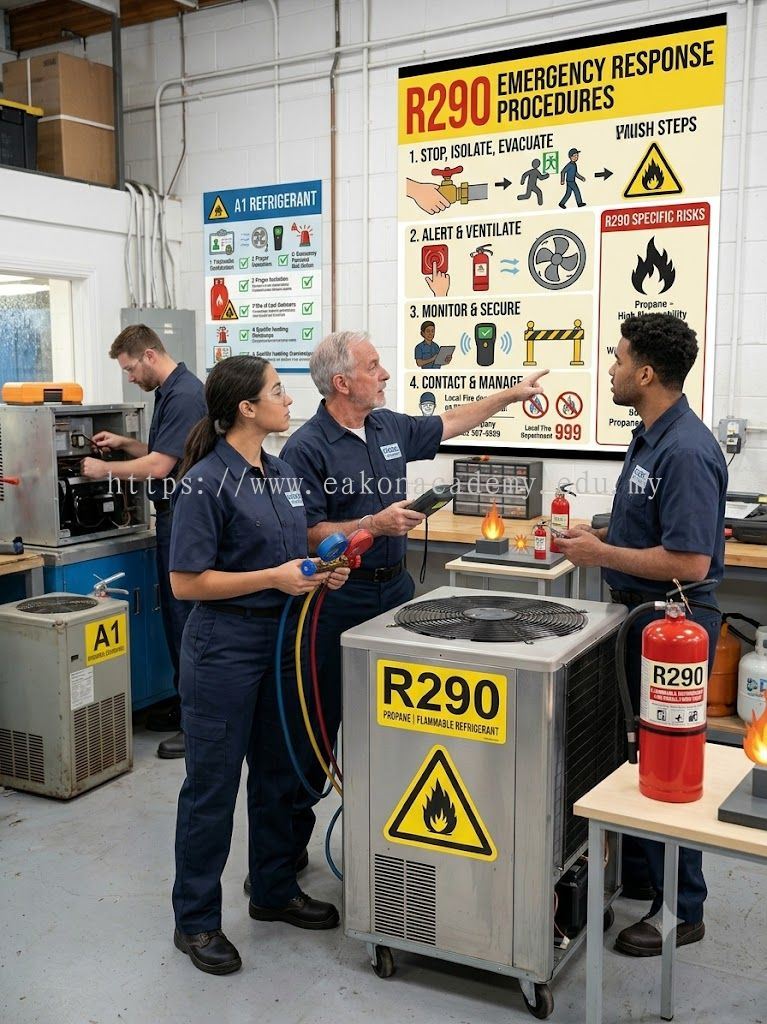
R290 EMERGENCY RESPONSE PROCEDURES – INCIDENT MANAGEMENT, LEAK CONTROL ACTIONS AND PROFESSIONAL HVAC SAFETY TRAINING
R290 emergency response procedures are a crucial part of modern refrigeration and air conditioning safety management, especially as the industry continues to adopt environmentally friendly refrigerants. R290, also known as propane refrigerant, is widely used due to its high energy efficiency, low global warming potential (GWP), and excellent cooling performance. However, because R290 is classified as an A3 flammable hydrocarbon refrigerant, emergency preparedness and response planning are essential to manage potential incidents such as leaks, fires, exposure risks, or system failures. For HVAC technicians, refrigeration professionals, and organizations seeking technical knowledge, eakonacadem.edu.my provides structured training and education focused on refrigerant safety, emergency response protocols, and modern HVAC industry standards.
The importance of R290 emergency response procedures lies in the need to minimize risks and ensure quick, effective action during unexpected incidents. Even though R290 systems are designed to be safe when properly installed and maintained, accidents can still occur due to mechanical failure, improper handling, or external factors. Emergency response procedures provide clear instructions on how to react in such situations to protect human life, prevent fire hazards, and reduce equipment damage. These procedures are essential for maintaining workplace safety and operational resilience.
One of the key components of R290 emergency response procedures is immediate evacuation and hazard isolation. In the event of a significant refrigerant leak, personnel must be evacuated from the affected area to prevent exposure to flammable gas. The area must be isolated to prevent unauthorized access, and all ignition sources must be eliminated immediately. This includes shutting down electrical equipment, avoiding open flames, and stopping any activities that could create sparks. Quick isolation of the hazard zone is critical to preventing escalation of the incident.
Another important aspect of emergency response procedures is leak detection and ventilation control. Once the area is deemed safe for controlled assessment, trained personnel may use gas detection equipment to identify the source and concentration of the leak. Proper ventilation must be established to disperse accumulated refrigerant gas safely. Mechanical ventilation systems or natural airflow may be used depending on the situation. These steps help reduce flammability risks and restore safe environmental conditions.
Fire response is also a critical element of R290 emergency response procedures. Because R290 is flammable, appropriate fire-fighting methods must be used in case of ignition. Dry chemical powder or carbon dioxide extinguishers are typically recommended for controlling propane-related fires. Water should not be used directly on refrigerant fires as it may be ineffective or worsen the situation. Emergency responders must be trained to handle hydrocarbon refrigerant fires safely and efficiently.
First aid and medical response are also included in emergency procedures. In cases of inhalation exposure or physical injury, affected individuals must be moved to fresh air immediately and provided with appropriate medical attention. Understanding basic first aid procedures is essential for minimizing health risks associated with refrigerant exposure.
Training and professional competency are essential for implementing effective R290 emergency response procedures. Technicians must understand refrigerant properties, hazard identification, emergency protocols, and safety equipment usage. Institutions such as eakonacadem.edu.my play a vital role in providing HVAC training programs that focus on natural refrigerants, safety response systems, and modern refrigeration technologies. Through structured education, technicians develop the skills required to respond effectively to emergency situations involving R290 systems.
For businesses and refrigeration operators, having proper R290 emergency response procedures in place offers significant benefits. It enhances workplace safety, reduces potential damage, ensures regulatory compliance, and improves overall risk management. Companies that invest in emergency preparedness and technician training are better equipped to handle unexpected incidents while maintaining operational continuity.
In conclusion, R290 emergency response procedures are essential for ensuring safety in HVAC and refrigeration systems using propane refrigerant. As the industry continues to adopt low-GWP and environmentally friendly refrigerants, emergency preparedness becomes increasingly important for protecting personnel and equipment. Through proper evacuation, leak control, fire response, and professional training, R290 emergencies can be managed effectively. eakonacadem.edu.my supports the development of skilled HVAC professionals by promoting safety education, technical training, and industry best practices, contributing to a safer, more efficient, and environmentally responsible refrigeration industry in Malaysia and beyond.
More detail about EAKON ACADEMY SDN BHD Malaysia