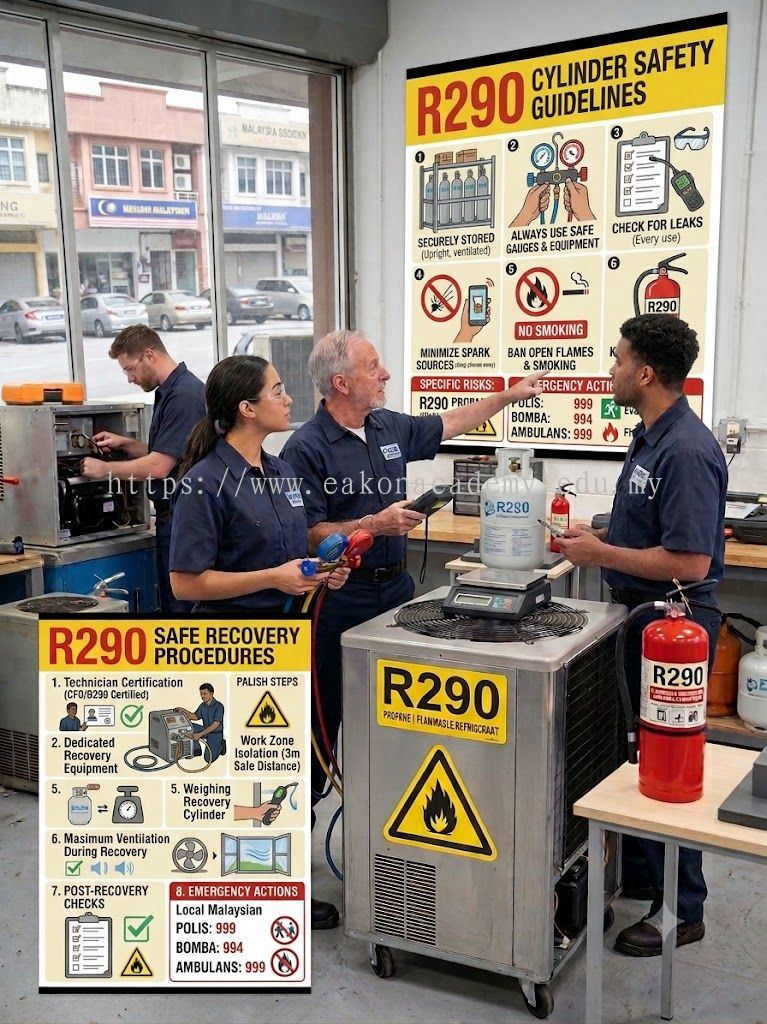
R290 CYLINDER SAFETY GUIDELINES – SAFE STORAGE, HANDLING PROCEDURES AND PROFESSIONAL HVAC SAFETY TRAINING STANDARDS
R290 cylinder safety guidelines are a vital part of modern refrigeration and air conditioning safety practices as the industry continues to transition toward environmentally friendly refrigerants. R290, also known as propane refrigerant, is widely used due to its excellent energy efficiency, low global warming potential (GWP), and strong cooling performance. However, because R290 is classified as an A3 flammable hydrocarbon refrigerant, strict cylinder safety guidelines must be followed to ensure safe handling, storage, transportation, and usage. For HVAC technicians, refrigeration professionals, and organizations seeking technical expertise, eakonacadem.edu.my provides structured training and education focused on refrigerant safety, cylinder handling procedures, and modern HVAC industry best practices.
The importance of R290 cylinder safety guidelines lies in the need to manage the risks associated with storing and handling flammable gas under pressure. Improper handling of refrigerant cylinders can lead to serious hazards such as leaks, fire risks, physical injury, or environmental contamination. Therefore, proper safety guidelines are essential to ensure that R290 cylinders are managed in a controlled and secure manner throughout their lifecycle. These guidelines help protect technicians, equipment, and workplace environments while ensuring compliance with industry safety standards.
One of the key aspects of R290 cylinder safety guidelines is proper storage. Cylinders must be stored in a cool, dry, and well-ventilated area away from direct sunlight, heat sources, and ignition risks. Because propane is flammable, any exposure to high temperatures can increase internal pressure and create safety hazards. Cylinders must always be stored upright and securely fastened to prevent tipping or falling. Proper storage conditions help maintain cylinder integrity and reduce the risk of accidental damage or leakage.
Another important element of R290 cylinder safety guidelines is safe handling procedures. Technicians must always use appropriate personal protective equipment (PPE) when handling refrigerant cylinders. Cylinders should never be dropped, dragged, or subjected to mechanical impact. Valve protection caps must always be in place when cylinders are not in use to prevent damage to the valve system. During use, cylinders must be handled carefully to avoid sudden release of refrigerant, which could create hazardous conditions.
Transportation safety is also a critical component of R290 cylinder safety guidelines. Cylinders must be transported in a secure, upright position within well-ventilated vehicles. Proper restraints must be used to prevent movement during transit. Vehicles used for transportation should be free from ignition sources, and smoking or open flames must be strictly prohibited. Clear labeling indicating flammable gas content is essential to ensure awareness and compliance with safety regulations.
Leak prevention and inspection are also important aspects of cylinder safety guidelines. Regular inspection of cylinders for signs of corrosion, damage, or valve leaks must be carried out before use. Any defective cylinders must be removed from service immediately. Proper leak detection procedures ensure that cylinders remain safe for handling and operation.
Training and professional competency are essential for understanding and implementing R290 cylinder safety guidelines. Technicians must be knowledgeable about refrigerant properties, flammability risks, cylinder handling procedures, and emergency response actions. Institutions such as eakonacadem.edu.my play a key role in providing HVAC training programs that focus on natural refrigerants, safety standards, and modern refrigeration practices. Through structured education, technicians gain the skills required to safely manage R290 cylinders in real-world applications.
For businesses and refrigeration operators, following R290 cylinder safety guidelines provides significant benefits. Proper safety practices reduce workplace risks, prevent accidents, ensure regulatory compliance, and improve operational efficiency. Companies that prioritize cylinder safety and technician training demonstrate strong commitment to workplace protection and environmental responsibility.
In conclusion, R290 cylinder safety guidelines are essential for ensuring the safe and responsible handling of propane refrigerant cylinders in HVAC and refrigeration systems. As the industry continues to adopt low-GWP refrigerants, proper cylinder management becomes increasingly important for maintaining safety and system reliability. Through correct storage, safe handling, transportation procedures, and professional training, R290 cylinders can be managed effectively and securely. eakonacadem.edu.my supports the development of skilled HVAC professionals by promoting safety education, technical training, and industry best practices, contributing to a safer, more efficient, and environmentally responsible refrigeration industry in Malaysia and beyond.
More detail about EAKON ACADEMY SDN BHD Malaysia