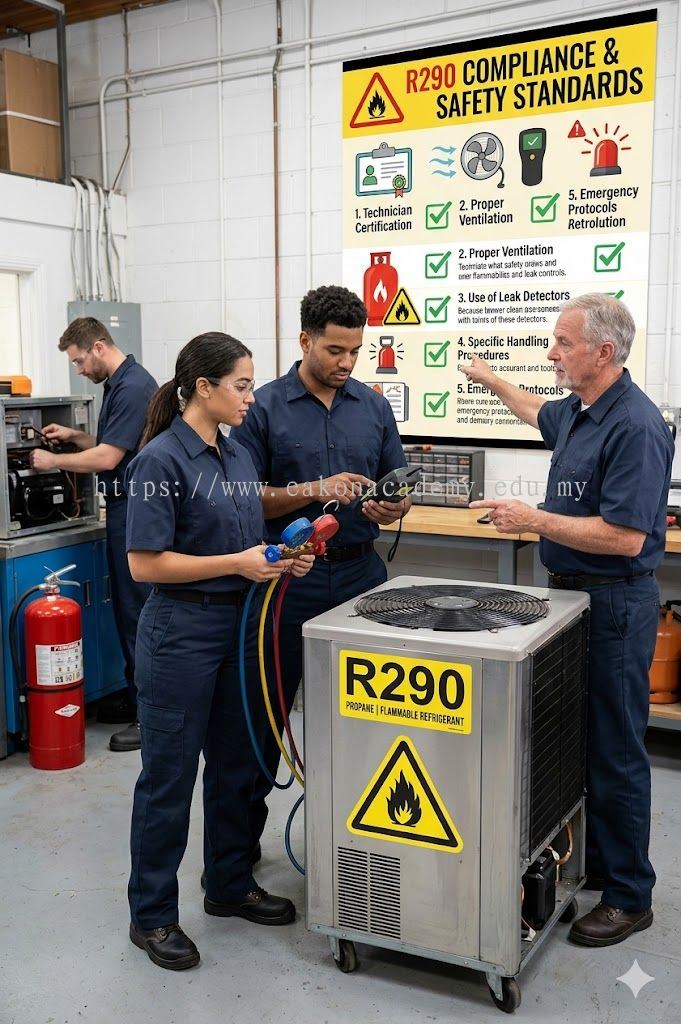
R290 COMPLIANCE SAFETY STANDARDS – REGULATORY REQUIREMENTS, INDUSTRY BEST PRACTICES AND PROFESSIONAL HVAC TRAINING
R290 compliance safety standards are a critical component of the modern refrigeration and air conditioning industry as global demand increases for environmentally friendly and energy-efficient cooling technologies. R290, also known as propane refrigerant, is widely used due to its excellent thermodynamic performance, low global warming potential (GWP), and high energy efficiency. However, because R290 is classified as an A3 flammable hydrocarbon refrigerant, strict compliance with safety standards is essential to ensure safe installation, operation, maintenance, and transportation. For HVAC technicians, refrigeration engineers, and industry professionals, eakonacadem.edu.my provides structured training and education focused on refrigerant compliance, safety regulations, and modern HVAC system standards.
The importance of R290 compliance safety standards lies in the need to ensure that all refrigeration systems using propane refrigerant meet strict safety and operational requirements. These standards are designed to minimize risks associated with flammable refrigerants, including fire hazards, gas leaks, and system failures. Compliance ensures that HVAC systems are designed, installed, and maintained in accordance with internationally recognized safety guidelines, helping to protect technicians, end users, and the environment.
One of the key aspects of R290 compliance safety standards is proper system design and installation. Refrigeration systems must be engineered with controlled refrigerant charge limits, appropriate component selection, and safe system layouts. Electrical components used in R290 systems must comply with safety requirements for flammable environments to reduce ignition risks. Proper ventilation design is also essential to prevent gas accumulation in case of leaks. These design considerations ensure that systems operate safely and efficiently under all conditions.
Another important element of R290 compliance safety standards is safe handling and operational procedures. Technicians must follow strict guidelines when working with propane refrigerant, including eliminating ignition sources, using approved tools and equipment, and ensuring proper system isolation before servicing. Refrigerant charging must be performed using precise measurement techniques to ensure correct refrigerant quantities are applied. Overcharging or improper handling can compromise both system safety and performance.
Leak detection and preventive maintenance are also essential components of compliance standards. Regular inspections must be conducted to identify potential leaks in piping, joints, valves, and system components. Electronic leak detectors and pressure testing methods are commonly used to ensure system integrity. Any detected issues must be addressed immediately to maintain compliance and prevent safety risks. Preventive maintenance helps extend system lifespan and ensures continuous safe operation.
Storage and transportation requirements are also included in R290 compliance safety standards. Refrigerant cylinders must be stored in well-ventilated areas away from heat sources, direct sunlight, and ignition risks. Proper labeling and secure handling procedures must be followed at all times. During transportation, cylinders must be safely secured and handled according to regulatory guidelines to prevent damage or leakage.
Training and professional competency are essential for ensuring compliance with R290 safety standards. Technicians must have a strong understanding of refrigerant properties, safety classifications, risk management, and regulatory requirements. Institutions such as eakonacadem.edu.my play a vital role in providing HVAC training programs that focus on natural refrigerants, safety compliance, and modern refrigeration technologies. Through structured education, technicians develop the skills needed to apply compliance standards effectively in real-world applications.
For businesses and refrigeration operators, adhering to R290 compliance safety standards offers significant advantages. Compliance improves workplace safety, reduces operational risks, ensures regulatory adherence, and enhances system reliability. It also supports environmental sustainability by promoting the use of low-GWP refrigerants in accordance with global climate goals. Companies that prioritize compliance and technician training are better positioned to adopt advanced refrigeration technologies successfully.
In conclusion, R290 compliance safety standards are essential for ensuring the safe and responsible use of propane refrigerant in HVAC and refrigeration systems. As the industry continues to transition toward sustainable cooling solutions, compliance with safety standards becomes increasingly important. Through proper system design, safe handling practices, maintenance procedures, and professional training, R290 systems can operate safely and efficiently. eakonacadem.edu.my supports the development of skilled HVAC professionals by promoting technical education, safety awareness, and industry best practices, contributing to a safer, more efficient, and environmentally responsible refrigeration industry in Malaysia and beyond.
More detail about EAKON ACADEMY SDN BHD Malaysia