
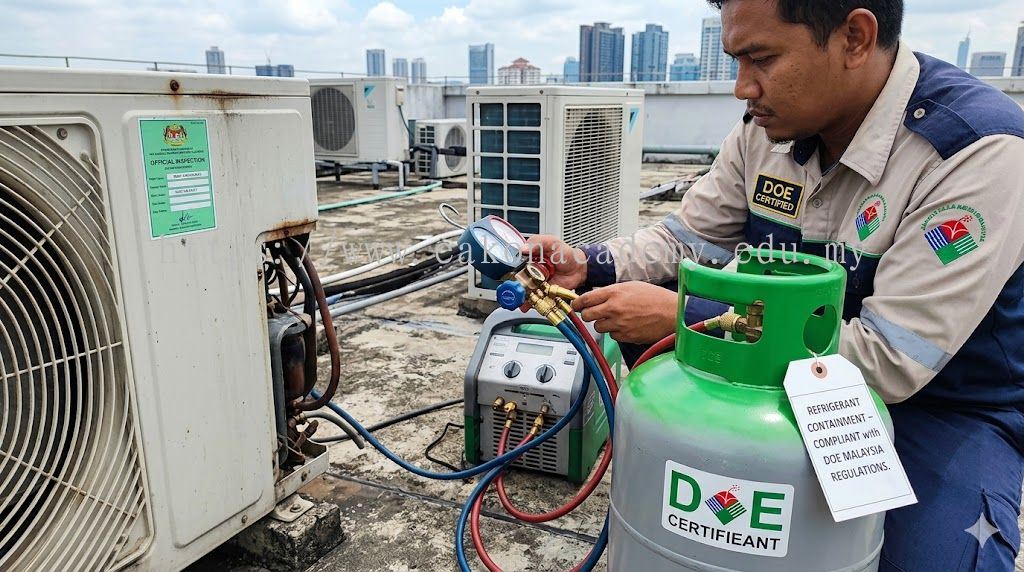
HVAC SYSTEM REFRIGERANT CONTAINMENT MALAYSIA DOE – ENVIRONMENTAL COMPLIANCE, LEAK PREVENTION AND SUSTAINABLE HVACR MANAGEMENT
HVAC system refrigerant containment in Malaysia under the Department of Environment (DOE) framework is a critical aspect of environmental protection and sustainable HVACR (Heating, Ventilation, Air Conditioning, and Refrigeration) operations. Refrigerant containment refers to the implementation of procedures, technologies, and maintenance practices that prevent refrigerant gases from escaping into the atmosphere throughout the lifecycle of an HVAC system. As refrigerants such as hydrofluorocarbons (HFCs), hydrochlorofluorocarbons (HCFCs), and other fluorinated gases possess significant global warming potential (GWP), effective containment has become a major priority for the Malaysian HVACR industry. Understanding HVAC system refrigerant containment Malaysia DOE requirements is essential for technicians, engineers, contractors, facility managers, and organizations seeking to achieve environmental compliance while improving system efficiency and reliability.
The primary objective of HVAC system refrigerant containment is to ensure that refrigerants remain securely sealed within air conditioning and refrigeration systems from installation to decommissioning. Proper containment helps reduce greenhouse gas emissions, improve energy efficiency, lower operating costs, and support Malaysia’s commitment to environmental sustainability. Refrigerant leaks not only contribute to environmental damage but can also reduce cooling performance, increase energy consumption, and lead to expensive repairs. Therefore, maintaining effective refrigerant containment is both an environmental responsibility and a sound business practice.
Under HVAC system refrigerant containment Malaysia DOE guidelines, the containment process begins during system design and installation. Proper system design minimizes the risk of refrigerant leakage by incorporating high-quality components, secure piping layouts, and reliable connections. During installation, technicians must follow manufacturer specifications and industry standards to ensure that all joints, fittings, valves, and service ports are properly assembled and sealed. Pressure testing and commissioning procedures should be performed before system startup to verify system integrity and confirm that no refrigerant leaks are present.
Routine maintenance plays a crucial role in maintaining refrigerant containment throughout the operational life of an HVAC system. Preventive maintenance programs help identify potential issues before they result in refrigerant emissions. Technicians should regularly inspect compressors, condensers, evaporators, expansion devices, piping systems, and service connections for signs of wear, corrosion, vibration damage, loose fittings, or deteriorating seals. Early identification and correction of these issues help maintain system performance while preventing refrigerant loss.
Leak detection is another important component of HVAC system refrigerant containment Malaysia DOE practices. Regular leak inspections should be conducted using approved methods such as electronic refrigerant leak detectors, nitrogen pressure testing, ultraviolet (UV) dye testing, and soap bubble testing. These methods allow technicians to accurately identify leak locations and perform repairs before substantial refrigerant loss occurs. In larger commercial and industrial HVAC systems, continuous monitoring technologies may also be used to provide real-time leak detection and system performance analysis.
Refrigerant recovery procedures are equally important in ensuring effective containment. Whenever HVAC systems undergo servicing, repairs, retrofitting, or decommissioning, refrigerants must be recovered using approved recovery equipment and stored in certified recovery cylinders. Proper recovery prevents refrigerant emissions during maintenance activities and supports responsible refrigerant management. Recovered refrigerants may be recycled, reclaimed, or processed according to environmental regulations and industry best practices.
Malaysia’s HVAC system refrigerant containment initiatives are aligned with international agreements such as the Montreal Protocol and the Kigali Amendment. These global environmental frameworks encourage the reduction of high-GWP refrigerants and the adoption of more environmentally friendly alternatives such as R32, R290 (propane), ammonia, and carbon dioxide (CO ). As the HVACR industry transitions toward these lower-impact refrigerants, maintaining effective containment practices remains essential for achieving environmental goals and operational safety.
Professional training and technical competency are key factors in successful refrigerant containment implementation. HVACR professionals must be trained in refrigerant handling, leak detection, pressure testing, refrigerant recovery, and environmental compliance procedures. Institutions such as Eakon Academy (eakonacadem.edu.my) provide specialized HVACR training programs that help technicians and engineers develop the skills necessary to meet DOE requirements and industry standards. These programs combine theoretical knowledge with practical experience, ensuring that participants are prepared to manage refrigerant containment effectively in real-world applications.
Proper documentation and record keeping are also important aspects of HVAC system refrigerant containment Malaysia DOE compliance. Organizations should maintain accurate records of refrigerant inventories, maintenance activities, leak inspections, refrigerant recovery operations, and repair work. These records support compliance audits, improve maintenance planning, and demonstrate commitment to environmental responsibility.
In conclusion, HVAC system refrigerant containment Malaysia DOE is a fundamental component of sustainable HVACR management. Through proper system design, preventive maintenance, regular leak detection, responsible refrigerant recovery, comprehensive documentation, and professional training through Eakon Academy (eakonacadem.edu.my), organizations can significantly reduce refrigerant emissions and improve operational performance. By adopting effective refrigerant containment strategies, Malaysia’s HVACR industry can contribute to a cleaner environment, stronger regulatory compliance, and a more sustainable future.
More detail about EAKON ACADEMY SDN BHD Malaysia
