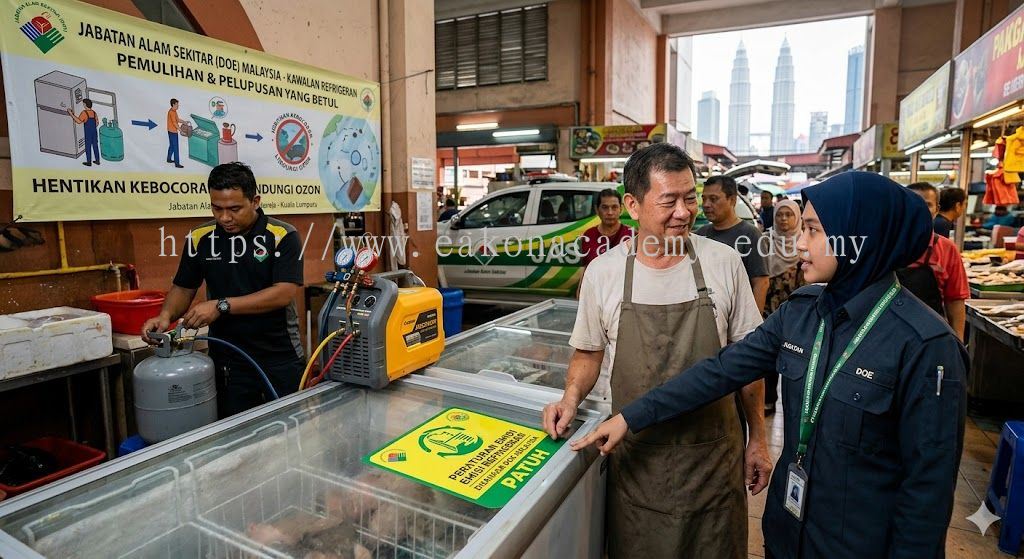
REFRIGERANT EMISSION REGULATIONS MALAYSIA DOE
Refrigerant emission regulations Malaysia DOE refer to the official environmental laws, technical standards, and enforcement policies established by Malaysia’s Department of Environment (DOE) to control and reduce the release of refrigerant gases from HVACR (Heating, Ventilation, Air Conditioning, and Refrigeration) systems. These regulations are designed to protect the environment by minimizing greenhouse gas emissions, preventing ozone layer depletion, and ensuring responsible refrigerant management across all stages of system installation, operation, maintenance, servicing, recovery, and disposal. The framework supports Malaysia’s commitment to international environmental agreements such as the Montreal Protocol and the Kigali Amendment, which aim to phase down harmful refrigerants and promote sustainable cooling technologies.
In Malaysia, refrigerant emission regulations apply to all refrigerants used in HVACR systems, including hydrofluorocarbons (HFCs) with high Global Warming Potential (GWP), ozone-depleting substances such as chlorofluorocarbons (CFCs) and hydrochlorofluorocarbons (HCFCs), as well as modern low-GWP alternatives such as hydrofluoroolefins (HFOs), ammonia (NH ), carbon dioxide (CO ), and hydrocarbons. Regardless of refrigerant type, strict regulatory compliance is required to ensure that no refrigerant gases are released into the atmosphere during any stage of system handling or operation.
A key component of refrigerant emission regulations Malaysia DOE is mandatory refrigerant recovery and containment procedures. Before any HVACR system is opened for servicing, repair, or dismantling, refrigerants must be safely extracted using certified recovery equipment. The recovered refrigerant must then be stored in approved, leak-proof cylinders to prevent accidental emissions. Proper handling procedures such as system isolation, pressure control, and safe transportation must be strictly followed to ensure full compliance with DOE environmental regulations.
Another important aspect is leak prevention and system maintenance requirements. HVACR systems must be properly designed, installed, and maintained to ensure airtight sealing and optimal performance. Regular inspections and preventive maintenance are required to detect leaks early and prevent refrigerant loss. Certified technicians must use approved leak detection tools and monitoring systems to ensure compliance with regulatory standards and to maintain system efficiency.
Training and certification are essential for ensuring compliance with refrigerant emission regulations in Malaysia. HVACR technicians must be properly trained to understand refrigerant properties, environmental impacts, regulatory requirements, and safe handling procedures. Without proper training, improper practices can lead to accidental emissions, environmental damage, safety hazards, and legal consequences. Institutions such as Eakon Academy provide structured HVACR training programs that focus on DOE regulatory compliance, refrigerant recovery techniques, and environmental safety practices. These programs ensure technicians are fully equipped with the skills and knowledge required to meet industry and regulatory expectations.
Refrigerant emission regulations also contribute significantly to energy efficiency and operational cost savings. HVACR systems that are properly maintained and free from refrigerant leaks operate more efficiently, consume less energy, and deliver stable cooling performance. Preventing emissions helps maintain system pressure and efficiency, reducing electricity consumption and minimizing equipment breakdowns. By complying with DOE regulations, businesses can improve system reliability, extend equipment lifespan, and reduce long-term maintenance costs.
In addition to environmental and operational benefits, refrigerant emission regulations support Malaysia’s broader sustainability and climate action goals. HVACR systems are among the largest contributors to greenhouse gas emissions, and strict enforcement of regulatory measures plays a vital role in reducing national environmental impact. Companies that comply with DOE standards demonstrate strong environmental responsibility, enhance their sustainability profile, and align with global environmental expectations.
In conclusion, refrigerant emission regulations Malaysia DOE are essential for ensuring safe, efficient, and environmentally responsible HVACR practices. By following DOE regulations, implementing proper refrigerant recovery and leak prevention procedures, and participating in professional training programs offered by institutions such as Eakon Academy, HVACR professionals can strengthen their technical expertise and contribute to a cleaner, safer, and more sustainable future for Malaysia.
More detail about EAKON ACADEMY SDN BHD Malaysia