
OZONE DEPLETING SUBSTANCES COMPLIANCE MALAYSIA
Ozone depleting substances (ODS) compliance in Malaysia is a critical environmental regulation framework designed to protect the Earth’s ozone layer by controlling, reducing, and eliminating the use of harmful chemical substances in HVACR (Heating, Ventilation, Air Conditioning, and Refrigeration) systems. These substances, which include chlorofluorocarbons (CFCs), hydrochlorofluorocarbons (HCFCs), halons, and other ozone-depleting chemicals, have historically been widely used in refrigeration, air conditioning, and industrial cooling systems. However, scientific research has proven that they contribute significantly to ozone layer depletion, leading to increased ultraviolet (UV) radiation exposure and serious environmental and health risks. As a result, Malaysia has implemented strict ODS compliance regulations aligned with the Montreal Protocol, an international environmental agreement aimed at phasing out ozone-depleting substances globally.
In Malaysia, ozone depleting substances compliance is regulated and enforced by the Department of Environment (DOE), which ensures that all industries handling refrigerants and cooling systems follow strict environmental guidelines. These regulations include proper control of ODS importation, usage, recovery, recycling, and disposal. HVACR professionals are required to manage refrigerants responsibly, ensuring that no harmful substances are released into the atmosphere during installation, maintenance, or system decommissioning. The goal is to minimize environmental impact while transitioning toward safer, environmentally friendly alternatives such as hydrofluorocarbons (HFCs), hydrofluoroolefins (HFOs), and natural refrigerants like ammonia (NH ), carbon dioxide (CO ), and hydrocarbons.
A key element of ozone depleting substances compliance in Malaysia is proper refrigerant management and leak prevention. Even small leaks from HVAC systems can release ODS into the atmosphere, contributing to long-term environmental damage. Therefore, technicians must follow strict procedures for leak detection, refrigerant recovery, and system maintenance. Compliance also requires the use of certified recovery equipment and adherence to standardized servicing practices to ensure that refrigerants are safely contained and properly handled throughout their lifecycle. These practices not only protect the environment but also improve system efficiency and reduce operational costs.
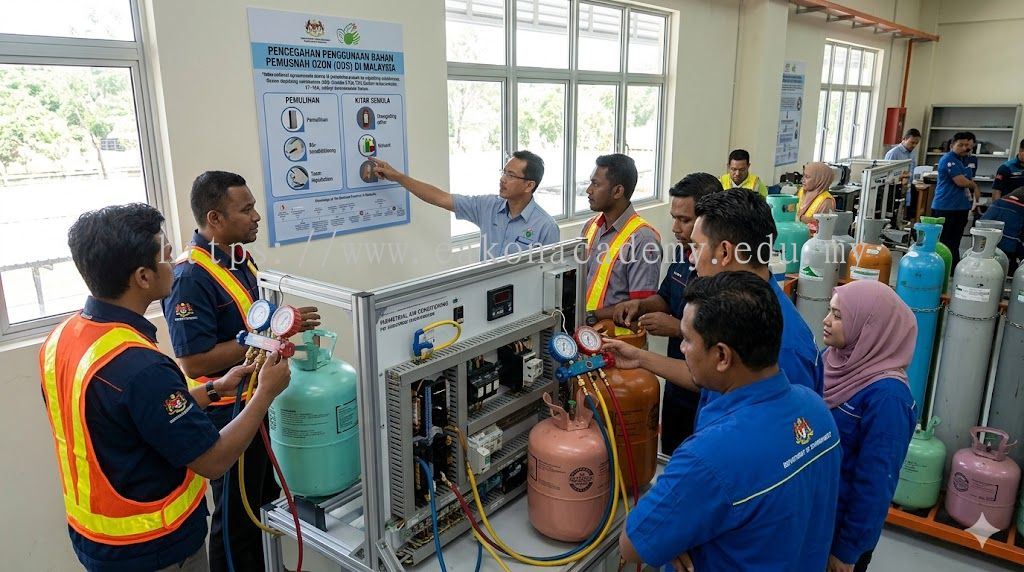
Training and certification are essential components of ODS compliance in Malaysia’s HVACR industry. Proper education ensures that technicians understand environmental regulations, safe handling procedures, and correct technical practices for working with refrigerants. Without proper training, improper handling can lead to regulatory violations, environmental harm, and safety risks. Institutions such as Eakon Academy play a vital role in providing professional HVACR training programs that focus on ozone depleting substances compliance, refrigerant safety, and environmental best practices. These programs help develop skilled technicians who are capable of meeting DOE requirements and supporting Malaysia’s environmental protection goals.
Ozone depleting substances compliance also contributes to Malaysia’s broader sustainability and climate protection initiatives. By reducing the use of harmful refrigerants and promoting eco-friendly alternatives, the HVACR industry plays a significant role in lowering greenhouse gas emissions and improving air quality. Compliance ensures that businesses operate in accordance with national and international environmental standards, enhancing their reputation and supporting corporate sustainability goals. It also helps organizations avoid legal penalties and ensures smooth regulatory approval for HVAC installations and maintenance activities.
In addition to environmental benefits, ODS compliance improves energy efficiency and system performance. Properly maintained HVACR systems that follow compliance guidelines operate more efficiently, consume less energy, and experience fewer breakdowns. This results in lower operational costs, improved equipment reliability, and extended system lifespan. As energy efficiency becomes increasingly important in modern building design, compliance with ODS regulations is essential for both economic and environmental performance.
In conclusion, ozone depleting substances compliance in Malaysia is a vital component of environmental protection and HVACR industry regulation. By adhering to DOE guidelines, eliminating harmful refrigerants, and adopting sustainable alternatives, Malaysia is actively working toward a greener future. Through professional training programs offered by institutions such as Eakon Academy, HVACR professionals can strengthen their technical expertise, ensure regulatory compliance, and contribute to global efforts to protect the ozone layer and combat climate change.
More detail about EAKON ACADEMY SDN BHD Malaysia
