
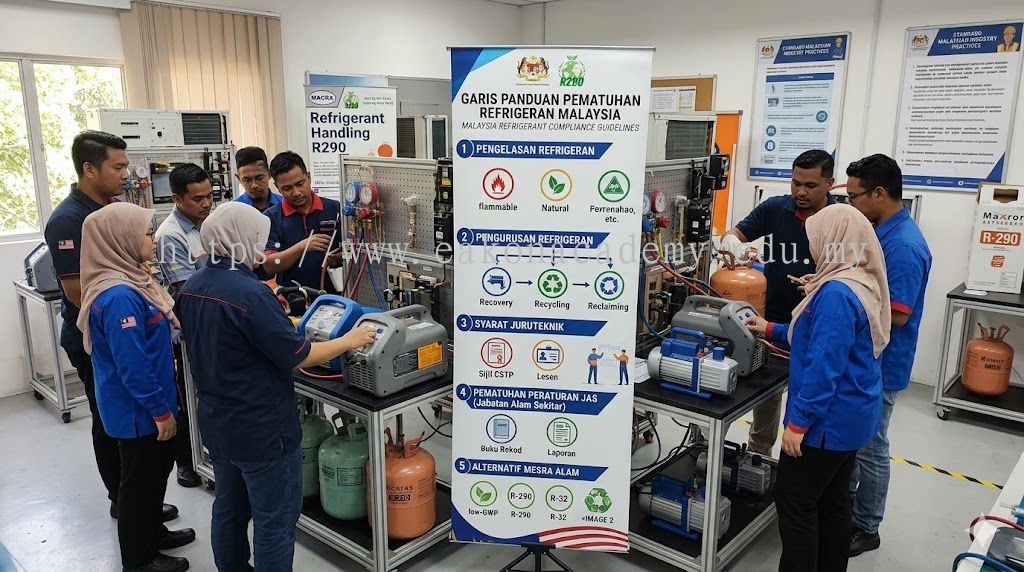
MALAYSIA REFRIGERANT COMPLIANCE GUIDELINES
Malaysia refrigerant compliance guidelines are an essential framework that governs the proper handling, usage, recovery, and management of refrigerants within the HVACR (Heating, Ventilation, Air Conditioning, and Refrigeration) industry. These guidelines are established to ensure environmental protection, energy efficiency, and safety in alignment with national regulations enforced by the Department of Environment (DOE) and international environmental agreements such as the Montreal Protocol and Kigali Amendment. As Malaysia continues to transition toward greener technologies and lower carbon emissions, refrigerant compliance guidelines play a critical role in shaping industry standards and ensuring responsible practices across all HVACR applications.
The main purpose of Malaysia refrigerant compliance guidelines is to reduce the environmental impact of refrigerants, particularly those with high Global Warming Potential (GWP) and ozone-depleting characteristics. This includes strict control over the use of refrigerants such as CFCs, HCFCs, and certain HFCs, which are being gradually phased down and replaced with more sustainable alternatives. These alternatives include low-GWP refrigerants, hydrofluoroolefins (HFOs), and natural refrigerants such as carbon dioxide (CO ), ammonia (NH ), and hydrocarbons. These environmentally friendly refrigerants help reduce greenhouse gas emissions while maintaining efficient cooling performance in residential, commercial, and industrial HVAC systems.
A key aspect of Malaysia refrigerant compliance guidelines is proper refrigerant lifecycle management. This includes procedures for refrigerant recovery, recycling, reclamation, and safe disposal. Technicians and service providers are required to follow standardized protocols to prevent refrigerant leaks, which can significantly contribute to environmental pollution and energy inefficiency. Proper leak detection, system maintenance, and safe handling practices are essential to ensure compliance with DOE regulations. These guidelines also emphasize the importance of using certified equipment and following best practices during installation, servicing, and decommissioning of HVACR systems.
Training and certification are fundamental to ensuring compliance with Malaysia refrigerant guidelines. HVACR professionals must be equipped with the technical knowledge and practical skills required to handle modern refrigerants safely and efficiently. Without proper training, improper handling can lead to regulatory violations, environmental damage, and increased operational risks. Institutions such as Eakon Academy play a vital role in providing structured HVACR training programs that focus on refrigerant compliance, environmental regulations, and hands-on technical skills. These programs ensure that technicians are well-prepared to meet industry standards and contribute to sustainable HVAC practices in Malaysia.
Malaysia refrigerant compliance guidelines also contribute significantly to energy efficiency and cost reduction. Proper refrigerant management ensures that HVAC systems operate at optimal performance levels, reducing energy consumption and minimizing wear and tear on equipment. Systems that comply with environmental standards are less likely to experience inefficiencies caused by refrigerant leakage or improper charging. This leads to lower electricity costs, improved system reliability, and extended equipment lifespan. As energy prices continue to rise, compliance with refrigerant guidelines becomes increasingly important for both economic and operational efficiency.
In addition to environmental and economic benefits, these guidelines support Malaysia’s broader sustainability and climate action goals. The HVACR sector is a major contributor to energy use and greenhouse gas emissions, making refrigerant compliance a key component of national environmental strategies. By following established guidelines, businesses demonstrate environmental responsibility, improve corporate sustainability profiles, and align with global green building standards. Compliance also helps organizations avoid legal penalties and ensures smooth operations within regulated industries.
In conclusion, Malaysia refrigerant compliance guidelines are a critical foundation for ensuring environmental protection, energy efficiency, and professional HVACR standards. By adhering to DOE regulations, adopting eco-friendly refrigerants, and participating in professional training programs offered by institutions such as Eakon Academy, HVACR professionals can enhance their expertise and contribute to a more sustainable future. These guidelines not only strengthen industry compliance but also support Malaysia’s long-term commitment to climate action and green technology development.
More detail about EAKON ACADEMY SDN BHD Malaysia
